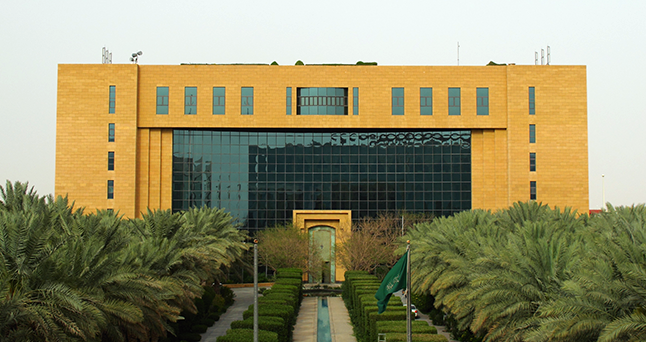

His Excellency the Minister of Municipalities and Housing Mr. Majid bin Abdullah Al-Hogail participated today in the Budget 2026 Forum in a panel discussion titled “Infrastructure development initiatives and their impact on the national economy and quality of life” during which he reviewed the achievements of the housing system and municipalities and their plans for the coming year.
His Excellency explained that the housing system and municipalities have continued to strengthen their presence in empowering Saudi families. His Excellency explained that the Housing system continued to strengthen its presence in empowering Saudi families, with more than 1.2 million families benefiting from housing support programs, while 920 thousand families have lived in their homes since the launch of the program, and the homeownership rate reached (65.4%) by 2024, with a plan to reach (66%) in 2026 and sign (100) thousand new housing contracts.
He pointed out that the housing system housing has continued to strengthen its presence in empowering Saudi families, with more than 1.2 million families benefiting from housing support programs, while (920) thousand families have moved into their own homes since the launch of the program. His Excellency pointed out that the volume of housing finance in the Kingdom reached (938) billion riyals by the end of the third quarter of 2025, in addition to the continued pumping of housing projects by providing (107) thousand units and developed land in 2025, and pumping (80) thousand new units in 2026 to enhance the real estate supply and achieve the required balance in prices, indicating that development housing programs have enabled more than (50) thousand families to own their homes, while providing (20) thousand new rental units in 2026.
The Minister pointed out that the developmental housing programs enabled more than (50) thousand families to own their homes, while providing (20) thousand new rental units in 2026. On the infrastructure side, H.E. Al-Hogail stressed the success of the municipal sector in reducing stalled projects to (4%) only in 2025, with the aim of achieving “zero stalled projects” in 2026, rehabilitating (1,732) km of urban roads, and increasing access to vital facilities to be within (800) meters for more than (73%) residents.
H.E. Al-Hogail stressed the success of the municipal sector in reducing stalled projects to (4%) only in 2025, with the aim of achieving "zero stalled projects" in 2026. He added that digital transformation has become an essential part of the system's work, as "Baladi Lens" has expanded its coverage to reach (95%) and deal with (1.2) million reports and process (14) million photos in 2025, while reducing violations to less than (90) violations per km², and the ministry aims to save (2.4) million hours of work through artificial intelligence solutions in 2026 and increase the adoption of smart technologies to (30%) of operations.
He pointed out that the launch of the Baladi Lens has expanded its coverage to (95%), dealing with (1.2) million reports and processing (14) million photos by 2025. He pointed to the launch of a unified digital system for construction licenses in 2026, linking the stages of design, implementation and follow-up, in addition to unifying policies and standards through the "National Inspection Center" to reach a supervisory coverage of (100%) of high-risk food and construction activities.
Minister Al-Hogail emphasized the continued development of the urban landscape by adding (2.5) million m² of parks and green spaces in 2025, updating urban requirements to apply (19) Saudi architectural styles in (9) cities, and supporting sustainability initiatives and smart cities implemented by the Ministry in 2026."
Minister Al-Hogail concluded. The Minister of Municipalities and Housing concluded his participation by emphasizing that these initiatives come within the framework of enhancing the quality of life, supporting the objectives of the Kingdom's Vision 2030, and stimulating the public and private sectors to expand partnership in housing and infrastructure projects, in order to increase the efficiency of services and achieve wider options for citizens.