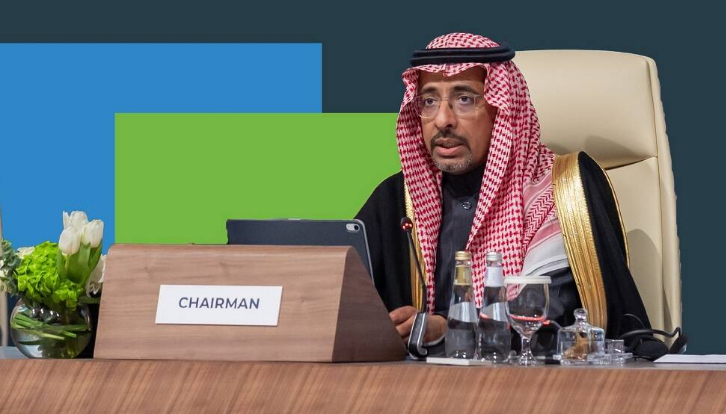

The Minister of Industry and Mineral Resources, Mr. Bandar bin Ibrahim Al-Khorayef, extended his sincere thanks and gratitude to the Custodian of the Two Holy Mosques King Salman bin Abdulaziz Al Saud and His Royal Highness Prince Mohammed bin Salman bin Abdulaziz Al Saud, Crown Prince and Prime Minister, on the occasion of the Cabinet decision approving the cancellation of the financial compensation for expatriate labor in industrial facilities licensed with an industrial license, based on what the Council of Economic Affairs and Development submitted.
In a press statement to the Saudi Press Agency (SPA), His Excellency explained that the decision comes as an extension of the continuous support and empowerment received by the industrial sector from His Highness the Crown Prince, considering industry as one of the main pillars of diversifying the national economy according to the Kingdom's Vision 2030, noting that this decision will contribute to enhancing the competitiveness of Saudi industry globally and increasing the reach of non-oil exports and their spread in various international markets.
Al-Khorayef stressed that the state's assumption of the financial equivalent during the past six years, within the first and second exemption periods that extended from October 1, 2019 to December 31, 2025, played a pivotal role in the qualitative growth of the industrial sector and the expansion of the industrial base, as the sector achieved qualitative leaps during the period from 2019 to the end of 2024, including an increase in the number of industrial facilities from 8,822 factories to more than 12 thousand, and an increase in the total value of industrial investments by 35%, from 908 billion riyals to 1. 22 trillion riyals.Non-oil exports grew by 16% from SR187 billion to SR217 billion, jobs grew by 74% from 488,000 employees to 847,000, and the localization rate increased from 29% to 31%, with the number of factories increasing from 8,822 to 12,000, and the total value of industrial investments increasing by 35% from 908 billion riyals to 1. Industrial GDP increased by 56% from 322 billion riyals to more than 501 billion riyals, pointing out that these achievements would not have been realized without the grace of God and then the great support that the industry and mineral wealth system receives from the wise leadership.
His Excellency pointed out that the Cabinet's decision to approve the abolition of the financial compensation for expatriate labor in industrial facilities licensed with an industrial license will promote sustainable industrial development in the Kingdom, contribute to the development of national industrial capabilities, attract more quality investments in light of the possibilities and incentives provided by the industrial system, reduce operational costs in factories to enable them to expand, grow and increase their production, and accelerate the adoption of modern business models such as automation solutions, artificial intelligence and advanced manufacturing technologies, thus raising the efficiency of the industrial sector and enhancing its capabilities. The Minister of Industry and Mineral Resources stressed the Ministry's keenness to continue supporting the growth of the industrial sector during the coming period, by integrating efforts with all relevant authorities, empowering the private sector, and providing an industrial environment that stimulates investment, innovation and technology, reflecting the Kingdom's commitment to achieve its vision to become a leading global industrial power by enabling advanced industries, attracting international investments, providing 800 investment opportunities in various industrial activities worth one trillion riyals, and tripling industrial GDP to reach 895 billion riyals by 2035, thus maximizing the role of industry as one of the main pillars of diversifying the Kingdom's economy.
In a press statement to the Saudi Press Agency (SPA), His Excellency explained that the decision comes as an extension of the continuous support and empowerment received by the industrial sector from His Highness the Crown Prince, considering industry as one of the main pillars of diversifying the national economy according to the Kingdom's Vision 2030, noting that this decision will contribute to enhancing the competitiveness of Saudi industry globally and increasing the reach of non-oil exports and their spread in various international markets.
Al-Khorayef stressed that the state's assumption of the financial equivalent during the past six years, within the first and second exemption periods that extended from October 1, 2019 to December 31, 2025, played a pivotal role in the qualitative growth of the industrial sector and the expansion of the industrial base, as the sector achieved qualitative leaps during the period from 2019 to the end of 2024, including an increase in the number of industrial facilities from 8,822 factories to more than 12 thousand, and an increase in the total value of industrial investments by 35%, from 908 billion riyals to 1. 22 trillion riyals.Non-oil exports grew by 16% from SR187 billion to SR217 billion, jobs grew by 74% from 488,000 employees to 847,000, and the localization rate increased from 29% to 31%, with the number of factories increasing from 8,822 to 12,000, and the total value of industrial investments increasing by 35% from 908 billion riyals to 1. Industrial GDP increased by 56% from 322 billion riyals to more than 501 billion riyals, pointing out that these achievements would not have been realized without the grace of God and then the great support that the industry and mineral wealth system receives from the wise leadership.
His Excellency pointed out that the Cabinet's decision to approve the abolition of the financial compensation for expatriate labor in industrial facilities licensed with an industrial license will promote sustainable industrial development in the Kingdom, contribute to the development of national industrial capabilities, attract more quality investments in light of the possibilities and incentives provided by the industrial system, reduce operational costs in factories to enable them to expand, grow and increase their production, and accelerate the adoption of modern business models such as automation solutions, artificial intelligence and advanced manufacturing technologies, thus raising the efficiency of the industrial sector and enhancing its capabilities. The Minister of Industry and Mineral Resources stressed the Ministry's keenness to continue supporting the growth of the industrial sector during the coming period, by integrating efforts with all relevant authorities, empowering the private sector, and providing an industrial environment that stimulates investment, innovation and technology, reflecting the Kingdom's commitment to achieve its vision to become a leading global industrial power by enabling advanced industries, attracting international investments, providing 800 investment opportunities in various industrial activities worth one trillion riyals, and tripling industrial GDP to reach 895 billion riyals by 2035, thus maximizing the role of industry as one of the main pillars of diversifying the Kingdom's economy.