Sponsored by Amlak, the most important and prominent exhibitions and events in the Riyadh region

The Riyadh region  During the coming period, a number of events and exhibitions will be held with great regional and international participation.

Below, Amlak reviews the most important exhibitions and events taking place during the upcoming period:

Public Transportation Projects Exhibition and Forum 5102

It will be held from June 1-3, 2015 at the Riyadh International Convention and Exhibition Center, Riyadh.

The exhibition is held with the direct governmental support of the Minister of Transport and with the participation of the General Organization for Railways and the Supreme Authority for the Development of Riyadh City (King Abdulaziz Public Transport Project in Riyadh) in addition to the participation of a number of regional and international bodies specialized in the design, implementation and construction of projects, as well as the Public Transport Authority (Metro). .

International Decoration and Furnishings Exhibition

And an exhibition  Gulf International Paints

It will be held from May 26-29, 2015 at the Riyadh International Convention Center  The Kingdom of Saudi Arabia's decoration, furnishings and paints market is growing as the Kingdom plans to invest nearly 500 billion dollars to build six new industrial cities and mega projects in all regions of the Kingdom.

Riyadh International Fair (Second Edition)  )

Held during the 26th - 29th  Held during the period  From 2015 at the Riyadh International Convention and Exhibition Center. .

This exhibition aims to:

Introducing investors to the investment and trade opportunities offered by the Saudi economy   .

Raising the level of economic exchange between the Kingdom and the participating countries to enhance the volume of trade exchange to the desired level in this period

Opening new markets within the Kingdom for a number of products and industries

Saudi Health Exhibition 5102

It will take place from May 28-20, 2015 at the Riyadh International Convention and Exhibition Center.

The exhibition is  The ideal platform that brings together regional and international business owners, major traders, distributors and service providers with officials and decision makers in the Saudi health sector.

Amlak Real Estate Newspaper will cover and sponsor these exhibitions as part of its pioneering role in this field.

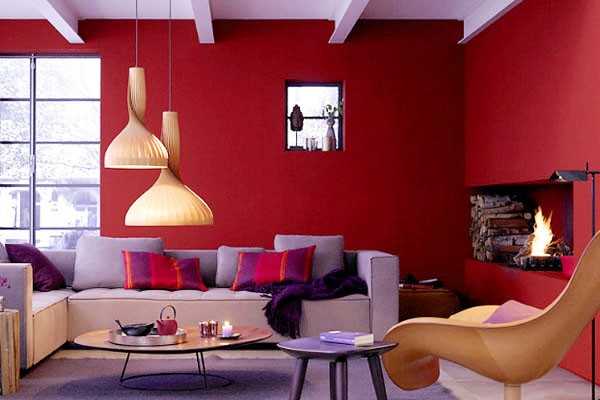
(Marsala is the color of beauty, pomp and royal grandeur, officially approved for 5102

Prepare  - M .  Sarah Bashir

Get the color of Marsala alasraM This news caused a great deal of excitement for interior designers and product designers, because this famous color is capable of attracting the eye and increasing sales. This news caused great happiness for interior designers and product designers, because this famous color is capable of attracting the eye and increasing sales.

Official Color of the Year 2015

“Marsala” (Pantone 18-1438) Many people may be surprised by the name when they first hear it and don't know what it means. It symbolizes wine red - a mixture of shades of antique pink and burgundy  It is considered a warm and elegant color that enriches the senses, inspires confidence and stability, and suggests wealth, sophistication, elegance and friendliness, and at the same time it has beauty, charm and elegant classicism, which makes it easy to use in various fields of fashion and decoration, and most designers were keen to introduce it in their designs for this year.

Additional and complementary color

As for decoration, Marsala cannot be adopted as an explicit overall color in the room, but should be used as an additional and complementary color, such as adding it to accessories or lamps, painting one wall with it, or introducing the color to one or two pieces of furniture.

It can be easily coordinated with different color palettes and furniture and there are specific ways to incorporate Marsala into the home:

1- Leather chairs in Marsala color:

When combined with this color, leather adds depth and complexity to your seating area.

2- Marsala-colored carpets:

To add a large area of Marsala to private rooms without committing to a color, which increases the luxury of the furniture in the rest of the room. .

3- Marsala-colored light fixtures:

You don't have to risk introducing color into your furniture by adding accents such as:

(chandeliers - lamps) in the color of Marsala, which gives it a classic character to add luxury to your lighting  .

4- The back of the bed is Marsala color:

Adding this color to the back of the bed gives it a royal feel and makes it look luxurious and beautiful.

The Beauty of Drowning Neutrality

In the Cottege style also, we find that the most beautiful thing that highlights the elegance of the room is the neutrality that dominates the colors of all its components, where we see the ceiling, floors and walls to the furniture and the color of the furnishings and carpets, the colors range from white to beige and brown in some tables, so it is very easy to renew these rooms in the Cottege style by adding Marsala touches through colored pillows that we can distribute on seats and sofas where Marsala accessories harmonize with beige and brown. The cushions can be chosen in different designs, some of them are patterned in white and Marsala, others are patterned in beige and Marsala, and there is no doubt that your visit to decor and fabric stores will reveal to you the many possibilities of Marsala.

Models with neutral colors

Marsala is a great color with neutral colors like light gray and taupe. This color also works well with amber brown, yellowish brown, golden yellow, turquoise, and blue of all kinds.

Saudi patent. «Super Cool» air conditioners save 08% of energy. And works without compressor

SuperCool Healthy Air Conditioners

Ajlan Central AC Factory started producing desert air conditioners a year ago, and the «Super Cool» product is the first air conditioner in the Kingdom to be made without a compressor, which is energy efficient and reduces electricity by about 80 %. It is a powerful and surprising product with good results in the world of cooling and air conditioning.

Shakeel Ahmed Kiani, marketing and sales manager, says  The product is healthy and the cooling circuit is natural, suitable for people with chronic allergies, especially since  There are about 20 % - 30 % residents of the region who have allergies, so we produced these air conditioners because of their natural cooling and useful for those who have these allergies, and it is an important and good product for hospitals because hospitals need natural air, the factory manufactures and also designs and we own the patent for Super Cool in the Ajlan Central Air Conditioners Factory.

Economical and practical product

SuperCool air conditioners are powered by two systems  (hot and cold) and guaranteeing the degree of cold 17 ° C, natural cooling without freon, remote control with thermostat and available from 5 tons to 25 tons of refrigeration, and delivery is done on a priority booking basis. One of the advantages of Super Cool is that it is environmentally friendly.

SuperCool's air conditioners save energy and with future study will save the government from building power plants that cost the country billions of dollars, and in this way, as the population increases, it will reduce electricity expenses by 80%.

Future ambitions and plans

As for future plans, Mr. Shakeel said: We plan within 10 years to make our product «Super Cool» in every home in the Kingdom, because of its excellent specifications that qualify it to compete with local and imported devices, and the product has proven its efficiency in hospitals, factories of all types and sizes, schools, markets and homes. Thank God, we have a large number of customers whose trust we cherish, such as: Al Othaim, Al Karama Sweets, some schools and some hospitals.

In conclusion, Mr. Shakeel Ahmed Kiani extended his congratulations to the Custodian of the Two Holy Mosques King Salman bin Abdulaziz - may God protect him - to His Royal Highness Prince Mohammed bin Nayef - may God protect him - Crown Prince, Deputy Prime Minister and Minister of Interior, and to Prince Mohammed bin Salman - may God protect him - Deputy Crown Prince  The Minister of Defense wished the government of the Custodian of the Two Holy Mosques King Salman bin Abdulaziz success in serving the Arab and Islamic nations and the loyal Saudi people.

Riyadh Metro work continues at 89... Location Prince of Riyadh launches 30-meter-deep drilling machine

Riyadh train

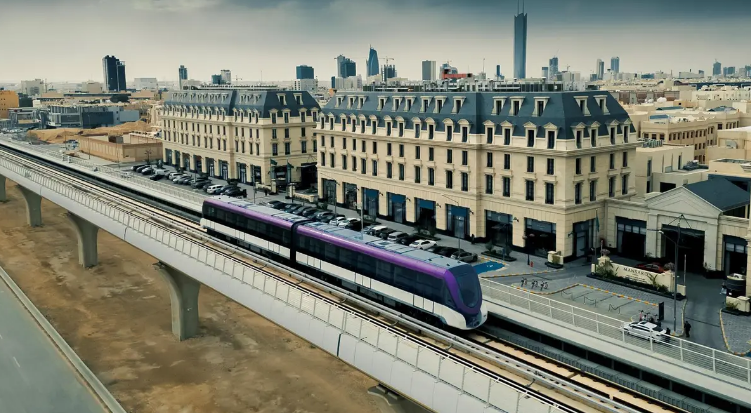
30 Work on the Riyadh Metro has reached advanced stages, with work continuing intensively in (89) locations across Riyadh city, and recently launched by the Emir of Riyadh.  Riyadh Governor Faisal bin Bandar, Chairman of the Supreme Authority for the Development of Riyadh City and Chairman of the Supervisory Committee for the King Abdulaziz Public Transport Project - train and buses The work of the giant tunnel boring machine (Dhafra)    For Riyadh Metro  which operates at a depth of 30 meters.

The Giant Machine “Zafra”

The Riyadh Development Authority (RDA) was keen to document the start of the first  (Riyadh Metro) of the King Abdulaziz Public Transport Project - trains and buses.

The Emir of Riyadh, Faisal bin Bandar, recently launched the work of the first giant tunnel boring machine within the project, at the launch site of the machine on the Green Line (King Abdulaziz Road axis), where His Highness pressed the control button to operate the giant machine, to start its work underground at a depth of up to 30 meters.

Accelerating the pace of work

The pace of work on the Riyadh Metro project has accelerated, to complete it on time, to contribute to alleviating traffic congestion on the main roads in the capital.

Work on the project is currently underway on the bases, columns and bridges to the west of Princess Nourah bint Abdulrahman University, located within the fourth track of the project.

  Reinforcement and concrete pouring continues for the station and track near Terminal 5 at King Khalid International Airport, which are also part of the fourth yellow-colored track with a total length of 29.6 kilometers.

National competencies

He honored  The Prince of Riyadh awarded the winners of the “Wish We Named It” competition to name the tunnel boring machines, and chaired the 14th regular meeting to follow up on the progress of the project.

His Highness said, “Thankfully, the project does not suffer from any obstacles and is proceeding according to the schedule set for it.  He praised the national competencies of Saudi engineers working on the project, who have proven their abilities and high skills and gained more experience. .

Over 98 locationsً

H.E. Mr. Ibrahim Al-Sultan, Member of the Supreme Committee for the Development of Riyadh City and Head of the Projects and Planning Center, explained  It is currently being   Within the project  Work at more than 89 locations along the six routes of the rail network across the city.

    He pointed out that some of the most prominent sites currently being implemented within the project: Aliya Station, Al-Hakam Palace Station, King Abdullah Financial Center Station, the station adjacent to the Dammam-Riyadh railway, the fifth terminal station on the fourth track at King Khalid International Airport, the control and operation center building, and accommodation and maintenance centers, in addition to work in many sites to prepare train tracks, implement bridge bases, transfer services and electrical power supply works, in addition to work in many sites to prepare train tracks, implement bridge bases, and transfer services.

   Work is also underway to transfer services within the scope of the station locations on the King Abdulaziz Road axis, and successive excavation in the tunnel located on the King Abdullah Road axis, where the distance of horizontal excavation in the tunnel on the track reached about 700 meters in the eastern and western directions.

Start manufacturing 074 railcars

On the railcar manufacturing side, 470 railcars have been started to be manufactured for the project at the factories of Siemens, Bombardier, and Alstom: Siemens, Bombardier and Alstom.

As part of the bus transportation network project, road modifications for the first phase of the BRT bus lanes in the south of Riyadh city continue to be carried out in each of the roads: Hamza bin Abdulmuttalib, Dirab, Prince Mohammed bin Abdulrahman, and Al Kharj.

Infrastructure contracts

Approval was given to award contracts for infrastructure works for the Riyadh Bus Project, which includes: Road modifications for the dedicated bus network, implementation of bus stations, and public parking lots within the project, which is being implemented in three phases.

The first stage. It includes the area south of the Makkah Road with a total length of 145 kilometers of bus routes.

Second stageIt includes the area from north of Makkah Road to south of Imam Saud bin Abdulaziz bin Mohammed Road, with a total length of 127 kilometers of bus routes.

Third stageIt includes the area from north of Imam Saud bin Abdulaziz bin Muhammad Road to south of King Salman Road with a total length of 175 kilometers of bus routes.

Metro tracks

The six lines of the metro network are distributed as follows:

The first track (blue line) is the 38-kilometer-long Al-Alia - Al-Batha - Al-Hayer axis.

  The second track (Red Line) is King Abdullah Road with a length of 25.3 kilometers.

The third path (orange line) is the Medina Road corridor.

Prince Saad bin Abdulrahman I Road with a length of 40.7 kilometers.

The fourth lane (yellow line) is the 29.6 kilometer-long King Khalid International Airport road.

The fifth track (Green Line) is the King Abdulaziz Road axis with a length of 12.9 kilometers.

The sixth track (Al-Banafjasi Line) is the Abdulrahman bin Ouf Road - Sheikh Hassan bin Hussein bin Ali Road, with a length of 30 kilometers.

During the Building and Construction Technologies Conference. Prince Dr. Turki bin Saud : The sector ranks second after petroleum

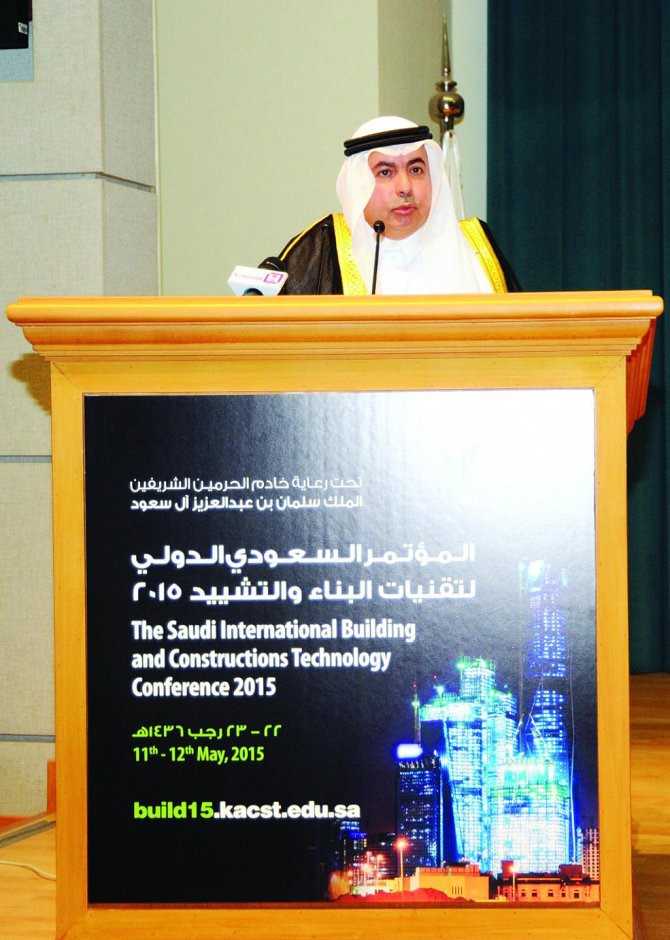
His Royal Highness Prince Dr. Turki bin Saud bin Mohammed Al Saud, President of King Abdulaziz City for Science and Technology, opened the Saudi International Conference on Building and Construction Technologies 2015, organized by the city at its headquarters yesterday, stressing that the building and construction sector in the Kingdom ranks second after oil in contributing to the gross domestic product. He noted that the city pays great attention to the building and construction sector by supporting scientific research and technical development in this field to meet the requirements of development and support Saudi universities in all regions of the Kingdom, in addition to establishing the National Center for Building and Construction Technology in the city to be a tributary that supports this important sector.

Prince Turki praised the technical and economic development in the Kingdom and the abundance of natural resources as one of the most important factors that led to the promotion and revitalization of this sector, which enhances the competitiveness of the Kingdom and achieves sustainable economic development in many sectors that depend on the building and construction sector, such as industry, transportation, water, energy, health, education and others.

He expressed his thanks and appreciation to the Custodian of the Two Holy Mosques King Salman bin Abdulaziz, his Crown Prince, and the Deputy Crown Prince - may Allah protect them - for the generous and continuous support that the science, technology and innovation sector receives, which resulted in many achievements in the field of supporting and implementing scientific research, planning and implementation to develop the national system for science, technology and innovation, and building national human capabilities that will contribute to realizing the vision of the Custodian of the Two Holy Mosques to build a knowledge-based economy.

For his part, the head of the scientific committee of the conference, Dr. Haitham bin Abdullah Al-Oudan, said that the conference is of vital importance as the development in the Kingdom is moving at a rapid and amazing pace, especially in the building and construction sector, as the Kingdom is the largest building and construction market in the Middle East region and is one of the fastest growing markets in the world. Al-Oudan said that the conference seeks to discuss the latest innovations and developments in building and construction technologies through several axes, namely the Saudi Building Code, where this axis will address supporting the application of the Saudi Building Code in the building and construction sector in the Kingdom and benefiting from Gulf experiences in applying requirements and requirements that take into account engineering standards for design, construction, operation and maintenance.

In its second axis, the conference will discuss green construction materials, where some unique international programs will be presented in the exploitation of natural resources and their use as applicable sustainable building materials, and the application of smart buildings in accordance with the environmental conditions of the Kingdom, indicating that the third axis is sustainable technologies in buildings, where this axis will discuss the development of environmentally friendly building and construction techniques based on the latest research and technical development and help transform buildings into environmentally friendly buildings by increasing efficiency and rationalizing energy consumption and reusing and developing construction waste, in addition to the fourth axis on the fourth axis on.


54 government and private organizations offer investment incentives to businessmen at ATM Dubai 2015      

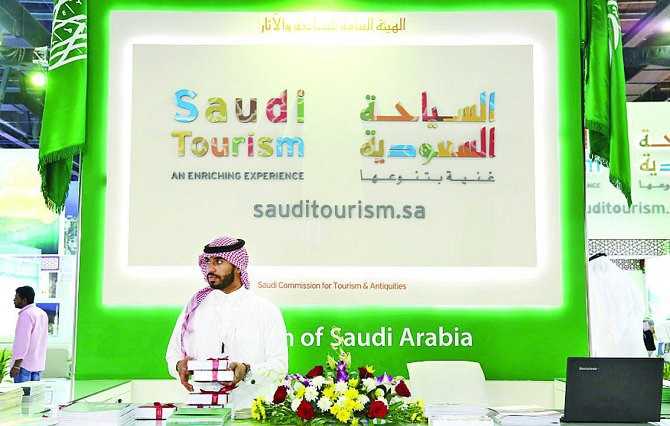
Fifty-four government and private entities from the Kingdom participated in the 22nd edition of the Arabian Travel Market 2015, which was held in Dubai recently from May 5-7 under the umbrella of the Saudi Commission for Tourism and Antiquities (SCTA), giving it a good presence and interest from visitors from different nationalities of the world. The Kingdom was represented at the pavilion by the Tourism and Antiquities Authority and a number of its partners working in the travel industry, national tourism, tour organization, tourist accommodation, and Umrah companies.

Access to Gulf markets

The Kingdom's participation aimed to highlight the Kingdom's unique cultural and tourism assets, in addition to marketing our distinctive tourist destinations to the citizens of the GCC countries. The Kingdom's pavilion will serve as a link for participating investors with their international counterparts, enable local tourism companies to reach the Gulf and other international markets, and provide the right information about the Kingdom as a tourist and economic destination to the international and Gulf media.

54 participating Saudi organizations

Hamad Al-Sheikh, Vice President for Marketing and Programs at the Saudi Commission for Tourism and Antiquities, explained that the Gulf market is one of the most important target markets, especially since citizens of the GCC countries do not need a visa to enter the Kingdom. He pointed out that the Kingdom's pavilion this year included 54 participating entities, including the General Investment Authority and the National Program for Exhibitions and Conferences, in addition to more than 25 tour operators, hotels and tourism companies that aim to market the Kingdom as a distinguished tourist destination.

Through participation, the Kingdom showcased tour packages for travel agencies, who are frequently present to purchase such packages and arrange programs for individual tourists and groups from the Gulf to visit the Kingdom, in addition to displaying a number of tourism patterns that the regions are famous for, a crafts and handicrafts pavilion, and an investment tourism destinations pavilion.

Supporting and incentivizing the tourism investment environment

During the forum, the General Authority for Tourism and Antiquities provided visitors with an overview of the Authority's role in supporting and stimulating the tourism investment environment by coordinating with financial institutions to support the financing of tourism development projects, and providing investment incentives for businessmen, and the pavilion displays part of the Authority's efforts in developing some programs related to hotel facilities, tourism guidance, the exhibition and conference industry, and national tourism human resources development.

General Investment Authority

The General Authority for Investment (GAFI) participated in a corner in the Kingdom's pavilion, in which it presented part of its role in developing and increasing local and foreign investment, proposing executive plans and rules to create the investment climate in the Kingdom, as well as monitoring and evaluating the performance of local and foreign investment, preparing studies on investment opportunities in the Kingdom and promoting it.

Media coverage of the Kingdom's participation

On the other hand, the Kingdom's participation in the Arabian Travel Market exhibition in Dubai was followed by the media and news agencies, and the pavilion has witnessed the presence of many reporters of newspapers and magazines specialized in the travel and tourism industry since the start of the exhibition activities on May 4, and CNN Arabic, Reuters, and Saudi satellite channels such as Al Akhbariya and Culture have recorded interviews with some Authority officials and participants in the Kingdom's pavilion.


During the Investment Opportunities Forum. 16 government and private entities launch dozens of investment projects worth hundreds of billions

The Investment Opportunities Forum and Exhibition 2015, organized by the Riyadh Chamber of Commerce and Industry in cooperation with the Higher Authority for the Development of Riyadh City from 15-17 Rajab 1436H at the Riyadh International Convention and Exhibition Center, represented a strategic dimension in presenting more real development projects by more than 16 government and private entities, at a time when the country is witnessing a package of radical changes in decision-making centers, which supports the outcomes and recommendations of this forum, which finds appreciable attention from officials.

Supporting construction projects

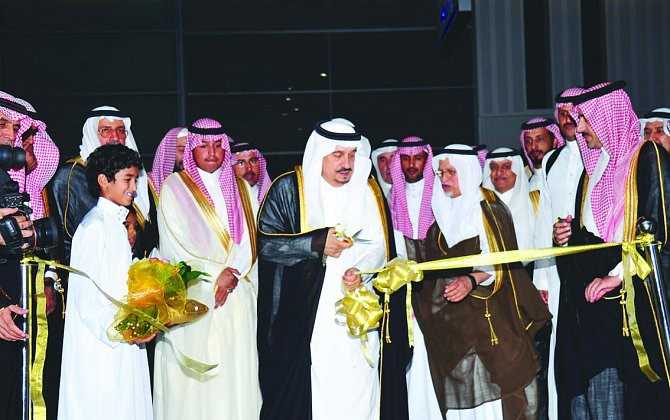
At the opening ceremony, HRH Prince Faisal bin Bandar bin Abdulaziz, Governor of Riyadh, emphasized the interest of the government of the Custodian of the Two Holy Mosques King Salman bin Abdulaziz - may God protect him - in economic development projects and the construction movement in the capital and its governorates, building a better environment for the lives of its residents and achieving more progress and well-being for them, and expressed his understanding and encouragement for efforts to drive the construction and investment system in the Riyadh region.

4821 projects at a cost of 509 billion

In his speech, the President of the Riyadh Chamber welcomed the business sector and their support for opportunities and projects that will contribute to revitalizing the investment movement and pushing economic and social development projects, in response to the directives of the Custodian of the Two Holy Mosques King Salman bin Abdulaziz - may God protect him - which emphasizes the interest in developing and advancing development projects in the Kingdom's regions, and Zamil noted the government's keenness to sponsor and support development projects, employ and invest all available capabilities and opportunities, and provide full facilities for Saudi investors to interact actively and constructively with these opportunities in order to push the march of development and economic progress.

Al-Zamil praised the efforts of the Emir of Riyadh, who is at the forefront of the efforts to develop Riyadh, where the major workshop is currently accelerating with the construction of 4821 development projects in all sectors, with a total cost of about 509 billion riyals, in addition to the opportunities that are being discussed at the forum.

Our economy inspires confidence and reassurance

For his part, the Secretary General of the Riyadh Chamber, Dr. Mohammed Al-Kathiri, stressed that holding the forum with such a distinguished attendance proves and confirms the solidity of our national economy and its high ability to face these challenges, just as it has proven before and is still able to stand firmly in the face of global economic crises and fluctuations in global oil markets and low prices, stressing that this sends a message of reassurance and confidence to every Saudi in the strength and durability of the national economy and its stability, thanks to God first, then thanks to the rational economic and financial policies pursued by our wise leadership.

21 speakers in 3 sessions and 8 workshops

The activities of the forum, which was attended by 21 speakers through three sessions and 8 workshops, witnessed an active interaction by the participants, especially young businessmen and owners of small and emerging projects, and the speakers, who represented the participating government agencies in addition to the available and ready investment opportunities, presented the atmosphere and climate of the investment environment in the Kingdom, as well as the most prominent investment projects under construction.

Credit Bank supports 27 thousand projects

In a workshop on the efforts of the Saudi Credit and Savings Bank, the speakers said that the bank has funded 27,000 projects for young entrepreneurs, small and emerging projects, and social projects, noting that it financed 1881 projects in the «emerging» and »excellence» project tracks alone in 2014 alone, with a total amount of SR 562 million, of which Riyadh accounted for 157 projects with funding of 59 million riyals.

Technology is the investment of the future

In his paper on technology investments, Engineer Yousef Al-Youssefi, Director of Investment at the Saudi Company for Development and Technical Investment «Taqnia», said that the company will soon launch its first technology-based investment funds in strategic partnership with Riyad Bank with a capital of 500 million riyals, followed by similar funds in the near term with a total capital of more than two billion riyals.

Speeches at the Forum's platforms

Brig. Gen. Attiya Al-Maliki - Ministry of Defense:

We initiated local military manufacturing and produced 5,200 spare parts, some of them for airplanes, which proved their efficiency and high quality. The ministry manages two million industrial items of spare parts and has reference standards for these items

Mohammed Al-Zahrani - Royal Commission for Jubail and Yanbu:

The authority has 80 investment opportunities, of which 50 are ready to be exploited by the private sector in the petrochemical, manufacturing and chemical industries.

M. Yazeed Alangari - Saudi Basic Industries Corporation (SABIC)“:

There are many ready-made investment opportunities in sectors such as home appliances, electrical, packaging, and construction, and SABIC's annual production is 50 million tons.

Tariq Al-Shaheeb - Saudi Industrial Estates Authority:

MODON succeeded in increasing the number of factories from 1950 to 5600 in 2014, and provided 600 equipped facilities for industry with all its facilities, and plans to establish 100 equipped industrial facilities for investors.

Ahmed bin Abdulaziz Al-Qwaiz - Saudi Industrial Development Fund:

Since its establishment 41 years ago, the fund has provided 100 billion riyals in loans to finance industrial projects.

Sari Hamad Al-Shammari - General Authority for Tourism and Antiquities:

The size of tourism investments in the Kingdom is estimated at 75-100 billion riyals, which constitutes about 2.5% of the Kingdom's GDP, and we have put forward 4 tourism projects for investment.

Engineer Mohammed Al-Omar - Saudi Electricity Company:

There are more than 18 investment opportunities in this sector, in the manufacturing of electrical equipment and materials, engineering consulting, solar energy, and more.

Saleh Al-Adhadad - Saudi Fund for Development, Saudi Exports Program:

The program provided total financing to support national exports amounting to 13 billion riyals until the end of March.


By photo and pen : Amlak ventures into Brazil's informal settlements

Brazilian informal settlements

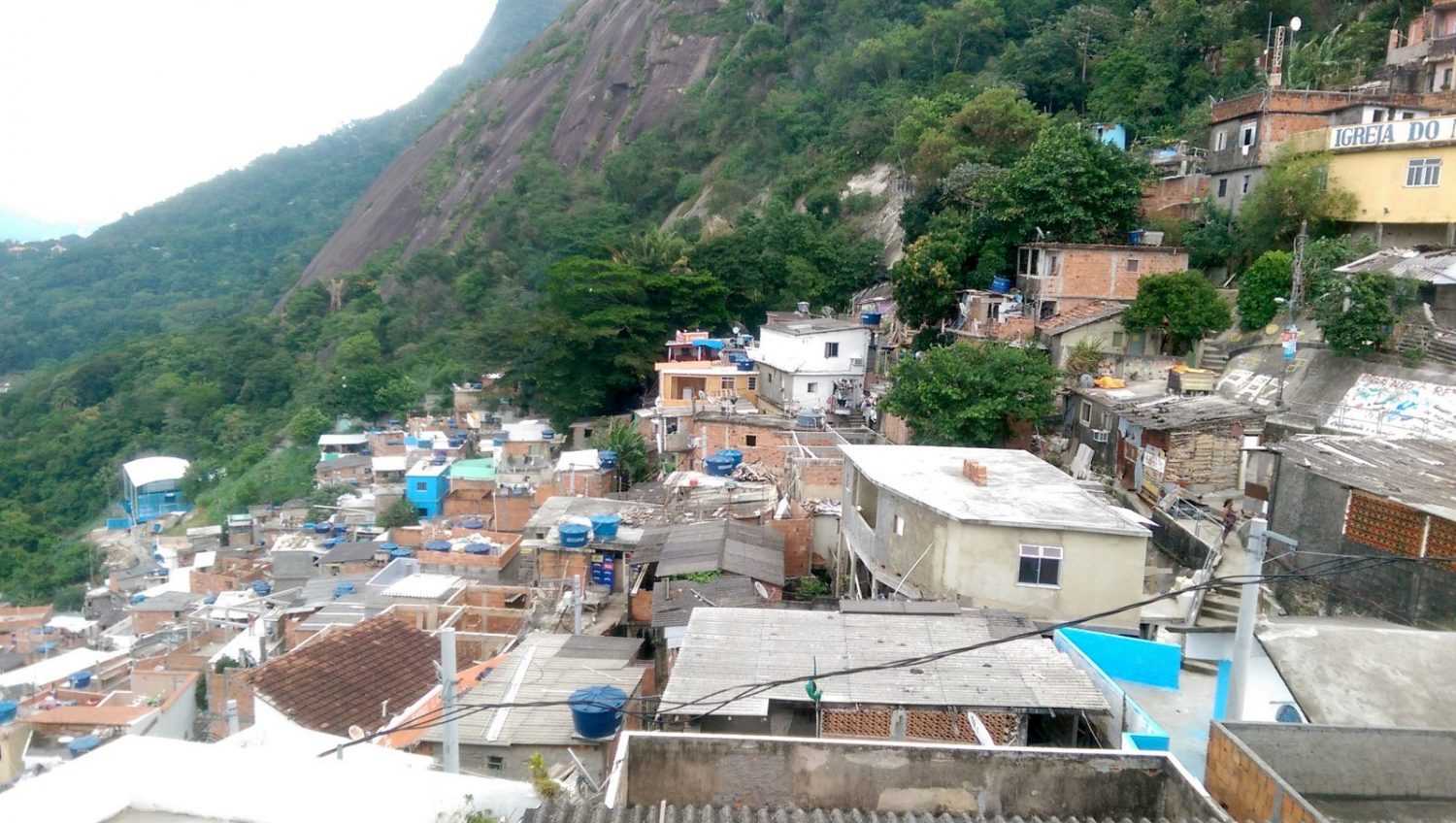
Favela is a Portuguese word for a slum  Due to the poverty in which the inhabitants of these slums live, they lack many of the requirements of modern and modern life, and the slums suffer from a lack of infrastructure. Houses are built on the surface of mountains and hills in unplanned lands by the government and are subject to removal and removal whenever the government is able to do so, and informal settlements are built from stones, cement, pieces of wood and metal remnants, and are widely spread in large cities and Brazilian capitals and large cities with strong economic movement and warm weather. Most favela residents are considered poor or below the poverty line.

The origin of the tale

Due to the economic conditions in Brazil  Many citizens have suffered from poverty and limited income and have adapted to their situation in various ways,  The number of informal settlements and illegal housing complexes has reached more than  1800 random, densely populated  The population of some of them reaches about 70,000 people, and organized crime is widespread through gangs, drug mafia and graft methods, so they live in complete isolation from the external oceans, and they have no educational institutions except for pre-school education, so ignorance and illiteracy are widespread among the population.

The Brazilian city of Rio de Janeiro is considered one of the most beautiful cities in the world due to its charming nature and the inclusion of rivers for its waist, such as Leblon Beach and Ipanema Beach, and is considered one of the most famous tourist areas in Brazil, but it is crowded on the other side with informal settlements that the residents adhere to and consider it a red line.

The beginning of the adventure

Amlak newspaper delegation headed by the editor-in-chief  Mr. Abdulaziz Al-Issa visited Brazil earlier this month to explore what informal settlements are, how they live, and what the government's role is in addressing their conditions and correcting their housing situation.  They agreed to visit government-controlled informal settlements because, as they put it, it was a risky venture.  The delegation's warning against  Any other moves.

The delegation headed to Sint Maarta, the first government-controlled slum near the capital, Brasilia, an open area with a very low risk and a population of 7,000 people. Other warnings were taken not to talk to residents and walk quickly, not to photograph in certain places, and to pay attention to the delegation's movement so that residents do not feel that someone is spying on them, or have an uncomfortable feeling of the presence of a stranger.

Government Efforts to Upgrade Informal Settlements

The delegation learned that the Brazilian government is making great efforts to control these informal settlements, and has succeeded in only 42 informal settlements, so it worked to improve their conditions and relocate some of those who wished to move to other more suitable and safer places, and connected water and electricity networks (60 amps per house) at a nominal fee and provided conveyors and electric elevators to transport residents free of charge from the bottom of the hill to the top from 6:00 am to 12:00 midnight. It also installed cable car lines and provided residents with internet access.  free of charge, and a cell phone network.

It incentivized children to study by subsidizing them with R$200 (US$67). The government approved trains and buses to transport students from the top of the mountain to schools in other regions.

It prevented the horizontal expansion of the informal settlements it controlled while encouraging vertical expansion. Government efforts went even further by building free housing for them and relocating them away from the informal settlements. This is in addition to  Infrastructure such as drainage and waterways.

Models and fusion  Peoples of the world

In Brazil in general, there are different nationalities from all nationalities and continents, and you see in one street different personalities and multiple colors from all parts of the world, due to the steady growth of the Brazilian economy and the ease of integration into society and the flexibility of conditions for those who want to invest and own property, and there are many foreigners residing in Brazil whose destination was America and Canada, but the country of «Samba» attracted them and appealed to them  for them to reside in the country. The Brazilian government allowed them to naturalize and enter the political arena through parliament.

The economics of informal settlements

The informal settlements suffer from a clear lack of infrastructure, which made their residents look for sources of livelihood in other places in neighboring cities with low wages, which made the danger of gangs and mafia dominate the public environment and practice many colors of illegal trade, with drugs at the top of the list, followed by the arms trade, which you find widespread among informal settlements residents for protection and self-defense and family.

There are no specific and recognizable types of investment in the slums except for a few scattered restaurants here and there, barbershops and buffets. The percentage of the rich among them is 40%. They are kind and friendly to the rest of the population and consider themselves a state within a state, but with no administrative organization and no political powers. Their situation was unknown or almost non-existent until US President Obama visited them on his airplane, which brought them to the attention of the government and the media. They were also visited by Queen Elizabeth of Britain and Michael Jackson, in addition to the economic dimension represented by the recent World Cup in Brazil, where Brazilian visitors and top soccer players considered the slums as a tourist destination to believe with their own eyes what they heard about human beings living in isolation from civilization  and civilization.  Some informal settlements have also been fertile ground for American movies.

Brazil's economy

Brazil's economy is one of the fastest growing economies in the world, the sixth most powerful economy in the world and the seventh largest economy by nominal GDP.  Its economy depends on the industrial boom that occurred during the past few decades, as well as oil extraction and the industrialization of its products, in addition to the agricultural sector for which Brazil is famous, especially in the cultivation of coffee and fruit, and it has a wide investment activity in the livestock sector, which increased the output of national income, in addition to the commercial aspect in which Brazil excelled thanks to the multiplicity of nationalities and nationalities, which gave it many outlets for communication with the countries of its immigrant citizens.  The active labor force includes more than 100 million Brazilians  They work in  Brazil's agricultural, industrial, commercial and service economy.

Brazilian Arabs

South America in general, and Brazil in particular, has witnessed large Arab migrations that began long ago but increased between the two world wars in the 1930s and 1940s, and the periods of the civil war in Lebanon witnessed large influxes of Lebanese to Brazil.  Brazil's Arab population  With a population of more than 10 million people, they represent a powerful economic force  Brazil, and have played important and influential roles in South American life, starting with former Argentine President Carlos Menem  which even popular singer Shakira.   

Carlos Slim (the son of Lebanese immigrants) is the richest man in Latin America and the founder of Mexico's telecommunications revolution. Joseph Safra of Lebanon, owner of the ninth-largest bank in Brazil, is the second richest Arab, with an estimated wealth of more than $11.4 billion.  The al-Mufaraj family owns the elegant Sheraton Hotel in São Paulo, where more Arabs live with their customs and traditions than in Beirut. Business tycoon Paulo Maalouf was a former governor of the city.

Amlak Team Blogs«

Money is not the only thing that gives life. !!!

This is the state of some of the residents who received the newspaper's delegation, who, despite the modesty of the place they live in, love it with a love that is buried in their hearts and we notice it in their facial expressions and gazes, and they tend to write on the walls  They draw their own satirical and expressive drawings like Yansky«  - Anonymous - who expresses thousands of people with his satirical art  He paints at night, only to surprise passersby with his paintings on the walls in the morning.

Slum dwellers enjoy  With a strong sense of belonging to their areas, you can feel the intimacy and friendliness that dominates the nature of the relationships between them, despite the lack of money and the poverty that covers the place. .

The sight of students in their uniforms and coming out of school draws the attention of passersby.  No noise, which suggests their love and implementation of school regulations.

There is a large police presence in the random streets of St. Martina, which we visited to curb crime and clear the area of suspects. However, people hear the occasional gunshot, and the presence of a dead body is not a triggering event to call the police. In the meantime, the delegation, in a spirit of adventure that only gets more exciting as we delve deeper into the facts, was able to  From visiting some of the firing sites and seeing the effects on the walls and debris  Throwing bullets.

Residents of Sint Martina say that the informal settlements here are more than eighty years old. We build our houses with great difficulty and hardship, carrying building materials, iron and cement from the bottom of the mountain to the top and ascending it through carved stairs that may reach up to 200 steps.  Dogs are seen in the streets and on top of buildings, and there are basketball courts on the roof of the mountain.

On one of Amlak's tours from one of the informal settlements, they were caught between two demonstrations, so they walked among the columns of people who clogged the streets, and were unable to leave the demonstration until after a long distance, and one of the two demonstrations was scattered.