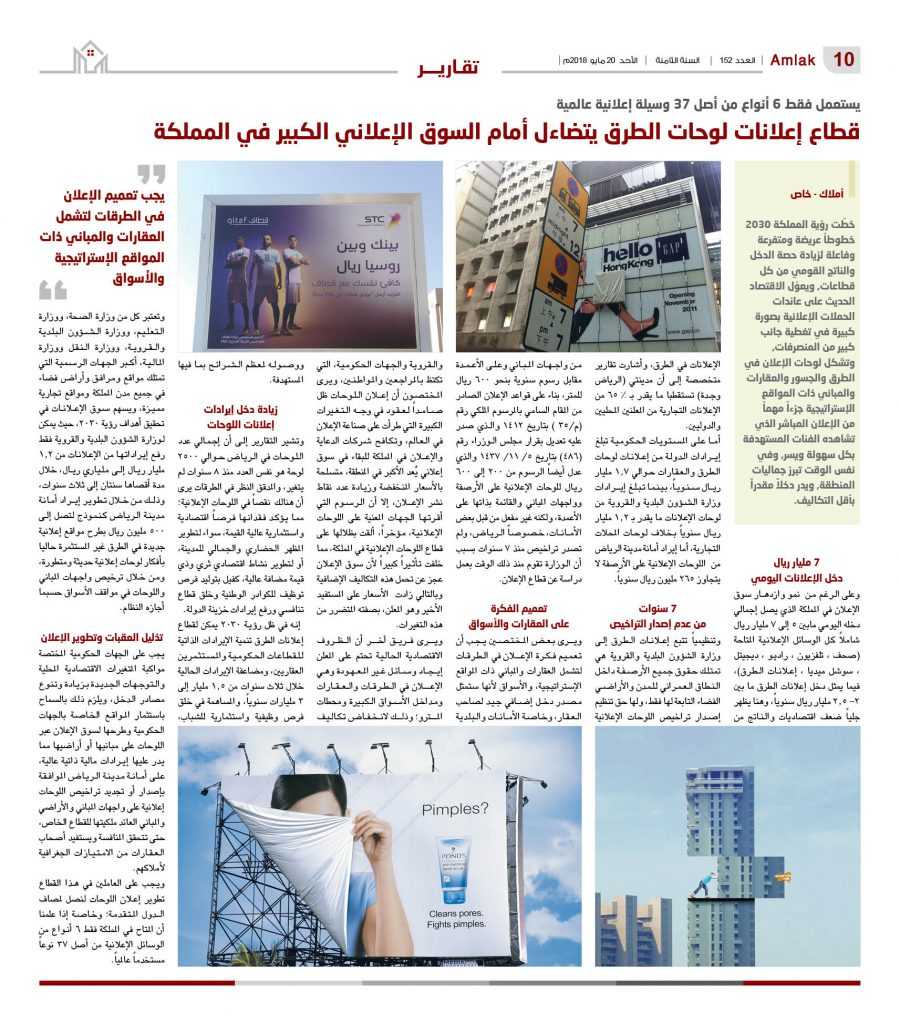

The Kingdom’s Vision 2030 has outlined broad, multifaceted, and effective strategies to increase the share of national income and output from all sectors, and the modern economy relies heavily on advertising revenue to cover a significant portion of its expenses. Billboards on roads, bridges, and strategically located properties and buildings constitute an important part of direct advertising that target audiences can easily view, At the same time, they highlight the region’s aesthetic appeal and generate substantial revenue at minimal cost.
7 billion riyals daily advertising revenue
Despite the growth and prosperity of the advertising market in the Kingdom, whose total daily revenue ranges between 5 and 7 billion riyals, including all available advertising media (newspapers, television, radio, digital, social media, and roadside advertising), with roadside advertising revenue accounting for between 2 and 2.5 billion riyals annually, clearly highlighting the weak economics and returns of roadside advertising. Specialized reports indicate that the cities of Riyadh and Jeddah attract an estimated 65% of commercial advertisements from local and international advertisers.
At the government level, state revenue from roadside billboards and real estate advertising amounts to approximately 1.7 billion riyals annually, while the Ministry of Municipal and Rural Affairs" revenue from billboards is estimated at 1.2 billion riyals annually, excluding commercial storefront signs, while the Riyadh Municipality’s revenue from sidewalk billboards does not exceed 265 million riyals annually.
7 years without issuing licenses
Regulatory authority over roadside advertisements falls under the Ministry of Municipal and Rural Affairs, which holds rights to all sidewalks within the urban boundaries of cities and their affiliated vacant lands only, and it has the right to regulate the issuance of licenses for billboards on building facades and on poles in exchange for an annual fee of approximately 600 riyals per meter, based on the advertising regulations issued by His Majesty via Royal Decree No. (M/35) dated 1412, which was amended by Cabinet Decision No. (486) dated 11/5/ 1437, which also amended the fees from 200 to 600 riyals for billboards on sidewalks, building facades, and freestanding poles; however, this has not been implemented by some municipal authorities, particularly in Riyadh, and no licenses have been issued for seven years because the Ministry has been conducting a study on the advertising sector since that time.
Extending the concept
to real estate and markets
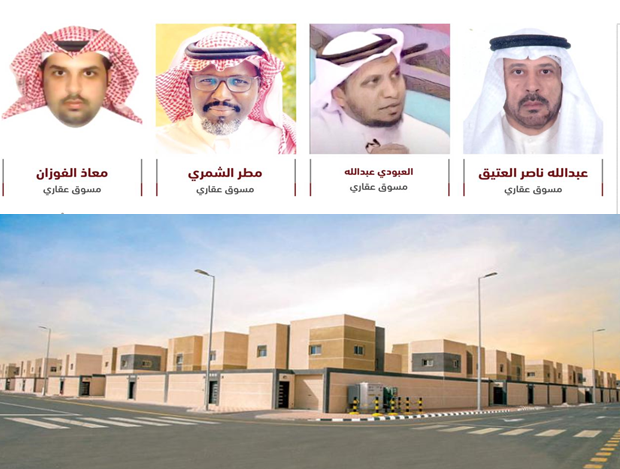
Some experts believe the concept of roadside advertising should be expanded to include real estate and buildings in strategic locations, as well as markets, as this would represent a good additional source of income for property owners, especially municipal offices, local councils, and government agencies, which are crowded with visitors and citizens. Experts note that billboard advertising has remained resilient for decades in the face of major changes in the global advertising industry, Advertising companies in the Kingdom are struggling to survive in what is considered the largest advertising market in the region, armed with low prices and an increasing number of advertising locations. However, the fees recently imposed by the relevant authorities on billboards have cast a shadow over the billboard sector in the Kingdom, which has had a significant impact because the advertising market was unable to bear these additional costs, and consequently increased prices for the end user, the advertiser, who is the party affected by these changes.
Another group believes that current economic conditions compel advertisers to find unconventional methods, such as advertising on roads, real estate, entrances to large markets, and metro stations; this is due to lower costs and the ability to reach most segments, including the target audience.
Increase in revenue from billboard advertising
Reports indicate that the total number of billboards in Riyadh is approximately 2,500, a figure that has remained unchanged for the past 8 years. A closer look at the streets reveals a shortage of billboards; this confirms that they are missing out on high-value economic and investment opportunities, whether for developing the city’s cultural and aesthetic appearance or for"Apple-converted-space"> a shortage of billboards; this confirms the loss of high-value economic and investment opportunities, whether for enhancing the city’s cultural and aesthetic appearance or for developing a thriving economic sector with high added value, capable of generating employment opportunities for national talent, creating a competitive sector, and increasing state revenue.
Under Vision 2030, the roadside advertising sector can increase the self-generated revenues of government sectors and real estate investors, and double current revenues within three years from 1.5 billion to 3 billion annually, while contributing to the creation of job and investment opportunities for youth. The Ministry of Health, the Ministry of Education, the Ministry of Municipal and Rural Affairs, the Ministry of Transport, and the Ministry of Finance are the largest government agencies that own sites, facilities, and vacant land in all cities of the Kingdom, as well as prime commercial locations. The advertising market contributes to achieving the goals of Vision 2030, as the Ministry of Municipal and Rural Affairs alone can increase its advertising revenue from 1.2 billion riyals to 2 billion riyals within a maximum of two to three years, This can be achieved by developing the revenue of the Riyadh Municipality as a model to reach 500 million riyals by introducing new advertising sites on currently underutilized roads with modern and advanced billboard concepts, and by licensing building facades and billboards in market parking lots as permitted by the regulations.
Overcoming Obstacles and Developing Advertising
Competent government agencies must keep pace with local economic changes and new trends by increasing and diversifying sources of revenue, which requires allowing the investment of government-owned sites and offering them to the advertising market through billboards on their buildings or land, thereby generating high self-generated revenue. The Riyadh Municipality must approve to issue or renew licenses for billboards on the facades of buildings and on land and buildings owned by the private sector, so that competition is achieved and property owners benefit from the geographical advantages of their properties.
Those working in this sector must develop billboard advertising to reach the level of developed countries, especially considering that only 6 types of advertising media are available in the Kingdom out of the 37 types used globally.