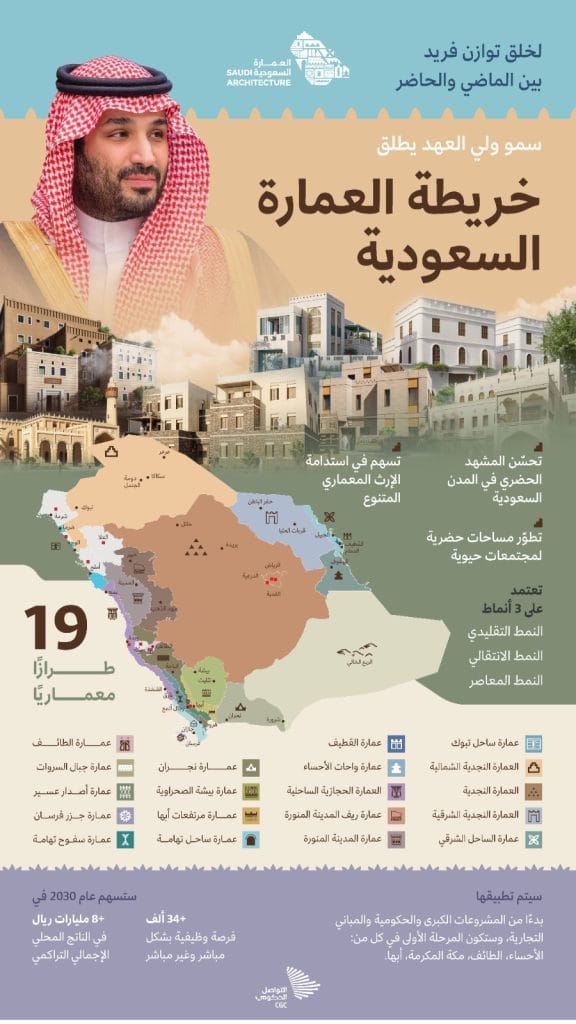

Cities in Saudi Arabia are undergoing an unprecedented urban transformation, redefining them with an identity inspired by their cultural roots and local environment, as part of the Saudi Architecture Map project, which presents 19 architectural styles inspired by the Kingdom's geographical and cultural diversity. The Saudi Architecture Map is important because of its cultural and geographical diversity, and in the long term it will shape the development of sustainable urban cities in harmony with their local nature.
The Saudi Architecture Project
is an integrated urban concept that recognizes the authentic and diverse architecture in different regions of the Kingdom, and promotes it through design guidelines that achieve a balance between originality and modernity, and contribute to providing contemporary architectural solutions that reflect the aesthetic and heritage values of the Kingdom, to develop a modern urban environment in the local character.As an embodiment of urban identity, the map comes as one of the national projects that redefine the features of cities in the Kingdom, and the details of life within a contemporary architectural character based on people and place, to embody the national identity and the spirit of each region.
19 different architectural styles
The map is based on 19 architectural styles that have been carefully selected to match the nature and culture of each region, forming an extension of the local environment and a mirror that reflects geographical and cultural diversity, and provides flexible options that meet a wide range of desires and suit different lifestyles, including Najdi architecture, <a href="https://amlak.net.Northern Najdi architecture, Tabuk coastal architecture, Medina architecture, Medina countryside architecture, Hejazi coastal architecture, Taif architecture, Sarawat Mountains architecture, Asir desert architecture, Tihama foothills architecture, Tihama coastal architecture, Abha highlands architecture, Jar Farsan architecture, Bisha desert architecture, Najran architecture, Ahsa oasis architecture, Qatif architecture, East Coast architecture, and Eastern Najdi architecture.
Najdi architecture, Najdi desert architecture, Ahsa oasis architecture, Qatif architecture, East Coast architecture and Eastern Najdi architecture.
Effective economic contribution
The map is based on flexible design guidelines that are divided into three main styles: traditional style that preserves the details of heritage architecture, transitional style that blends authenticity and modernity, and contemporary style that offers modern solutions inspired by the local character. The Saudi Architecture Map is expected to have an economic, social and cultural impact, with an estimated contribution of more than 8 billion riyals to the cumulative GDP and more than 34,000 direct and indirect job opportunities by 2030, with an active role in supporting the tourism sector by offering unique cities with attractive architectural character.
Saudi Architecture is launching in its first phase in four major cities, Makkah, Al-Ahsa, Taif and Abha, as the first models for the application of authentic urban models to be generalized later in the rest of the Kingdom. Within the implementation plan, "Saudi Architecture" relies on integrated partnerships with government agencies, real estate developers and engineering offices, and offers, through the Saudi Architecture Support Center, engineering design studios and design review, in addition to training workshops to qualify national competencies in the fields of design and engineering. Saudi architecture is an important tributary in promoting national identity and achieving sustainable development through the adoption of local building materials and design solutions that suit the requirements of the times, as well as a pillar to enrich national culture and the artistic and creative scene, through cities that reflect the Kingdom's heritage and interact with its environmental character.
Saudi Architecture is an important component of the Saudi Architecture program.
The design guidelines for Saudi architecture balance quality and sustainability without increasing construction costs, rely on flexible designs that do not impose costly restrictions, making them applicable to government, commercial and residential projects without burdening owners and developers, and enhance the attractiveness of cities through urban environments that are inspired by the local character. This is reflected positively on the national economy by increasing the number of visitors and tourists, stimulating tourism and hospitality-related sectors, stimulating economic growth, encouraging investment in cities in the Kingdom, and contributing to raising the cumulative GDP.
The Saudi Architecture Map is an integrated national project to develop an urban identity, through architectural models inspired by the culture of each region, and this initiative contributes to building sustainable cities that reflect the natural and cultural diversity of the Kingdom and improve the quality of life in accordance with the objectives of the Kingdom's Vision 2030.
Saudi architecture emphasizes its role in enhancing the national identity within the urban landscape and achieving urban development in line with the requirements of the times, including providing an integrated living environment for residents and a rich experience for visitors that highlights the unique cultural and architectural heritage of the Kingdom, so that its cities are a living mirror of its values and ancient history.
The initiative contributes to building sustainable cities that reflect the natural and cultural diversity of the Kingdom and improve the quality of life in accordance with the objectives of the Kingdom's Vision 2030.
The Saudi Architecture Map is a national project developed in partnership with the Ministry of Municipalities and Housing, the Saudi Development Authorities Support Center, and the Quality of Life Program, and with the support of multiple government and engineering entities, to embody architectural styles inspired by the culture and environment of each region and contribute to the formation of a unique urban identity that reflects the spirit of place and people.