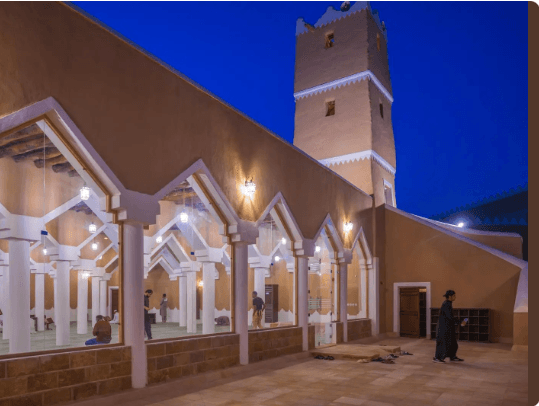

في إطار الجهود الوطنية الرامية إلى العناية بالمساجد التاريخية والحفاظ على هويتها المعمارية الأصيلة، يحظى مسجد العودة في محافظة الدرعية باهتمام خاص بوصفه أحد المعالم الدينية والتراثية البارزة في منطقة الرياض، لما يمثله من قيمة تاريخية ومكانة اجتماعية متجذرة في ذاكرة أهالي الحي.
ويقع مسجد العودة في حي العودة بمحافظة الدرعية، على الضفة الغربية لوادي حنيفة، على الطريق المؤدي إلى سد العُلب، ويتوسط الحي ليشكّل الجامع الرئيس لأهله، إذ لا يوجد فيه مسجد سواه. ويُعد المسجد من أقدم المساجد التراثية في المنطقة، حيث ارتبط بنشأة الحي وتطوره العمراني والاجتماعي عبر العقود.
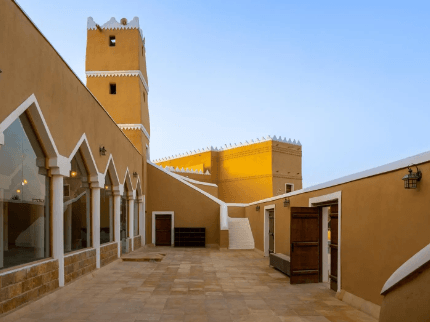
وكان المسجد في بنائه الأول مشيّدًا بالطين، ومكوّنًا من عدة أروقة تشكّلت بعقود مثلثة من الحجارة ترتكز على أعمدة حجرية، وفق النمط السائد في عمارة المساجد التقليدية في منطقة نجد، وتعلو مدخله الجنوبي مئذنة مربعة الشكل، إضافة إلى مدخل آخر من الجهة الشرقية، فيما كان جداره الشمالي ملتصقًا بالمساكن المجاورة، ويطل جداره الغربي المصمت، الذي يتوسطه المحراب، على ساحة صغيرة تفتح عليها مجموعة محدودة من المساكن.
وشكّل المسجد على مدى سنوات طويلة جامع الحي الذي تُقام فيه صلاة الجمعة، ويخطب فيه الشيخ عبدالعزيز السياري، وبعد أكثر من ثلاثين عامًا، أُعيد بناؤه باستخدام الخرسانة والمواد الحديثة، وأُجريت توسعات إضافية على سطحه لاستيعاب أعداد المصلين في صلاة الجمعة والقادمين من أحياء الدرعية الأخرى، من خلال إنشاء قاعة من الحديد وألواح الصاج المموجة، ما أثّر في المشهد البصري للمسجد والمنطقة المحيطة به.
ورغم أن معظم المساكن الطينية في الحي قد أصبحت اليوم بين مهدّم أو متضرر أو أُعيد بناؤه بمواد حديثة، فإن المسجد لا يزال عامرًا بالمصلين، وشُيّد المسجد على الطراز النجدي السعودي، وخضع لعدة عمليات ترميم متعاقبة استُخدمت فيها تقنيات البناء بالطين والمواد الطبيعية بما يتناسب مع البيئة المحلية والمناخ الصحراوي الحار.
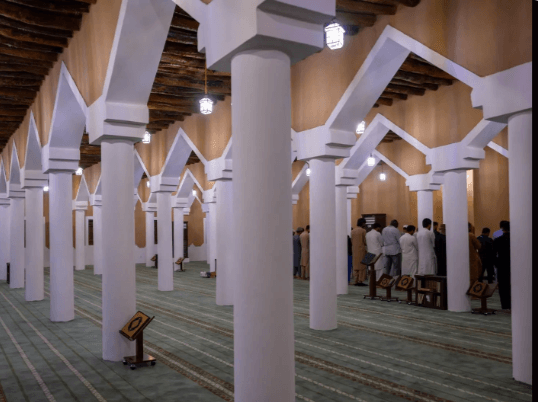
وفي آخر عملية تطوير، ضمن مشروع الأمير محمد بن سلمان لتطوير المساجد التاريخية، جرى توسيع مساحة المسجد من 794 مترًا مربعًا إلى 1,369.82 مترًا مربعًا، كما ارتفعت طاقته الاستيعابية من 510 مصلين إلى 992 مصلّيًا، بما يعزز دوره الديني والاجتماعي، ويحافظ في الوقت ذاته على طابعه المعماري الأصيل.
ويعمل مشروع الأمير محمد بن سلمان لتطوير المساجد التاريخية على تحقيق التوازن بين معايير البناء القديمة والحديثة بطريقة تمنح مكونات المساجد درجةً مناسبةً من الاستدامة، وتدمج تأثيرات التطوير بمجموعة من الخصائص التراثية والتاريخية، في حين تجري عملية تطويرها من قبل شركات سعودية متخصصة في المباني التراثية وذوات خبرة في مجالها، مع أهمية إشراك المهندسين السعوديين للتأكد من المحافظة على الهوية العمرانية الأصيلة لكل مسجد منذ تأسيسه.
وينطلق المشروع من أربعة أهداف إستراتيجية، تتمثّل في تأهيل المساجد التاريخية للعبادة والصلاة، واستعادة الأصالة العمرانية للمساجد التاريخية، وإبراز البعد الحضاري للمملكة العربية السعودية، وتعزيز المكانة الدينية والثقافية للمساجد التاريخية، ويُسهم في إبراز البُعد الثقافي والحضاري للمملكة الذي تركز عليه رؤية المملكة 2030 عبر المحافظة على الخصائص العمرانية الأصيلة والاستفادة منها في تطوير تصميم المساجد الحديثة.