
While the construction sector in Saudi Arabia is witnessing accelerated activity driven by major urbanization projects, the latest data reveals continued pressure on construction costs, as construction material prices are no longer the only determining factor in the cost of projects, but other elements - mainly labor and energy - have become the most influential player in the cost equation, reflecting a clear shift in the spending structure within the construction sector.
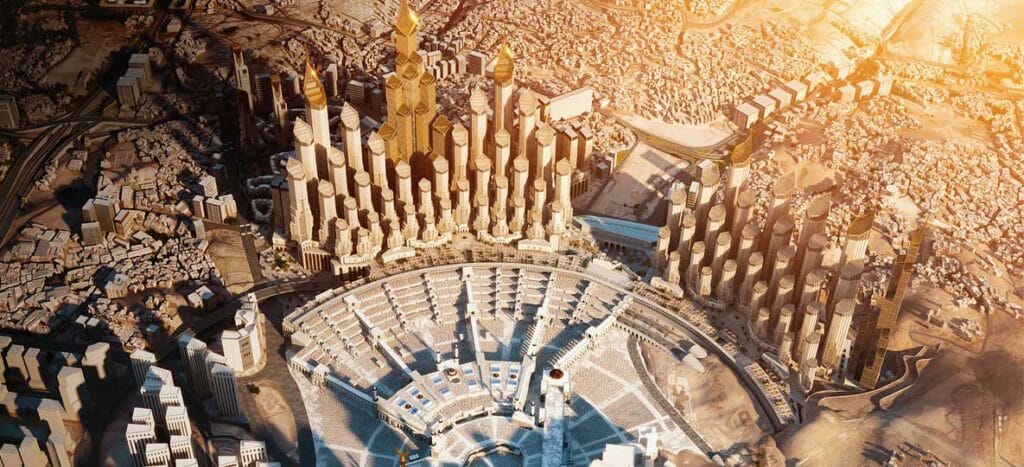
The construction sector in Saudi Arabia is experiencing accelerated activity driven by major construction projects and urbanization.
Year-on-year rise in construction cost index
According to data from General Authority for Statistics, Saudi Arabia's construction cost index rose by 1.4% during February 2026 compared to the same period in 2025, and the index rose to 102.5 points according to the base year 2023, compared to 101.1 points in February last year, continuing the upward trend that started gradually during 2025 and continued at the beginning of the current year.
The Construction Cost Index is a statistical tool that measures changes in the prices of an integrated set of construction elements, including materials, services, labor, equipment and energy, and is widely used by economic planners and researchers to assess construction sector trends and their effects on economic development.
The Construction Cost Index is widely used by economic planners and researchers to assess trends in the construction sector and its effects on economic development.
Upward trajectory since early 2025 This trajectory reflects a state of relative stability in the market, as increases came gradually rather than sharply, indicating accumulated cost pressures rather than sudden price shocks.
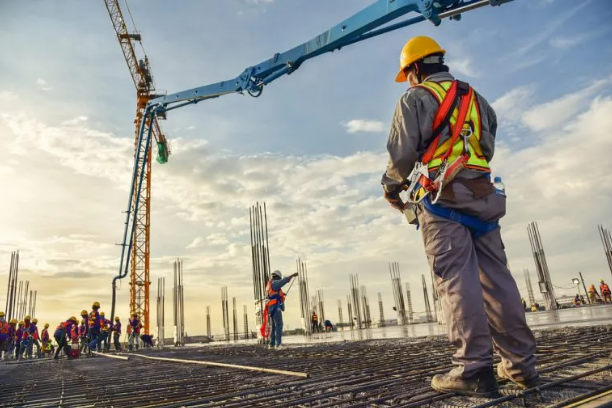
Labor Leads Cost Rising Factors The year-on-year increase in construction costs was mainly driven by higher labor costs, which recorded a growth of 2.8% compared to February 2025, becoming the most influential factor in the rise of the overall index.
In contrast, prices of basic materials - which account for about half of the index's weight at 48.5% - remained almost stable, recording a slight increase of only 0.2%, which contributed to limiting the acceleration of the overall increase in construction costs. In other words, raw materials are no longer the main driver of price increases as in previous years, but rather the pressure has shifted to operational and execution elements.
Reading the components of the index More recent projects have relied more heavily on specialized equipment and energy-intensive operation.
Residential sector leads the rise The data showed that the residential sector, which accounts for the largest share of construction activity with a weight of 77.5%, recorded a year-on-year increase in costs by 1.4%.
Faster growth in the non-residential sector
Material Stability Limits Construction Inflation Acceleration Moderate increase in the index also indicates that the sector continues to grow at a balanced pace, without indications of sharp rises that may negatively affect the sustainability of projects.
The reading of the index development over the past months indicates a relatively stable growth path, starting 2025 at approximately 101 points, before moving gradually during the year with successive slight increases. The index continued to rise at a limited but steady pace until the end of the year, reaching 101.9 points in December 2025, then recording a relatively larger jump in January 2026 at 102.4 points, before continuing to rise to 102.5 points in February.
This trajectory reflects a state of relative stability in the market, as increases came gradually rather than sharply, indicating accumulated cost pressures rather than sudden price shocks.
The year-on-year increase in construction costs was mainly driven by rising labor costs, which recorded a growth of 2.8% compared to February 2025, becoming the most influential factor in the overall index rise.Equipment and machinery rental costs rose by 1.9%, while energy costs recorded the largest growth rate among the various components at 3.0%, reflecting the increased operational burdens associated with project implementation.
In other words, raw materials are no longer the main driver of price increases as in previous years, and the pressure has shifted to operational and execution elements.
When analyzing the components of the index, it is clear that basic materials, despite having the largest weight in the index, recorded a very limited change, indicating relative stability in the prices of major construction inputs.
In contrast, labor accounted for almost a third of the index weight, and with its cost rising at a higher pace than the rest of the components, this was directly reflected in the overall index. Increasing equipment and energy costs - despite their lower weights - also contributed to the index's upward trend, especially as modern projects rely more heavily on specialized equipment and energy-intensive operation.
The data showed that the residential sector, which accounts for the largest share of construction activity with a weight of 77.5%, recorded a year-on-year rise in costs of 1.4%. This growth came as a result of an increase in labor costs by 2.7%, along with higher equipment and energy costs, while basic material prices remained almost stable with a slight increase of 0.3%.
This reflects the continued strong demand for residential projects, especially in light of housing programs and urbanization, which increases the demand for labor and construction-related services.
The non-residential sector recorded a relatively larger increase of 1.5% year-on-year, driven by a higher increase in labor costs of 3.0%, as well as higher equipment and energy costs.Although this sector accounts for a lower weight in the overall index compared to the residential sector, the higher pace of growth indicates increased activity in commercial, service and infrastructure projects, which typically require specialized equipment and higher labor intensity.
One of the highlights of the February 2026 data is the relative stability of basic material prices in both the residential and non-residential sectors. This stability has played a pivotal role in curbing the rise in overall costs, as had materials recorded significant increases in parallel with labor and energy, the index would have seen a much larger jump.
This suggests that current pressures on the construction sector are more related to operational factors than to supply chains or raw material prices.
The data reveals a gradual shift in the construction cost structure within the Kingdom, with execution and operating costs - not just materials - becoming the most influential element in project pricing. This may prompt developers and contractors to re-evaluate pricing models and manage human and technical resources to contain future costs.
The moderate increase in the index indicates that the sector continues to grow at a balanced pace, without indications of sharp rises that may negatively affect the sustainability of projects, which reinforces expectations that construction activity will continue on a stable path in the coming period.