
في إطار التحول الشامل الذي تقوده رؤية السعودية 2030، يبرز قطاع الإسكان والعقار كأحد الركائز الأساسية لتحقيق الاستقرار الاجتماعي وتعزيز النمو الاقتصادي، حيث يعكس تطور هذا القطاع حجم التقدم في تمكين الأسر السعودية وتحسين جودة الحياة، وفق ما ورد في التقرير السنوي للرؤية لعام 2025.
ويشهد قطاع الإسكان والعقار في المملكة تحولًا متسارعًا يعكس توجهًا استراتيجيًا واضحًا نحو تحقيق الاستقرار السكني ورفع نسب التملك بين المواطنين، وذلك وفق التقرير الذي استعرض أبرز المنجزات والتطورات في هذا القطاع الحيوي.
زيادة المعروض السكني
ويشير التقرير إلى أن المعروض المتزايد من الوحدات السكنية أسهم في تلبية احتياجات المواطنين، ما عزز من استقرارهم الأسري والاجتماعي، ومنحهم فرصًا أوسع للعيش والعمل في بيئات متوازنة. كما أكد على أهمية تملك المسكن باعتباره أحد الركائز الأساسية للاستقرار، إلى جانب دوره في تعزيز الانتماء وتحسين جودة الحياة.
وفي هذا الإطار، يوضح التقرير أن الجهات المعنية عملت على إطلاق مبادرات نوعية لتوفير خيارات سكنية متنوعة بأسعار مناسبة، مدعومة بحلول تمويلية ميسرة، إلى جانب تطوير الأنظمة والتشريعات التي تسهم في رفع كفاءة السوق العقاري وتحقيق التوازن بين العرض والطلب. كما تم التركيز على تحفيز المطورين العقاريين، وتوفير الأراضي المناسبة للبناء، وتحسين بيئة الاستثمار، وهو ما انعكس في نمو المشاريع السكنية وارتفاع نسب التملك.
تطورات تنظيمية في القطاع العقاري
ويستعرض التقرير سلسلة من التطورات التنظيمية التي شهدها القطاع منذ عام 2016، حيث تم إطلاق منصة جود الإسكان، تلاها في عام 2017 تأسيس الهيئة العامة للعقار وإطلاق برنامج سكني. وفي عام 2018، أُطلقت خدمة “وافي” لتنظيم البيع على الخارطة، إلى جانب برنامج الإسكان التنموي تحقيقًا لرؤية السعودية 2030، ومنصة “إيجار” لتنظيم السوق العقارية وتوثيق العقود.
كما يوضح التقرير أنه في عام 2019 تم إطلاق منصة سكني، وفي عام 2020 أُطلقت الاستراتيجية الشاملة للقطاع العقاري. وفي عام 2021، تم إقرار نظام ملكية الوحدات العقارية وفرزها وإدارتها، وإطلاق ضوابط لمعالجة تعثر مشاريع البيع على الخارطة. أما في عام 2022، فقد شهد صدور نظام الوساطة العقارية والموافقة على نظام التسجيل العيني للعقار، فيما تم في عام 2023 إطلاق النسخة الأولى من مؤشر سكني، إلى جانب إطلاق نظام المساهمات العقارية.
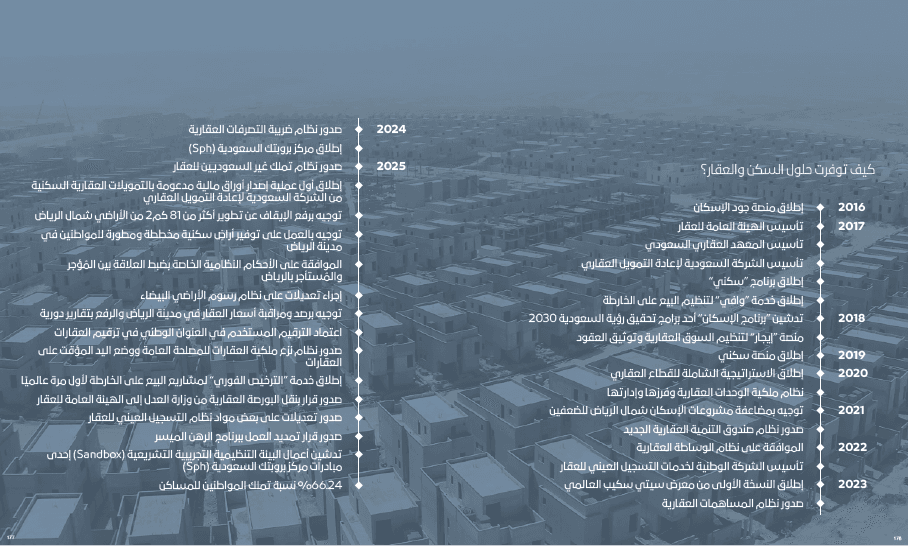
ويواصل التقرير رصد التطورات في عام 2024، حيث صدر نظام ضريبة التصرفات العقارية، وتم إطلاق مركز خدمات المطورين (Spc). أما في عام 2025، فقد شهد حزمة واسعة من الإجراءات شملت صدور نظام تملك غير السعوديين للعقار، وإطلاق آلية معالجة أوضاع الدعم السكني، وإطلاق الشركة السعودية لإعادة التمويل العقاري، إلى جانب التوجيه برفع الإيقافات لتطوير أكثر من 80 مخططًا شمال الرياض، والعمل على توفير أراضٍ سكنية مطورة للمواطنين في مدينة الرياض، والموافقة على الأحكام المنظمة لضبط العلاقة بين المؤجر والمستأجر في الرياض.
كما يتضمن التقرير عددًا من الإجراءات التنظيمية الأخرى، من بينها إجراء تعديلات على نظام رسوم الأراضي البيضاء، والتوجيه بمتابعة أسعار العقارات في الرياض والنشر بتقارير دورية، واعتماد رقم موحد للعقار في العنوان الوطني وربطه بالجهات الحكومية، إلى جانب صدور نظام ملكية العقار لغير السعوديين ووضع ضوابطه. كذلك تم إطلاق خدمة “إفراغ” الإلكترونية لتنفيذ عمليات نقل الملكية، وفرض حدود رقابية على البورصة العقارية بما يتوافق مع نظام الوساطة العقارية، وإدخال تعديلات على نظام التسجيل العيني للعقار، وإطلاق برنامج دعم المطورين، وتدشين البيئة التنظيمية التجريبية (Sandbox) لأعمال التقنية العقارية، إضافة إلى إطلاق مركز خدمات المطورين (Spc).
ارتفاع التمويل العقاري
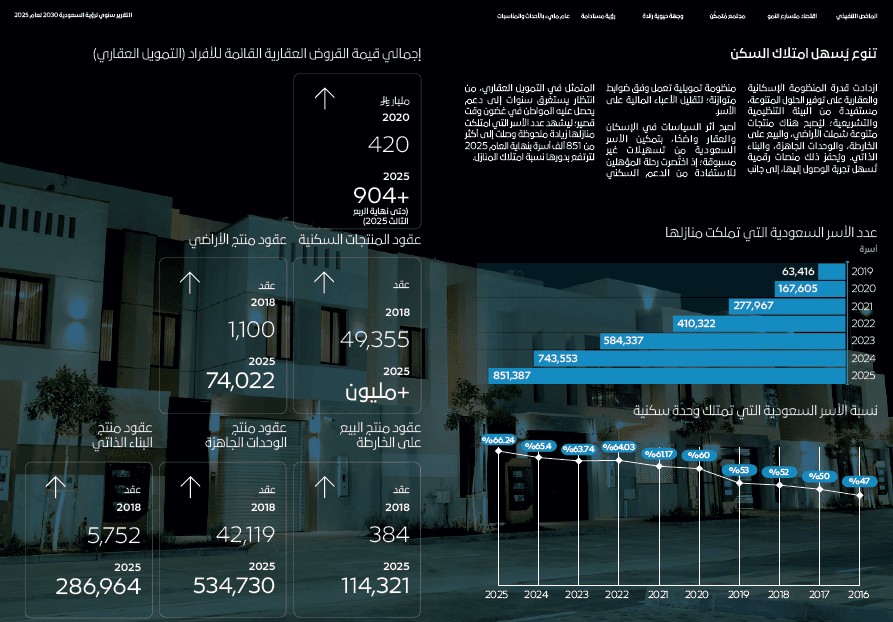
وعلى صعيد التمويل العقاري، يبرز التقرير النمو الكبير في إجمالي قيمة القروض العقارية القائمة للأفراد (التمويل العقاري)، حيث ارتفعت من 420 مليار ريال في عام 2020 إلى أكثر من 904 مليار ريال في عام 2025، بنسبة نمو تتجاوز 85% خلال خمس سنوات، مع توقعات باستمرار هذا النمو بدعم من توسع برامج التمويل وتنوعها.
كما يشير التقرير إلى التطور الكبير في العقود العقارية بين عامي 2018 و2025، حيث ارتفعت عقود المنتجات السكنية من 49,355 عقدًا إلى أكثر من مليون عقد. وارتفعت عقود منتج الأراضي من 1,100 عقد إلى 74,022 عقد، فيما زادت عقود البناء الذاتي من 5,752 عقد إلى 286,964 عقد. كذلك ارتفعت عقود الوحدات الجاهزة من 42,119 عقدًا إلى 534,730 عقد، بينما سجلت عقود البيع على الخارطة نموًا من 384 عقدًا إلى 114,321 عقد.
ارتفاع نسب تملك الأسر
وفيما يتعلق بتملك الأسر السعودية، يوضح التقرير ارتفاع عدد الأسر المالكة لمنازلها من 63,416 أسرة في عام 2019 إلى 167,605 أسرة في 2020، ثم إلى 277,967 أسرة في 2021، و410,322 أسرة في 2022، و584,337 أسرة في 2023، و743,553 أسرة في 2024، وصولًا إلى 851,387 أسرة في عام 2025.
كما سجلت نسبة تملك الأسر السعودية للوحدات السكنية ارتفاعًا تدريجيًا، حيث بلغت 47% في عام 2016، و52% في 2017، و53% في 2018، و60% في 2019 و2020، ثم ارتفعت إلى 61.7% في 2021، و64.03% في 2022، و63.74% في 2023، و65.4% في 2024، لتصل إلى 66.2% في عام 2025.
ويؤكد التقرير في ختامه أن تنوع المنتجات السكنية، التي تشمل الأراضي والوحدات الجاهزة والبناء الذاتي والبيع على الخارطة، إلى جانب الحلول التمويلية المرنة، أسهم في تمكين شريحة أوسع من المواطنين من تملك مساكنهم، بما يعزز الاستقرار الاجتماعي ويدعم مسيرة التنمية المستدامة في القطاع العقاري.
وتظهر الأرقام نموًا واضحًا في عدد المستفيدين من الحلول السكنية، إذ بلغ عددهم أكثر من 98,700 مستفيد في عام 2024، قبل أن يرتفع إلى 109,035 مستفيدًا في عام 2025، في دلالة على تسارع وتيرة التمكين السكني. كما شهد قطاع العمل التطوعي المرتبط بالإسكان توسعًا لافتًا، حيث ارتفع عدد المتطوعين المؤهلين من 17,800+ متطوع في عام 2021 إلى أكثر من 342,000 متطوع في عام 2025، بإجمالي تراكمي مليون متطوع.
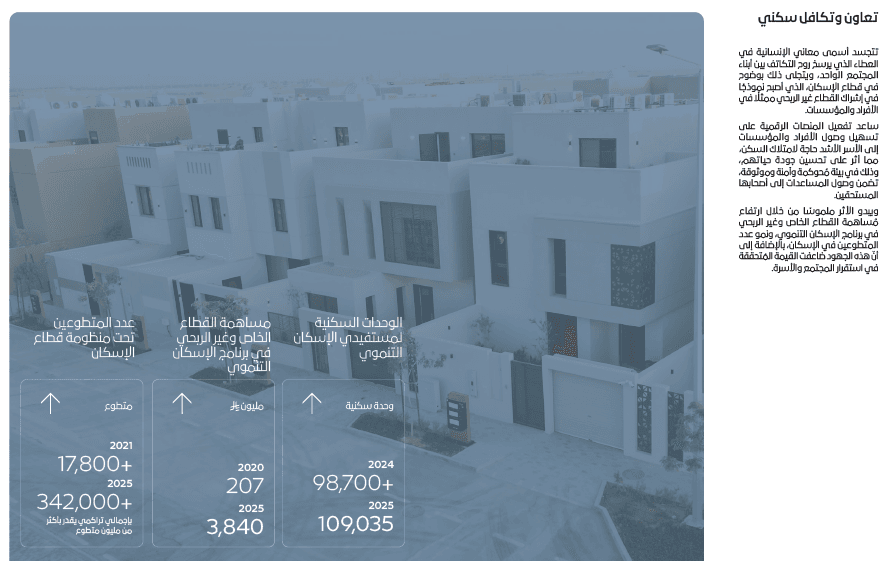
وفي سياق متصل، تعززت مساهمة القطاع الخاص في دعم منظومة الإسكان، حيث ارتفع عدد الجهات المشاركة من 207 جهات في عام 2020 إلى 3,840 جهة في عام 2025، ما يعكس تنامي الشراكة بين القطاعين العام والخاص في دفع عجلة التنمية العمرانية.
وعلى صعيد أداء القطاع العقاري، سجلت التعاملات العقارية عبر الوساطة أكثر من 470,858 عملية خلال عام 2025، فيما بلغ عدد العقود الإيجارية المبرمة عبر منصة «إيجار» 3,214,929 عقدًا في العام ذاته، مع تسجيل متوسط سعر إيجار للمتر المربع عند 106,046 ريال، ما يعكس حيوية السوق واستمرار الطلب.
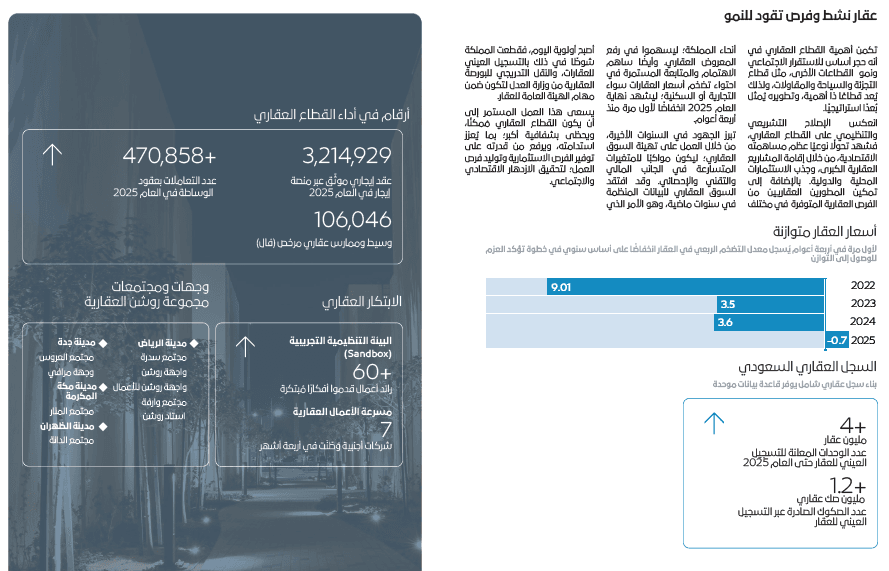
كما يبرز الابتكار كأحد المحركات الرئيسية لتطور القطاع، حيث أتاحت البيئة التنظيمية التجريبية (Sandbox) الفرصة لأكثر من 60 رائد أعمال لتطوير ابتكارات عقارية، إلى جانب إنشاء 7 شركات ناشئة خلال فترة زمنية قصيرة، في خطوة تعزز من كفاءة السوق وتدعم التحول الرقمي.
وفيما يتعلق بالمجتمعات العمرانية، شهدت المملكة تطوير عدد من الوجهات والمشروعات العقارية المتنوعة، شملت مدينة جدة ومدينة الرياض، إلى جانب مجتمعات مثل النرجس والفرسان وروشن، فضلًا عن وجهات حيوية مثل مطار الرياض، إضافة إلى مدينة الملك عبدالله الاقتصادية، ما يعكس تنوع الخيارات السكنية وتوسع الرقعة العمرانية.
ويؤكد النشاط المتزايد في القطاع العقاري دوره المحوري في دعم الاقتصاد، إذ يسهم في تعزيز الناتج المحلي، وتوفير فرص العمل، وجذب الاستثمارات، إلى جانب دعم التنمية الحضرية المتسارعة. كما يعكس هذا النشاط الطلب المتنامي على المشاريع السكنية والتجارية، بما يتماشى مع مستهدفات التنمية المستدامة.
وفيما يتعلق بأسعار العقارات، تشير البيانات إلى أنه لأول مرة منذ 4 سنوات يسجل معدل التضخم الربعي في العقار انخفاضاً على أساس سنوي في خطوة تؤكد العزم للوصول إلى التوازن، وبحسب البيانات حيث سجل التضخم العقاري 9.01 في عام 2022، ثم 3.5 في 2023، و3.6 في 2024، قبل أن تصل إلى -0.7 في عام 2025، وهو ما يعكس استقرار السوق إلى حد كبير.
أما على مستوى التوثيق والتسجيل، فقد سجل السجل العقاري السعودي أكثر من 4 ملايين عقار، إلى جانب تسجيل أكثر من 1.2 مليون قطعة عقارية، ما يعزز من الشفافية ويرسخ الثقة في السوق العقاري.