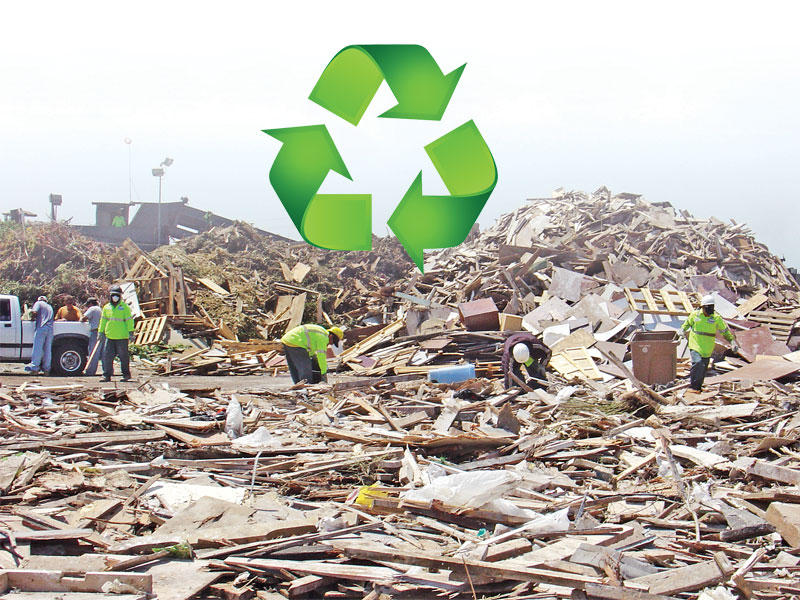

The Kingdom of Saudi Arabia is undergoing a rapid transformation in the management of construction and demolition waste, as part of clear initiatives to promote environmental sustainability and reduce waste in the construction sector by recycling this waste and using it in infrastructure projects, most notably in road paving. This initiative is part of national efforts to minimize environmental impact and make the most of available resources.
Construction and demolition waste is one of the largest sources of solid waste generated by construction, demolition, and urban development activities, which has prompted the relevant authorities in the Kingdom to adopt innovative solutions to reuse it rather than dispose of it in landfills.
Pioneering recycling projects in the road
sector in recent years, many entities in Saudi Arabia have begun implementing practical models for recycling construction and demolition waste. Among the most notable is the use of this waste—after processing—in asphalt mixtures for road paving, which represents a significant shift toward a circular economy in the infrastructure sector.
In January 2025, the General Authority for Roads announced the construction of the world’s first road to use building demolition waste in the asphalt mixes on the road surface, in collaboration with the Al-Ahsa Municipality and the National Waste Management Center (Mawan), The project involves using construction and demolition waste in the asphalt pavement layers of a road in Al-Ahsa Governorate.
In its statement, the “Roads Authority” explained that the initiative aims to promote environmental sustainability and develop more efficient infrastructure, in response to environmental challenges. It noted that the management of construction and demolition waste is part of the Kingdom’s transition plan toward a circular economy, as the Kingdom seeks to recycle 60% of this waste by 2035.
It noted that the research study conducted at the Authority’s Road Research Center included an assessment of asphalt and gravel layers containing aggregate derived from the crushing of building debris and old concrete, which was supplied from the Al-Ahsa Municipality’s environmental landfill. This fruitful collaboration with the National Waste Management Center (Mawan)) to expand the use of this type of sustainable paving.
Municipal initiatives to promote sustainability
at the city level: Regional municipalities have launched multiple initiatives to recycle construction waste and use it in road projects, where this waste is sorted, processed, and reintroduced into the base and asphalt layers, thereby helping to reduce visual pollution and curb illegal dumping.
Reports have also indicated that some projects have successfully recycled high percentages of construction waste, converting it into materials suitable for use in construction—particularly in road and infrastructure projects—thereby enhancing the sector’s efficiency and reducing operating costs.
Environmental and Economic
Dimensions Recycling construction and demolition waste helps reduce pressure on landfills, lower emissions resulting from the long-distance transport of raw materials, and reduce costs associated with traditional construction materials.
Furthermore, the reuse of these materials in road projects helps promote the sustainability of infrastructure and supports the Kingdom’s efforts to reduce the environmental impact of the construction sector, as part of the goals to transition toward an economy that is more efficient in resource management.
Toward a Circular Economy in the Construction
Sector Official policies confirm that the management of construction and demolition waste is no longer merely a process of removal or disposal; but rather has become part of an integrated system of reuse and recycling, in line with the Kingdom’s plans to improve the efficiency of waste management and maximize its utilization in development projects. As urban development projects continue to expand in the Kingdom, this sector is expected to witness further advancements in recycling technologies, particularly in the areas of roads and infrastructure, thereby reinforcing the role of sustainability as a fundamental element in the future of construction in Saudi Arabia.