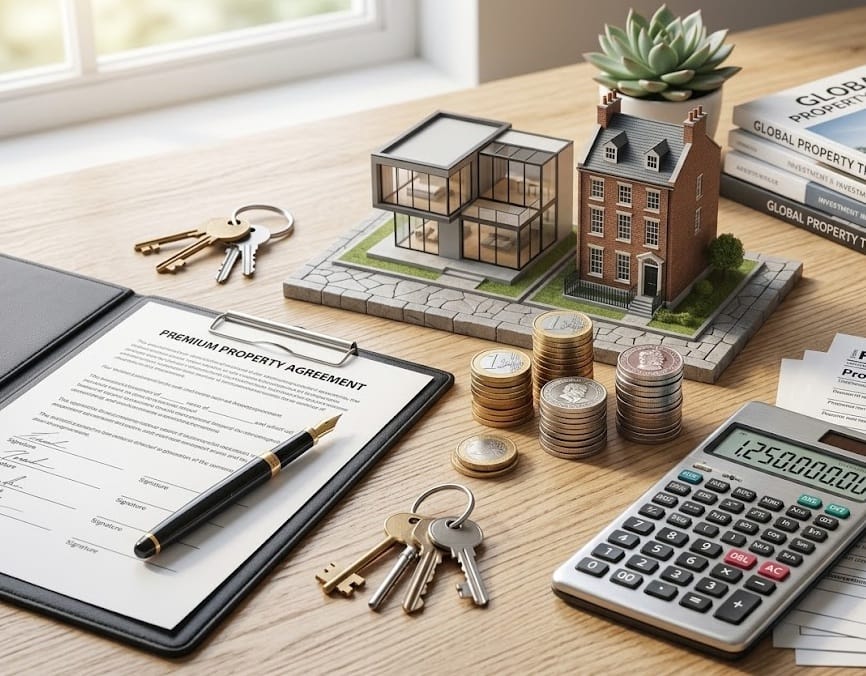

There is a defining moment for any buyer in the real estate market; a moment when the dream of stability turns into an equation numbers in the Saudi market Today, this moment is no longer an exception, but rather the norm. Buying a home is no longer an emotional decision driven by the desire for «stability», but a complex financial decision, in which details are calculated before taking the step.
This shift did not come suddenly, but is the result of accumulations witnessed by the market in recent years. Real estate financing has expanded significantly, and the ability to own property has increased, but in return, the commitment extends for twenty or thirty years. The question is no longer whether to buy or not, but how will I manage this commitment over the long term?
Buyers today treat real estate like a long-term investment, calculating the installment as a percentage of their income, comparing the interest rate, taking into account the possibilities of changing income or life commitments, and even comparing the cost of ownership with the cost of renting in the long term. These calculations were not as obvious in the past, but today they are an essential part of the thinking.
This shift is not limited to individuals, but is clearly reflected in the market as a whole. The real estate developer is no longer selling a «unit», but a repayment capacity. The design of the project, the size of the unit, and even its location are all factors that have become linked to one question: does it fit the financing capacity of the target group? The market has also become more sensitive to general economic variables, any change in interest rates is immediately reflected in demand and any pressure on income affects purchasing decisions. In other words, the real estate sector is no longer separate from the macro-economy, but has become one of the most closely linked to it.
But this shift has another more profound aspect when the real estate decision becomes a financial decision, it imposes a degree of discipline on the market, quick decisions decrease, the importance of study and planning increases, and growth becomes more related to real capacity rather than expectations. This, in itself, is an indicator of market maturity. However, the challenge remains. Not all buyers have the financial awareness to make a decision of this magnitude. And the length of the commitment may put some under pressure if economic or personal circumstances change. This is where the importance of a balance of financing that allows ownership, but does not turn into a long-term burden.
In the end, it can be said that the real estate market in Saudi Arabia is no longer what it used to be. It is no longer just a space to buy, but a commitment to manage. It is no longer a decision related to the present, but an investment that extends over many years. Between the desire to own and the calculations of money, a new generation of buyers is forming... more cautious, more aware, and perhaps more able to make the right decision.
@ArchHesham