
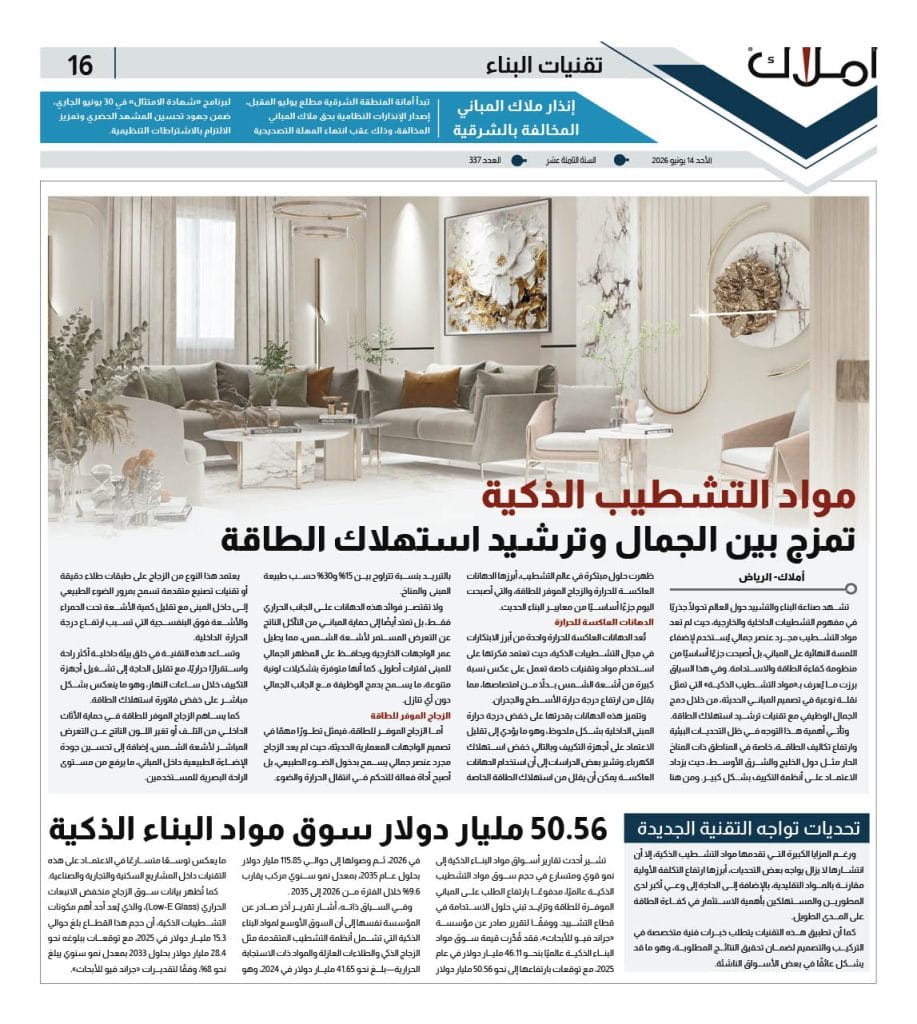
تشهد صناعة البناء والتشييد حول العالم تحولًا جذريًا في مفهوم التشطيبات الداخلية والخارجية، حيث لم تعد مواد التشطيب مجرد عنصر جمالي يُستخدم لإضفاء اللمسة النهائية على المباني، بل أصبحت جزءًا أساسيًا من منظومة كفاءة الطاقة والاستدامة. وفي هذا السياق برزت ما يُعرف بـ«مواد التشطيب الذكية» التي تمثل نقلة نوعية في تصميم المباني الحديثة، من خلال دمج الجمال الوظيفي مع تقنيات ترشيد استهلاك الطاقة.
وتأتي أهمية هذا التوجه في ظل التحديات البيئية وارتفاع تكاليف الطاقة، خاصة في المناطق ذات المناخ الحار مثل دول الخليج والشرق الأوسط، حيث يزداد الاعتماد على أنظمة التكييف بشكل كبير. ومن هنا ظهرت حلول مبتكرة في عالم التشطيب، أبرزها الدهانات العاكسة للحرارة والزجاج الموفر للطاقة، والتي أصبحت اليوم جزءًا أساسيًا من معايير البناء الحديث.
الدهانات العاكسة للحرارة
تُعد الدهانات العاكسة للحرارة واحدة من أبرز الابتكارات في مجال التشطيبات الذكية، حيث تعتمد فكرتها على استخدام مواد وتقنيات خاصة تعمل على عكس نسبة كبيرة من أشعة الشمس بدلاً من امتصاصها، مما يقلل من ارتفاع درجة حرارة الأسطح والجدران.
وتتميز هذه الدهانات بقدرتها على خفض درجة حرارة المبنى الداخلية بشكل ملحوظ، وهو ما يؤدي إلى تقليل الاعتماد على أجهزة التكييف وبالتالي خفض استهلاك الكهرباء. وتشير بعض الدراسات إلى أن استخدام الدهانات العاكسة يمكن أن يقلل من استهلاك الطاقة الخاصة بالتبريد بنسبة تتراوح بين 15% و30% حسب طبيعة المبنى والمناخ.
ولا تقتصر فوائد هذه الدهانات على الجانب الحراري فقط، بل تمتد أيضًا إلى حماية المباني من التآكل الناتج عن التعرض المستمر لأشعة الشمس، مما يطيل عمر الواجهات الخارجية ويحافظ على المظهر الجمالي للمبنى لفترات أطول. كما أنها متوفرة بتشكيلات لونية متنوعة، ما يسمح بدمج الوظيفة مع الجانب الجمالي دون أي تنازل.
الزجاج الموفر للطاقة
أما الزجاج الموفر للطاقة، فيمثل تطورًا مهمًا في تصميم الواجهات المعمارية الحديثة، حيث لم يعد الزجاج مجرد عنصر جمالي يسمح بدخول الضوء الطبيعي، بل أصبح أداة فعالة للتحكم في انتقال الحرارة والضوء.
يعتمد هذا النوع من الزجاج على طبقات طلاء دقيقة أو تقنيات تصنيع متقدمة تسمح بمرور الضوء الطبيعي إلى داخل المبنى مع تقليل كمية الأشعة تحت الحمراء والأشعة فوق البنفسجية التي تسبب ارتفاع درجة الحرارة الداخلية.
وتساعد هذه التقنية في خلق بيئة داخلية أكثر راحة واستقرارًا حراريًا، مع تقليل الحاجة إلى تشغيل أجهزة التكييف خلال ساعات النهار، وهو ما ينعكس بشكل مباشر على خفض فاتورة استهلاك الطاقة.
كما يساهم الزجاج الموفر للطاقة في حماية الأثاث الداخلي من التلف أو تغير اللون الناتج عن التعرض المباشر لأشعة الشمس، إضافة إلى تحسين جودة الإضاءة الطبيعية داخل المباني، ما يرفع من مستوى الراحة البصرية للمستخدمين.
انتشار محدود وتحديات
ورغم المزايا الكبيرة التي تقدمها هذه المواد، إلا أن انتشارها لا يزال يواجه بعض التحديات، أبرزها ارتفاع التكلفة الأولية مقارنة بالمواد التقليدية، بالإضافة إلى الحاجة إلى وعي أكبر لدى المطورين والمستهلكين بأهمية الاستثمار في كفاءة الطاقة على المدى الطويل.
كما أن تطبيق هذه التقنيات يتطلب خبرات فنية متخصصة في التركيب والتصميم لضمان تحقيق النتائج المطلوبة، وهو ما قد يشكل عائقًا في بعض الأسواق الناشئة.
نمو قوي ومتسارع
تشير أحدث تقارير أسواق مواد البناء الذكية إلى نمو قوي ومتسارع في حجم سوق مواد التشطيب الذكية عالميًا، مدفوعًا بارتفاع الطلب على المباني الموفرة للطاقة وتزايد تبني حلول الاستدامة في قطاع التشييد. ووفقًا لتقرير صادر عن مؤسسة «جراند فيو للأبحاث»، فقد قُدِّرت قيمة سوق مواد البناء الذكية عالميًا بنحو 46.11 مليار دولار في عام 2025، مع توقعات بارتفاعها إلى نحو 50.56 مليار دولار في 2026، ثم وصولها إلى حوالي 115.85 مليار دولار بحلول عام 2035، بمعدل نمو سنوي مركب يقارب 9.6% خلال الفترة من 2026 إلى 2035 .
وفي السياق ذاته، أشار تقرير آخر صادر عن المؤسسة نفسها إلى أن السوق الأوسع لمواد البناء الذكية—التي تشمل أنظمة التشطيب المتقدمة مثل الزجاج الذكي والطلاءات العازلة والمواد ذات الاستجابة الحرارية—بلغ نحو 41.65 مليار دولار في 2024، وهو ما يعكس توسعًا متسارعًا في الاعتماد على هذه التقنيات داخل المشاريع السكنية والتجارية والصناعية .
كما تُظهر بيانات سوق الزجاج منخفض الانبعاث الحراري (Low-E Glass)، والذي يُعد أحد أهم مكونات التشطيبات الذكية، أن حجم هذا القطاع بلغ حوالي 15.3 مليار دولار في 2025، مع توقعات ببلوغه نحو 28.4 مليار دولار بحلول 2033 بمعدل نمو سنوي يبلغ نحو 8%، وفقًا لتقديرات «جراند فيو للأبحاث».