
A report released by the real estate consulting firm Knight Frank revealed that the total number of hotel rooms in Saudi Arabia reached 176,260, representing luxury, ultra-luxury, and upscale hotels , of which 35% are luxury, ultra-luxury, and upscale. Estimates in the report indicate the addition of more than 105,000 new rooms, bringing hotel capacity to more than 281,500 rooms by 2030.
According to data from the World Travel & Tourism Council, the travel and tourism sector contributed approximately $178 billion to Saudi Arabia’s gross domestic product (GDP) in 2025, equivalent to 46% of the total tourism economy in the Middle East. The sector also recorded annual growth in tourism GDP of 7.4%, compared to a regional average of 5.3% and a global average of 4.1%.
During the first quarter of 2026, the Kingdom recorded 37.2 million visitors, with total spending reaching 82.7 billion riyals, according to tourism sector data. The number of domestic visitors rose by 16% to 28.9 million, while their spending increased by 8% to 34.7 billion riyals. Hotel performance data showed an average occupancy rate of 63.4% between January and April, with an average daily rate of 754 riyals and revenue per available room at 478 riyals.
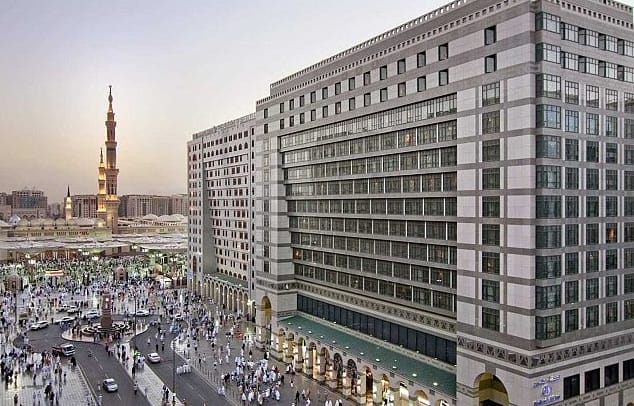
In Makkah, the average daily rate was 775 riyals, with revenue per available room growing by 4.7%, while Madinah recorded an occupancy rate of 76% with a 2.7% increase in the average daily rate. During the 2026 Hajj season, the number of pilgrims reached 1.71 million, an increase of 2.2%, including 1.55 million international pilgrims representing 165 nationalities, according to official statistics for the Hajj season.
More than 218,000 rooms and residential units are also being developed in Mecca and Medina as part of major projects, including: Ruya Al-Haram, Ruya Al-Madinah, Dar Al-Hijrah City for Pilgrims, Knowledge Economic City, Masar Mecca, and Zakhr Mecca. Knight Frank estimates that the expansion of the aviation sector—including Riyadh Air and airport expansions—along with reforms regarding foreign ownership, will boost demand for tourism andhospitality in the coming years.