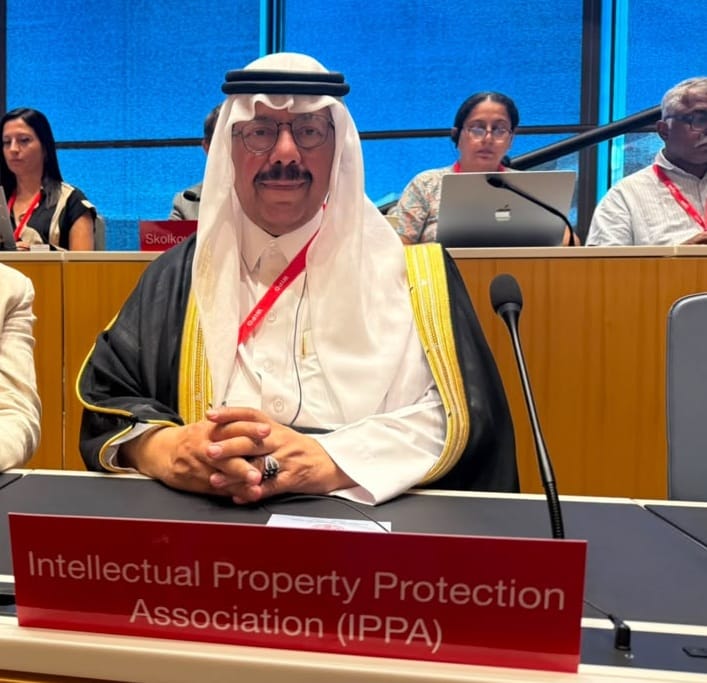

The Chairman of the Board of Directors of the Saudi Intellectual Property Protection Association, Counselor Mohammed bin Abdullah Al-Salamah, emphasized the importance of developing the international intellectual property system to strike a balance between encouraging innovation and protecting the rights of creators, calling for the expanded use of the Arabic language in the international registration services of the World Intellectual Property Organization (WIPO).
He made these remarks during a speech delivered at the 68th session of the Assemblies of Member States of the World Intellectual Property Organization (WIPO), held at the organization’s headquarters in Geneva from July 7 to 15, 2026.
Al-Salamah began his speech by congratulating the Director General of WIPO, Daren Tang, on the occasion of his reappointment, expressing his best wishes for his continued success in leading the organization and strengthening its role in keeping pace with rapid technological transformations, foremost among them artificial intelligence.
He explained that the Association for the Protection of Intellectual Property is the first civil society organization specializing in this field in the Kingdom of Saudi Arabia, and works to promote a culture of intellectual property, foster innovation, raise public awareness, and support innovators and entrepreneurs, in addition to its commitment to the principles of governance, transparency, and institutional excellence.
He noted that over the past year, the association continued to implement specialized programs and initiatives in the areas of awareness and training, with a focus on the impacts of artificial intelligence, combating intellectual property rights infringements, and strengthening cooperation with universities and entrepreneurs, based on civil society’s role in supporting the innovation ecosystem.
Al-Salamah called on the World Intellectual Property Organization (WIPO) to take practical steps to expand the use of the Arabic language in the Madrid and Hague systems, thereby reinforcing the principle of multilingualism and providing equal opportunities to benefit from international registration services, and meets the aspirations of Arab countries and Arabic-speaking users.
He also emphasized the importance of strengthening the role of non-governmental organizations accredited as observers to the WIPO, by expanding their participation in various programs and initiatives, and supporting capacity-building efforts, thereby contributing to the dissemination of a culture of intellectual property, promoting innovation, and serving the communities they represent.
In concluding his remarks, the Association’s Chairman reaffirmed its support for the role played by the World Intellectual Property Organization in promoting international cooperation and building a more efficient, comprehensive intellectual property system capable of addressing future challenges and opportunities.