- Estimates: 30% of the Kingdom's population live in inadequate housing
- High land prices hinder real estate developers to build affordable housing
- Need to launch programs and projects to develop land schemes
- Real estate sector to maintain growth levels at 5.9 % through 2017
- Government steps contribute to enhancing the Kingdom's reputation as a leading global investment destination
Government steps contribute to enhancing the Kingdom's reputation as a leading global investment destination
Private - Amlak : Ahmed Alshimi
The Middle East Monitor (MIDDLE EAST MONITOR), a British magazine specializing in financial and economic affairs, praised the strength and solidity of the Saudi economy, describing it as ”the largest Arab economy,” pointing out that housing is one of the most prominent crises facing the Kingdom, due to the high demand for housing units, driven by the rapid growth of the population and the increase in the number of expatriate workers.
<Inadequate housing.
It is estimated that the Kingdom's population has doubled since 1988, growing by more than 2%, while at the same time two-thirds of the population lacks access to affordable housing and 30% of them live in inadequate housing.
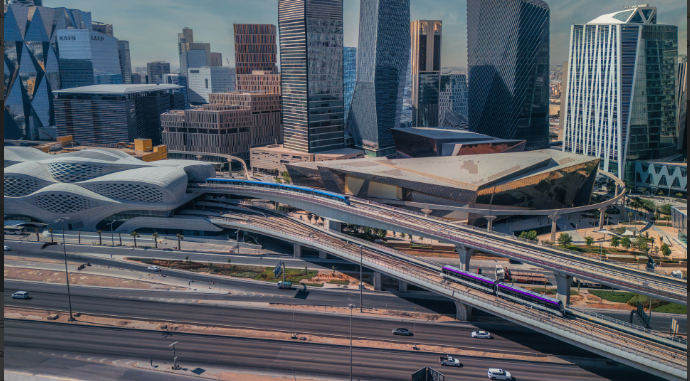
Saudi Arabia's major cities are densely populated, while some areas are sparsely populated, driving demand for housing higher in urban areas than in rural areas. About 5.2 million people live in the capital Riyadh, 20% of the total population, which is the same population rate found in Jeddah, making the latter the most populous city in the world, so the Saudi government recently announced its intention to spend about 76 billion dollars to build new homes for citizens throughout the Kingdom.
According to estimates by Jones Lang LaSalle, about 6,000 new housing units were added in the capital Riyadh during the third quarter of last year, with plans to build another 100,000 units by 2015.
60% in rented housing
In 2011, the Kingdom announced its need to build 1.6 million housing units by 2015 to meet the growing demand, and until now about 60% of the population (10 million citizens) live in rented housing, while CB Richard Ellis believes that high land prices hinder attempts by private real estate developers to build affordable housing, leading to the high cost of housing units and thus the lack of purchasing power for a wide range of citizens, especially middle and low-income people.
The Foundation added in its report: ”The inflation of residential land prices significantly excludes the possibility of low-cost housing in most regions of the Kingdom,” stressing the need for the government to establish regulatory frameworks for land trade, making prices revolve around supply and demand, instead of speculation and fictitious price increases.
The role of the Custodian of the Two Holy Mosques' directives
Experts emphasize that the directives of the Custodian of the Two Holy Mosques King Abdullah to urgently build 1,000 housing units in 10 regions of the Kingdom, in addition to his generous directives to build 500,000 units within five years at a total cost of 250 billion riyals, and his expansion of the circle of mortgage loans to reach 500,000 riyals, will undoubtedly lead to a tremendous recovery in the Saudi real estate market and limit the rise in housing prices and rents.
The Saudi government, which has pledged to spend 580 billion riyals on infrastructure projects in order to eliminate the housing supply crisis, is taking steps to encourage the Saudi real estate sector as the second largest economic sector after oil.
Improving economy and strong real estate performance
Studies and estimates indicate a remarkable improvement in the structure of the Saudi economy during the first quarter of 2013, driven by the development projects that have already begun implementation, which led to the recovery of the real estate sector, especially in Riyadh and Jeddah in terms of revenues and prices.
The strong performance of the real estate market over the past few months is explained by the growing demand, the encouraging environment for foreign and local investments, the support of the banking sector and companies to the real estate sector, in addition to the additional loan program, with the need to launch programs and projects to develop land schemes.
According to a report by Business Monitor International, these positive developments will contribute to increasing investor confidence in the Saudi real estate sector, predicting that the sector will continue to grow at 5.9 TP3T until 2017, in addition to the high annual growth rate in the construction sector.
The report added that the high pace of government spending, along with the imminent implementation of mortgage regulations and the adoption of ambitious development plans are the most important factors that will contribute to enhancing the reputation of Saudi Arabia, and Riyadh in particular, as a leading investment destination.