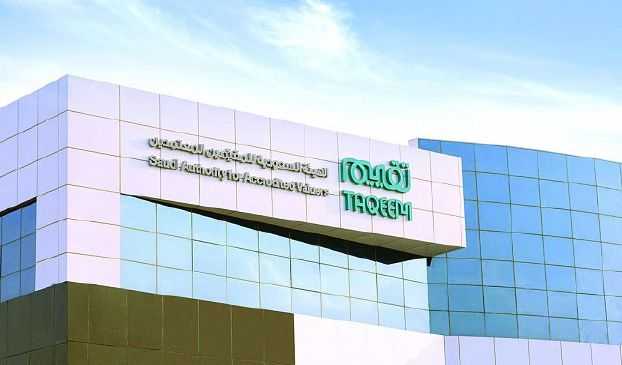

Yesterday, the Authority granted the first 35 practitioners in the field of economic facility valuation membership in the Authority’s Economic Facility Valuation Branch after they successfully completed the required courses. This comes as part of the Authority’s role in qualifying and raising the professional standards of practitioners. The Authority, in collaboration with the International Institute of Business Valuators, has offered a number of specialized courses to qualify business valuators.
In this regard, the Secretary-General of the Saudi Authority for Certified Valuers, Essam Al-Mubarak, emphasized that the Certified Valuers System has established controls and standards for the valuation profession, developed it, and raised the performance level of its practitioners. and that, for this purpose, the Authority has joined the Board of Directors of the International Institute of Business Valuators and signed an agreement with the Institute granting the Authority the status of the Institute’s exclusive academic partner in the Arab region.
Al-Mubarak noted that the Authority has conducted thirteen training courses in Riyadh and Jeddah attended by 290 trainees, and that the Authority, in collaboration with the Institute, has offered two courses in Dubai and Cairo attended by 18 trainees. As part of the Authority’s training plan for the coming year, eleven training courses will be offered, through which trainees can obtain Certified Appraiser membership in the Economic Facilities Appraisal Branch.
Al-Mubarak emphasized the Authority’s commitment to moving forward with its strategy aimed at intensifying efforts to develop and regulate the profession of economic facility valuation and to qualify practitioners in accordance with international valuation standards by offering more qualifying training coursesfor membership.
Al-Mubarak stated that this regulation will help enhance transparency and raise professional standards, as well as contribute to achieving Saudi Vision 2030 to become a leading investment powerhouse that enables and attracts numerous high-quality investments and projects contributing to economic development.
For his part, Shura Council member Dr. Fahd bin Jumaa explained that the success of an enterprise does not depend on providing residents for economic enterprises, but rather on providing the fundamental factors for their success, namely securing financing and developing its mechanisms, eliminating bureaucracy in government agencies by adopting a decentralized policy—especially since speed and efficiency have become essential in a market economy—and creating innovative projects that take into account the evolving needs of the market.
Bin Jumaa said, that the majority of small and medium-sized enterprises require significant and effective institutional foundations that respond to their aspirations and specificities so that they can survive and compete in local and international markets. Despite the efforts made on the regulatory and technical fronts, there is still a long way torequires a strategy to build multifaceted institutional frameworks, whether from governmental or non-governmental institutions, which are required to work continuously and in every way to overcome all obstacles in general and secure financing in particular, taking into account the limited capabilities of small