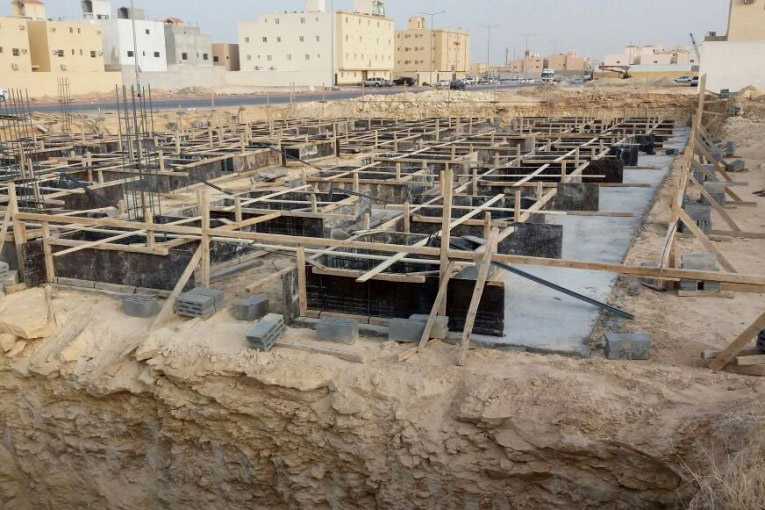

According to the Value-Added Tax (VAT) Implementing Regulations issued by the Zakat and Income Authority, certain real estate-related services are subject to tax, including any construction, demolition, conversion, reconstruction, modification, expansion, repair, or maintenance of real estate.
Property Rights
The Value Added Tax Regulations state: Real estate, according to the regulations, includes any defined area of land on which property rights, possession rights, or other rights in rem may arise, as well as any buildings or engineering structures permanently erected on land, and any fixtures or equipment that form a permanent part of, or are permanently attached to, a building, structure, or engineering work.
It further states that, for the purposes of applying the Convention and the Regulation, services related to real estate are those that affect the area of the real estate or are linked to a specific area of the real estate, and these services include, but are not limited to:
a. Granting, assigning, or relinquishing any right in the real estate.
b. Granting, assigning, or relinquishing any personal right to claim or receive any interest or right in the property.
c. Granting, assigning, or relinquishing a license to occupy the property or any contractual right exercisable on or in relation to the property, including the provision, leasing, or renting of sleeping accommodations in a hotel or similar establishment.
D. Any construction, demolition, conversion, reconstruction, alteration, expansion, repair, or maintenance of the property.
E. Services provided by real estate agents, auctioneers, architects, surveyors, engineers, and others who perform tasks and work related to real estate.
It is noted that the value-added tax is expected to take effect starting in early January 2018 at a rate of 5%.
Tax Objectives
It is worth noting that the executive regulations for the value-added tax aim to align with the unified value-added tax agreement among the Gulf Cooperation Council (GCC) states, and the Value Added Tax system in Saudi Arabia, to regulate all details of the tax’s implementation in Saudi Arabia. The scope of taxation on certain goods and services, registration rules, the handling of imports and exports, and other details have been specified, according to the newspaper «Al-Riyadh.»
The implementing regulations comprise 79 articles distributed across 12 chapters, clarifying a set of key points regarding how to register for VAT, taxable entities, exempt or zero-rated supplies, as well as numerous provisions governing the implementation of VAT in the Kingdom of Saudi Arabia.
Strengthening Procedures
Businesses of all sizes have several steps they can take to enhance their readiness for the tax, and the Authority is fully prepared to support them, This comes as the Authority seeks to ensure that businesses understand VAT and the steps required for the preparation process, which is a priority for the General Authority of Zakat and Income,» while calling on all businesses to review the implementing regulations and take advantage of the resources that have been developed.
Impact on the Real Estate Market
Many real estate professionals and experts have expressed concern about the extent to which subjecting construction, expansion, and property maintenance to VAT will impact the real estate market both now and in the future.
It should be noted that value-added tax will be implemented in the Kingdom of Saudi Arabia on January 1, 2018, as part of the unified agreement among the Gulf Cooperation Council (GCC) countries.