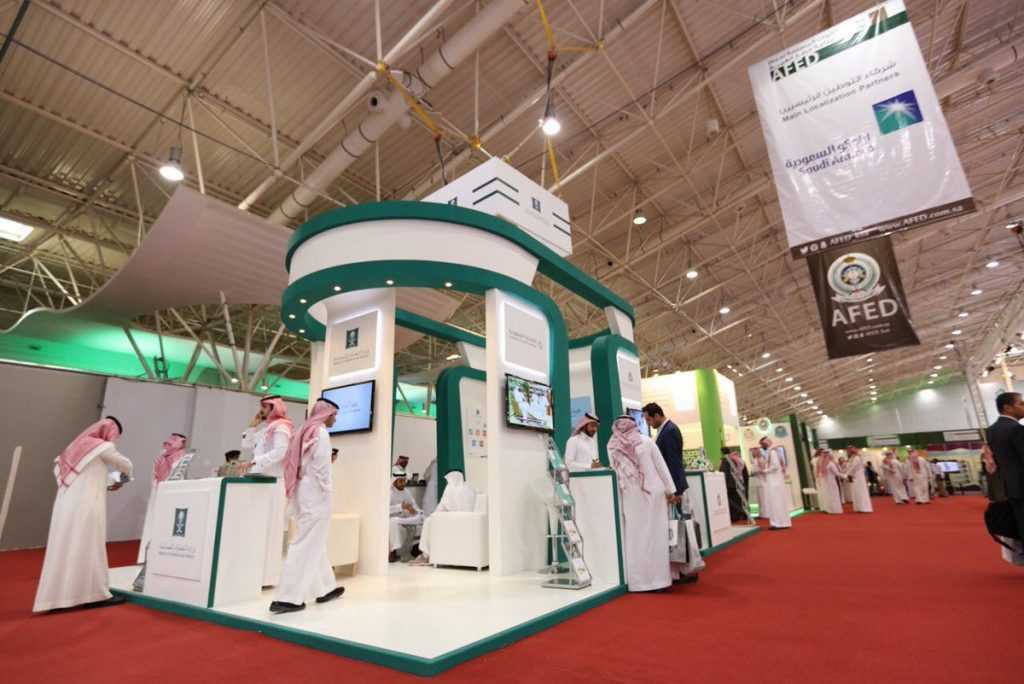

On the sidelines of the Armed Forces Exhibition to Support Local Manufacturing “AFED 2018”, an agreement was signed between Middle East Aircraft Engines Company Limited with General Electric Company and the Saudi Air Force to maintain and pack the engines of the new F15-S and F15- SA warplanes and Apache and Black Hawk helicopter engines of the T700 engine type worth more than 330 million dollars and is expected to achieve an estimated revenue of 2.6 billion riyals over the next five years.
Middle East Aircraft Engines Company Limited, one of the economic balance companies, revealed that the technology transfer agreement will create 250 to 300 jobs in the Saudi market and will achieve several benefits. Abdullah Al-Omari, CEO of Middle East Aircraft Engines Company Limited, one of the economic balance companies, revealed that the technology transfer and localization agreement will create between 250 to 300 jobs in the Saudi market, and achieve several objectives in the field of localizing the spare parts industry, equipment, training, technical and engineering support, indicating that the agreements will increase the attraction of technical graduates and engineers from universities and specialized institutes, in addition to benefiting from the expertise of the military.
Al-Omari said that the agreements will increase the attraction of technical graduates and engineers from universities and specialized institutes, in addition to benefiting from the expertise of the military. He pointed out that this step comes within the framework of localizing the military industries, especially since the Kingdom is the second largest user of these engines in the world, and constitutes approximately 45% of the support costs in the Ministry of Defense on warplanes, explaining that the company's investment of approximately 100 million riyals in 2017 to enable the company to carry out such operations in the maintenance of engines of war fighters, in addition to raising the human capacity of the company by 70%, indicating that the goal is to localize human capacity by 100%.
Amri explained that the agreement includes provisions for a lifetime license and right of concession, noting that this step comes within the framework of the localization of military industries, especially that the Kingdom is the second largest user of these engines in the world, and accounts for approximately 45% of support costs for warplanes.