Saudi Arabia’s business environment and laws are a draw for foreign investment, with the Kingdom ranking 76th out of 186 countries worldwide as one of the most attractive destinations for foreign direct investment, according to a report by the Institute of Chartered Accountants in England and Wales titled ” Economic Outlook for the Middle East: Second Quarter 2014.“
Charles Davies, Director of the Economic Forecasting Division at the Institute of Chartered Accountants, said that 2014 is a year of recovery for the global economy following several years of economic stagnation resulting from the 2008 economic crisis, noting that global GDP is expected to grow to 2.3% this year, with the pace of growth accelerating in 2015 and beyond.
Global Economies
Davis noted that stability in global economies will provide a strong boost to growth prospects in emerging markets in the Middle East—particularly in energy-dependent countries, including those of the Gulf Cooperation Council (GCC).
He explained that falling oil prices will pose a challenge to GCC countries unless their governments step up efforts to diversify their economies and develop additional export sectors.
He noted that although the report points to a slowdown in growth in emerging markets—particularly in the Gulf—increasing demand for oil from major global economies will offset this slowdown.
Export Expansion
In addition, the growing expansion of exports from Iran could lead to a decline in oil prices, which would in turn affect GDP in emerging economies whose budgets rely heavily on oil exports.
The report revealed that many Middle Eastern economies continue to rely heavily on commodity exports. It examined the volume of commodity exports—which represent a key source of revenue for Gulf countries—and their contribution to GDP.
In this regard, it noted that commodities account for more than half of total exports in the region, with commodities’ share of GDP in the Kingdom reaching 8.86% of total commodity exports.
These figures reveal the continued reliance of Gulf economies on commodity exports, which account for three-quarters of export revenues.
Saudi Arabia and Infrastructure
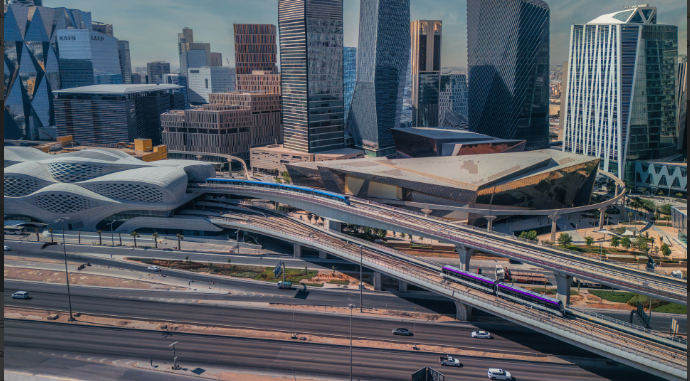
On the other hand, a recently released report indicated that the Kingdom continues to lead in terms of the scale and type of infrastructure projects, as well as in terms of the diversity of objectives and the value of investments directed toward these projects over the past several years, Published reports indicate that infrastructure project contracts in the Kingdom have exceeded $400 billion since 2008, and the value of projects currently under implementation this year is expected to exceed $61 billion. The education, real estate, transportation, and electricity sectors have been the focus of the government’s infrastructure projects, Furthermore, the volume of investments allocated to the development and expansion of infrastructure projects in the Kingdom is expected to reach more than 750 billion riyals by 2020.
Real Estate Projects
Al-Mazaya Holding Company’s weekly report noted that the pace of activity is expected to place Saudi infrastructure and real estate projects at the center of foreign countries’ plans and objectives, Market developments also indicate active movement, with China’s focus on the Kingdom’s infrastructure projects becoming a primary target for its investments in the coming period, as China moves toward implementing a number of major investment projects, foremost among which is the railway project, In addition, China is a strategic partner in the energy sector, and Saudi Arabia and Spain are moving to establish a dedicated infrastructure fund with a capital of up to $1 billion to finance a number of infrastructure projects, In addition, a $5 billion investment fund is being established by business leaders from both countries, dedicated to joint investments between the two nations.
Development of the Construction Sector
The report states that the building materials sector is currently experiencing a golden age in the region, with demand intensifying due to the investment momentum driven by infrastructure and construction projects, and it is expected that building materials factories and related suppliers will face significant market pressures that could cause disruptions and delays in the completion and delivery phases of the large-scale projects currently underway.
Development Projects
The report emphasized the importance of continuing infrastructure and development projects in the region’s countries to sustain progress, development, and global competitiveness across all fields, Al-Mazaya believes that the volume of current and projected investments presents significant investment opportunities for the banking systems of countries in the region—opportunities rarely seen elsewhere in the world. Although government support and generous spending on infrastructure projects continue, the proliferation of projects—such as airports, ports, power plants, roads, bridges, and healthcare projects—and others, creates an urgent need for multiple sources of financing to complete all planned projects and support government spending. The banking sector can benefit directly from the projects currently underway by developing its financing instruments to ensure a return on investment for these projects within short time frames, This is because estimates indicate that up to $2 trillion will be invested in infrastructure projects in the Gulf states in the coming period; consequently, the responsibility for development and modernization rests with all parties, both the government and the private sector.