
Which cities are the luckiest in terms of real estate market growth?
Abdullah Munir Al-Otaibi
In recent years, Riyadh, Jeddah, and Dammam have emerged as the three largest cities in Saudi Arabia in terms of population and economic growth. Riyadh, for example, accounts for 27.7% of the Kingdom’s population growth, followed by the Makkah region with 25.07%, and the Eastern Province with 15.01%. Economically, Riyadh alone contributes 29% to non-oil GDP, followed by the Eastern Province at 24% and the Makkah Region at 20.8% ).
These figures highlight the importance of these cities in driving the Kingdom’s economy and urban development, particularly in light of national policies aimed at diversifying the economy and strengthening non-oil sectors, which has a direct, significant, and major impact on the growth of the real estate market across all its sectors. This has been achieved through the implementation of strategic plans and a focus on implementing key factors that positively influence the real estate sector by leveraging the unique characteristics of each city in line with Vision 2030. I will mention the most important of these, though this list is not exhaustive:
Riyadh:
- Infrastructure:
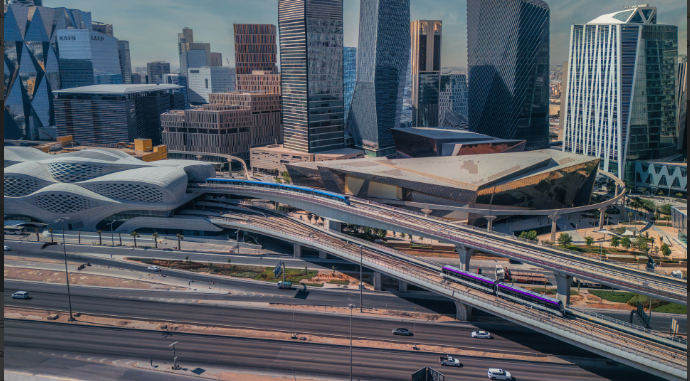
- Riyadh Metro: The world’s largest public transportation project, facilitating travel within the city.
- Expansion of King Khalid International Airport: Aims to increase capacity to 35 million passengers annually.
- Government Support:
- Regional Headquarters Program: Requires foreign companies to establish their regional headquarters in Riyadh by 2024.
- Vision 2030 initiatives: Aim to diversify the economy and attract investment.
- Quality of Life:
- Riyadh Green Projects: Aim to plant 7.5 million trees.
- Riyadh Art Project: Includes the installation of more than 1,000 works of art.
- Al-Dir’iya Development Project:
- Al-Dir’iya: Considered one of the largest heritage and cultural projects in the Kingdom, with a budget of 75 billion Saudi riyals.
- Facts and Figures: The project involves the development of a 7-square-kilometer area and will include 20 luxury hotels and more than 100 restaurants and cafes, in addition to residential and commercial spaces.
Supportive Legislation and Technological Advancements:
- Tax Incentives: Tax incentives are offered to foreign and local investors.
- Streamlined Procedures: Bureaucratic procedures for purchasing real estate and obtaining building permits have been simplified.
- Government Technology Programs:
- The “Ejar” Platform: An online platform that facilitates the registration and documentation of lease agreements.
- “Sakani” Program: Provides housing solutions for citizens through a mobile app that makes it easy to access available options.
- “Baladi” Platform: Facilitates obtaining building permits and municipal services electronically.
- “Real Estate Registration” Program: Aims to register and document real estate electronically to facilitate real estate transactions and guarantee property rights.
- Real Estate Exchange Project: Aims to establish a digital real estate market through which properties can be traded more transparently and efficiently, thereby increasing the attractiveness of investment in the sector.
This point, and the previous one in particular, are common to all the major cities mentioned in this article.
Jeddah:
- Geographic Location:
- The Red Sea: A strategic location that makes it a hub for trade and tourism.
- The new King Abdulaziz International Airport: Enhances the city’s appeal for investment.
- Infrastructure:
- Waterfront Development: A project that boosts the value of surrounding real estate.
- Residential Projects:
- King Abdullah Economic City: Adds thousands of residential units.
- Diyar Al-Salam Project: Provides 734 residential units.
Dammam and Al-Khobar:
- Industrial Growth:
- Industrial and Oil Hubs: Their location on the Arabian Gulf coast makes them hubs for industry and oil.
- Infrastructure:
- Road and port expansion: Increases the region’s appeal for real estate investment.
- Connectivity projects and railways that will have a significant impact on economic activity
- Demand for Real Estate:
- Government Housing Projects: These contribute to an increase in the number of residential units.
- Growing demand: Driven by investments in the industrial and logistics sectors and an increase in the number of jobs.
- Property and Real Estate Manager