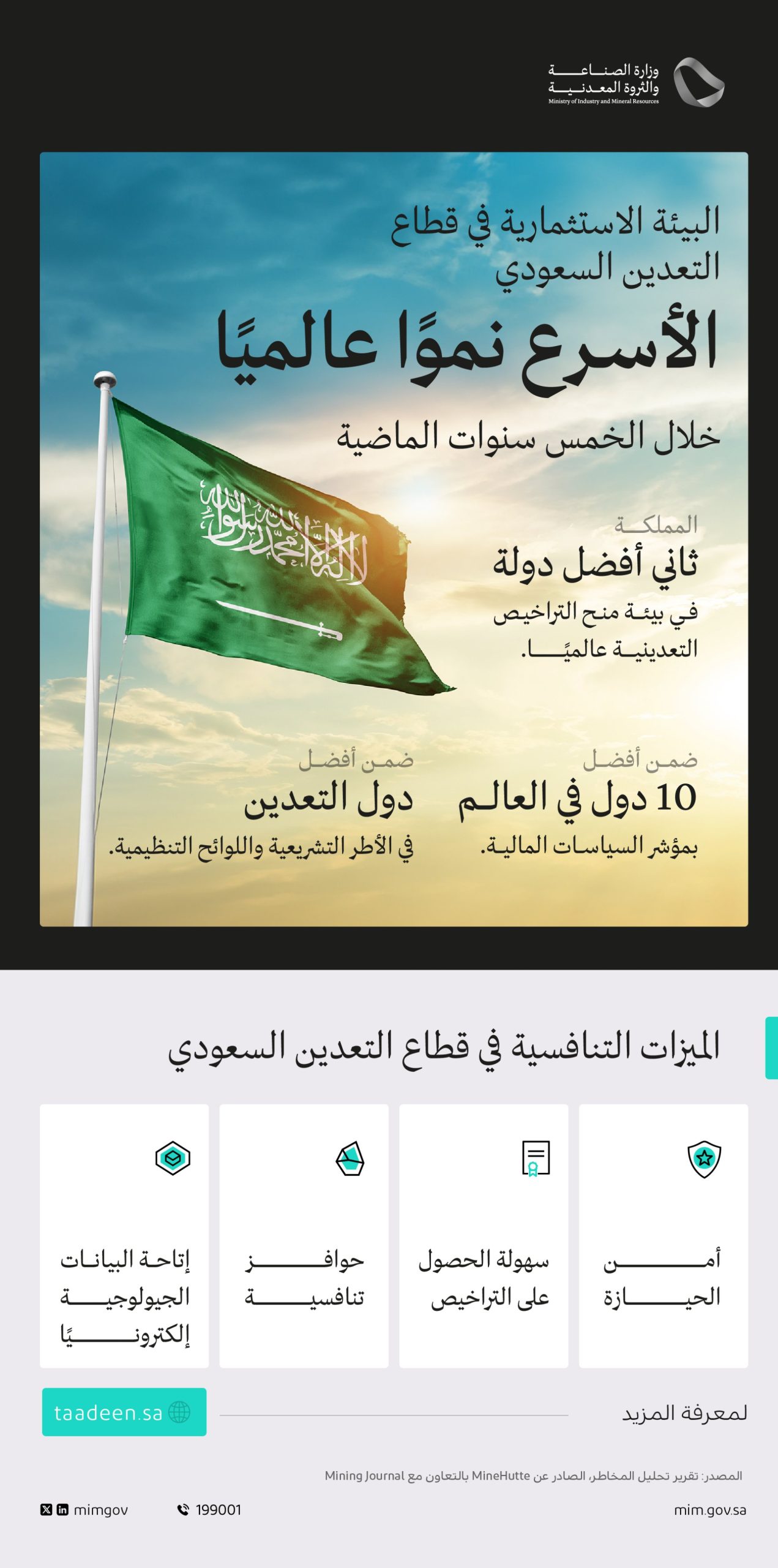
سجَّلت المملكة تقدمًا كبيرًا في التقييم العالمي لمخاطر الاستثمار في قطاع التعدين الصادر عن MineHutte بالتعاون مع مايننغ جورنال، محرزة أسرع نمو عالمي في تطور البيئة التنظيمية والأساسية الجاذبة للاستثمارات خلال السنوات الخمس الماضية (2018-2023)، منذ إطلاق برنامج التحول في القطاع، بدءًا بتطوير البنية التشريعية واللوائح التنظيمية للقطاع، حتى أصبحت المملكة “وجهة مفضلة” للاستثمار في قطاع التعدين.
وتضمنت التصنيفات الواردة بالتقييم، تحسن تقييم المملكة في مؤشر التراخيص التعدينية، حيث جاءت ثاني أفضل دولة في بيئة منح التراخيص في العالم، إضافة إلى تطور كبير في تقييم المملكة بمؤشر السياسات المالية، مما جعلها إحدى أفضل 10 دول في هذا المؤشر على مستوى العالم.
وأحرزت المملكة تقدمًا كبيرًا في مؤشر البنية التشريعية واللوائح التنظيمية؛ لتصبح ضمن أفضل دول التعدين في العالم من حيث الأطر التشريعية والتنظيمية، وبذلك تعد المملكة نموذجًا يحتذى به في تحسين البيئة الاستثمارية وتطوير قطاع التعدين بالبلدان المجاورة.
وسلّط التقييم العالمي لمخاطر الاستثمار في قطاع التعدين الضوء على جهود المملكة في تطوير قطاع التعدين، بدايةً من إطلاق الإﺳﺘﺮاﺗﻴﺠﻴﺔ اﻟﺸﺎﻣﻠﺔ ﻟﻠﺘﻌﺪﻳﻦ واﻟﺼﻨﺎﻋﺎت اﻟﻤﻌﺪنية في عام 2018م؛ لتعظيم القيمة المحققة من الموارد الطبيعية، مدعومة بتطوير نظام الاستثمار التعديني، الذي يشكل البنية التشريعية والنظامية للقطاع، ويوفر بيئة واضحة وشفافة وميسرة للمستثمرين في قطاع التعدين، إضافة إلى الإصلاحات الشاملة والمحفزات للمستثمرين في القطاع.
وأكد معالي نائب وزير الصناعة والثروة المعدنية لشؤون التعدين، المهندس خالد بن صالح المديفر، أن هذا التصنيف الأعلى عالميًا؛ يأتي نتيجة للجهود المبذولة لتطوير قطاع التعدين خلال الخمس سنوات الماضية، حيث شرعت المملكة منذ انطلاق رؤية المملكة 2030 بقيادة صاحب السمو الملكي الأمير محمد بن سلمان بن عبدالعزيز آل سعود ولي العهد رئيس مجلس الوزراء ـ حفظه الله ـ في اتخاذ خطواتٍ جادة لتنويع مصادر اقتصادها إلى جانب النفط والغاز، ووضعت على هذا الأساس برامج ومبادرات ضمن خطة التحول لتطوير قطاع التعدين؛ ليُصبح الركيزة الثالثة للصناعة الوطنية.
وأشار معاليه إلى أنه في ظل هذا التحول، صدر نظام الاستثمار التعديني الجديد ولائحته التنفيذية وإطلاق مشروع المسح الجيولوجي لمنطقة الدرع العربي الأكبر من نوعه عالميًا، ومبادرة الاستكشاف المسرع، والعشرات من المبادرات الهادفة لتطوير وتحول القطاع، مضيفًا أن هذه النتائج تحفز المستثمرين لاستثمار الفرص بالمملكة، حيث أصبحت رائدة في صناعة التعدين والمعادن عالميًا.
بدورها أشادت الرئيسة التنفيذية للعمليات ومديرة الأبحاث في MineHutte، إيما بيتي، في التقرير؛ بالتحول الكبير والإيجابي الذي شهدته المملكة، وقالت: “إن التحول في قطاع التعدين بالمملكة يعد الأبرز على المستويين الإقليمي والدولي خلال الأعوام الخمسة الماضية، وأن الإصلاحات التي شهدها القطاع على المستوى التنظيمي والتشريعي والبنية الأساسية تعد السبب الرئيس وراء تقدمها الكبير في التصنيف الدولي للتقرير وريادتها في تصنيف المخاطر بالتقرير، وأنه من المبهر والمحفّز أن تسهم هذه التحولات الكبرى في جذب الاستثمارات الأجنبية وتحقيق الرؤية الاقتصادية التي وضعتها المملكة لقطاعها التعديني”.
ويعد تقرير تحليل المخاطر، الصادر عن MineHutte بالتعاون مع مايننغ جورنال، مصدرًا موثوقًا لشركات التعدين والمستثمرين حول العالم لتحديد وجهات الاستثمارات بناءً على خمسة معايير، وهي: (الإطار التشريعي، والحوكمة، والبنية التحتية، ومحفزات الاستثمار، والمعايير الاجتماعية).
وتسعى المملكة إلى جذب الاستثمارات الأجنبية لقطاع المعادن، مستفيدة من نمو اقتصاد ثرواتها المعدنية، التي تضاعفت قيمتها مؤخرًا لتصل إلى أكثر من 9.3 تريليونات ريال، نتيجة إلى تطوير البنية التحتية والتشريعية وعمليات الاستكشاف المستمرة والطلب المحلي وموقعها الإستراتيجي، وكذلك العمل على النهوض بالصناعات التعدينية، وتشتمل ثروات المملكة المعدنية على الذهب والفوسفات والنحاس والزنك والعناصر الأرضية النادرة.
ويُشكّل نظام الاستثمار التعديني البنية الأساسية النظامية للقطاع، ويحقق حوكمة القطاع وتقديم الحوافز للمستثمرين، بما يسهم في تعزيز الشفافية ومبادئ الاستدامة، وزيادة ثقة المستثمرين بالقطاع ، إضافة إلى العمل على التحول الرقمي للقطاع من خلال إطلاق منصة تعدين لمنح الرخص التعدينية، وتطوير قاعدة البيانات الجيولوجية الوطنية التي تضم حصيلة 80 عامًا من البيانات الجيولوجية ومعلومات الاستكشاف الخاصة بالمملكة، وخاصة منطقة الدرع العربي.
كما أعلنت وزارة الصناعة والثروة المعدنية بالتعاون مع وزارة الاستثمار عن حزمة حوافز تتضمن تسهيلات مالية للشركات والمستثمرين الراغبين في الاستثمار في أنشطة استكشاف الموارد المعدنية في المملكة؛ بهدف دعم الشركات الحاصلة على رخص كشف سارية لأقل من 5 سنوات بقيمة تصل إلى 7.5 ملايين ريال كحد أقصى لكل رخصة، كما يقدم صندوق التنمية الصناعية السعودي ما يصل إلى 75% من تكاليف مشاريع الاستكشاف والتعدين المؤهلة.
يذكر أن وزارة الصناعة والثروة المعدنية تنظم مؤتمر التعدين الدولي، الذي شهد في نسخه الثلاث السابقة مشاركة أكثر من 75 دولة في الاجتماع الوزاري الدولي، و14 ألف مشارك وزائر من كبار المتحدثين الدوليين لمناقشة مستقبل صناعة التعدين والمعادن، وجذب الاستثمارات لمنطقة التعدين الكبرى الممتدة من أفريقيا إلى غرب ووسط آسيا، وتحويل مخرجات الحوار إلى أعمال قابلة للتطبيق على أرض الواقع، إضافة إلى الإسهام في حل مجموعة من التحديات التي يواجهها قطاع التعدين والمعادن، خاصة في ظل الطلب المتزايد على المعادن الإستراتيجية اللازمة لتحقيق التحول نحو الطاقة النظيفة وتلبية مستهدفات الحياد الكربوني.