
Throughout the five decades of his reign in Riyadh, King Salman bin Abdulaziz Al Saud established a great philosophy and visions in architectural design, and led the development plans of the capital from a small town to a global city, and became a model that reflects its distinctive character and quality of architectural design that blends originality and modernity.
During Riyadh's journey of urban development, it was subjected to models of modernity, like many cities in the Arab world, but it managed to reconcile with its ancient past, translating this into works that were deeply appreciated.
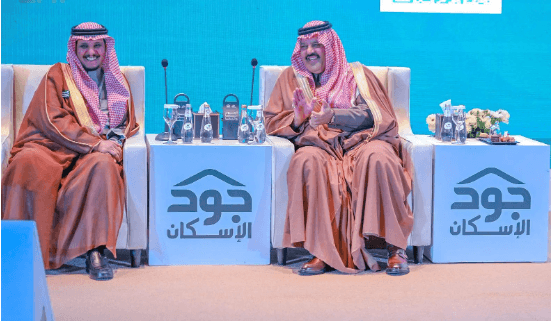
In honor of the leader who supervised this unique path in planning and construction, and foresaw its prospects over half a century, and nurtured it with originality, care and creativity, His Highness Prince Dr. Abdulaziz bin Mohammed bin Ayyaf in 2017 named this urban philosophy and modern design approach the term ”Salmani style”. The term "Salmani style" was the first to introduce its name, as His Royal Highness followed the vision of King Salman bin Abdulaziz Al Saud - may God protect him - for 15 years, during his work as the Secretary of Riyadh Region, explaining with this term important lessons selected from this architectural movement and its design philosophy.
Salmani architecture
<Historically, Salmani architecture has formed its own history, as it has undergone multiple stages of development over many decades, and has been featured in several projects such as the Ministry of Foreign Affairs, the development of the Palace of Government, the Embassy Quarter, and the King Abdulaziz Historical Center, where these projects have received international recognition and won numerous awards, reflecting the success of the philosophy of Salmani architecture in enhancing local identity.The charter document was issued in the form of a book entitled "King Salman Urban Charter", where the book came as a title for the Saudi urban identity and includes the essence of creativity based on solid bases of innovation and discovery, consistent with the exemplary urban environments and edifices established under the patronage of the Custodian of the Two Holy Mosques King Salman bin Abdulaziz - may God protect him - where the idea was born to draft the charter in a way that includes everything that concerns professionals in designing the urban environment throughout the Kingdom, starting from thinking about construction, through all stages until the delivery of the building.
The charter was developed in a way that includes everything that concerns specialists in designing the urban environment throughout the Kingdom, starting from thinking about construction, through all stages until the handover of the building.
Salmaniya Architecture represents a unique approach that combines the ancient past with future aspirations, taking into account the local environment and cultural traditions. The charter consists of seven chapters, including an introduction that defines the vision, objectives and areas of application, then inspiration and authenticity of the place that addresses the historical and cultural context.
The Charter goes on to clarify the core values of authenticity, continuity, human centeredness, livability, innovation, and sustainability, providing design guidelines and criteria for each value.
Chapter 5 deals with the applications of the Charter and reviews exemplary projects, while Chapter 6 focuses on the stages of implementation and the most important design considerations.
Authenticity reveals the identity of a place
The core values of the charter are highlighted in terms of “Authenticity” towards enhancing place identity and reconnecting people with their local environment, by creating urban and architectural spaces that genuinely express the place.
”Continuity” focuses on drawing inspiration from the past and developing the future through a strong cultural identity, creating a balance between ancient and modern designs, while “Human Centricity” is concerned with designing spaces that focus on the needs of individuals and groups, enhancing urban and holistic experiences, and “Livability” aims to improve the quality of life through a safe and attractive urban environment that meets the needs of residents and promotes social cohesion.
The charter highlights the value of “innovation” to explore new approaches in design, adopt modern technologies to improve the quality of life and encourage creativity, as well as "sustainability" to protect the environment and promote environmental, social and economic aspects, to ensure the long-term sustainability of urban projects.
Applications of the King Salman Urban Charter
<The Charter is applied in various fields related to the built environment, including architecture, urban planning and design, interior design, and environmental architecture, with the aim of achieving a balance between modern development and authenticity, and encouraging designs that enhance local identity and take into account the environment and climate. The charter includes detailed guidelines for the design of buildings and public spaces, so that they conform to the local context and respond to the needs of the community.In accordance with a national methodology to achieve urban excellence and improve the quality of life through urban environments based on cultural and environmental heritage and simulating future developments, the charter seeks to spread awareness of urban quality concepts and guide those involved in design and planning towards achieving its core values.
Under the supervision of King Salman bin Abdulaziz, Riyadh has become an urban icon that blends originality and modernity, as evidenced by the exemplary projects that embody the philosophy of Salmani architecture: the Palace of Governance, the Embassy District, and the King Abdulaziz Historical Center, which have received international recognition and won numerous awards, reflecting the success of the philosophy of Salmani architecture in enhancing local identity.
The King Salman Urban Charter represents an integrated design reference reflected in the exemplary projects implemented in Riyadh, and a model to be followed at the regional and international levels. The Charter contributes to strengthening the Saudi urban identity and aims to apply its principles in various regions of the Kingdom, to be a source of inspiration for creative works in architecture and urbanism. Through its core values, it aims to achieve balanced and sustainable urban environments that meet human needs and future aspirations.