
Map of Saudi Architecture: Challenges for designers, opportunities for local creativity
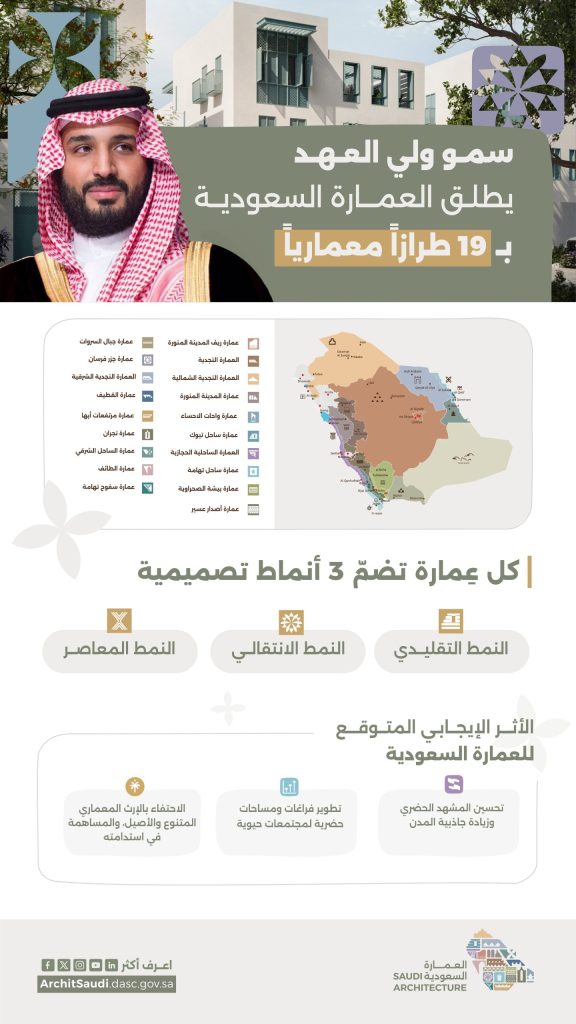
Poll: Abdullah Al-Salih: The Saudi Architecture Map contains 19 architectural styles inspired by the geographical nature and cultural identity of each region, this initiative not only aims to improve the urban landscape and enhance the quality of life, but also to establish an inspiring architectural identity that embraces the past and keeps pace with the future. Does this map succeed in reshaping the features of Saudi cities, and how aware are society and specialists of its developmental and cultural dimensions?
Amlak newspaper polled opinions on the impact of the architectural map on the real estate sector.
Amlak newspaper polled opinions on the impact of the architectural map on the real estate sector.
Othman Abdulmohsen: Saudi architecture is a tourist and economic treasure for investment
Engineer Othman Abdul Mohsen, CEO of Design and Implementation Technology Foundation, emphasized that adopting local styles in urban designs is not only about achieving visual beauty, but also includes economic, tourism and sustainable development dimensions.
<Abdul Mohsen believes that unifying the architectural style within Saudi cities will contribute to the development of a unique urban personality that reflects the spirit of the place, especially when adopting traditional styles inspired by the local environment, such as the Najdi, Hijazi or Mountain style. He added that this approach strengthens the cultural identity of the place and gives cities a homogeneous and harmonious character, similar to what we see in European cities or historical areas such as Al-Turaif neighborhood in Diriyah.
He pointed out that the unified architectural character reflects positively on the attractiveness of Saudi cities for tourism, as the visitor feels that he is in front of an integrated experience that reflects the spirit and culture of the city, while this trend can also contribute to reducing operational costs by adopting design solutions suitable for the local environment and climate, such as using locally available materials or focusing on natural ventilation and reducing dependence on air conditioning.
In the case of buildings in Saudi Arabia, this approach can contribute to reducing operational costs by adopting design solutions suitable for the local environment and climate, such as using locally available materials or focusing on natural ventilation and reducing dependence on air conditioning. <Regarding the tourism dimension, Abdul Mohsen pointed out that traditional Saudi architecture represents a real wealth that can be invested in revitalizing cultural tourism, especially since each region in the Kingdom has its own distinctive character, starting from the racks and wood carvings in the Hijazi style in Jeddah and Mecca, through the colorful decorative details in the mountain style in Asir, to the Najdi style in harmony with the desert environment in Najd and Qassim. He explained that these styles are not just an architectural heritage, but living stories that reflect the depth of the local community and its history, and constitute a unique tourist attraction that enhances the visitor's connection to the place. <In terms of combining modernity and identity, Abdul Mohsen emphasized that modern architectural waves do not conflict with the local character, but can integrate with it. He cited projects such as Diriyah Gate and NEOM that merge modern technologies with the local architectural spirit, creating a unique visual and human experience. He pointed out that commitment to identity does not mean reproducing the past as it is, but reimagining it in a modern architectural language that reflects the needs and aspirations of the current society. <He added that the Saudi Architecture Guidelines represent a national project par excellence, which aims to make every Saudi city able to tell its story through its urban character, and to move away from the global stereotypes towards a distinctive Saudi character, reflecting the person, place and environment at the same time. He considered that these directives represent an opportunity to reshape the relationship between the citizen and the city, and enhance the sense of belonging through familiar and inspiring architectural details. <In a related context, Abdul Mohsen pointed out that the implementation of these guidelines has a direct impact on the real estate sector, as it contributes to raising the market value of projects that comply with them, and increases their distinctiveness in a market where projects are competing to attract buyers. He also explained that architectural identity has become an influential factor in purchasing decisions, especially by segments looking for excellence, originality and quality, adding that real estate developers who adopt these trends will be in an advanced position to benefit from government incentives, whether in terms of facilitating licensing procedures or obtaining a higher rating from the concerned authorities.
<He concluded by emphasizing the importance of taking practical steps to activate these trends on the ground, by integrating the design guidelines into the building requirements for each region, providing prototype design models that help developers implement projects according to the specified identity, encouraging local developers to adhere to these guidelines by granting them additional privileges and incentives, as well as the importance of involving national competencies of Saudi engineers in the design and implementation processes, as this has a great role in consolidating local creativity and creating an urban environment that is in harmony with the Saudi society and reflects its aspirations towards Mesa.
M. Omar Al Mansour: Deira neighborhood has transformed the area into a tourist attraction
Engineer Omar Al-Mansour emphasized that the Saudi architecture map will contribute significantly to attracting tourists and improving the attractiveness of cities. For example, we find that the development of the Deira neighborhood in Riyadh has turned this area into an attraction for tourists and tourism-related events as a result of the urban development in that area.
Engineer Omar Al-Mansour stressed that the Saudi architecture map will contribute significantly to attracting tourists and improving the attractiveness of cities. Al-Mansour warned that the adoption of local styles in construction may limit the architectural creativity of Saudi designers and engineers, as the regulations, specific lengths, dimensions and exterior design will challenge their creativity while adhering to these standards, but it will create opportunities for innovation in favor of these requirements in addition to the role of these approved designs in reducing costs.
Mansour warned that the adoption of local styles in construction may lead to limiting the architectural creativity of Saudi designers and engineers. As for the expected challenges in this decision, Al-Mansour explained that there are certain neighborhoods where specific models will be applied that may not be admired and praised by customers, or vice versa, as happened in some complexes that were presented with standardized models and created a diversity of opinions between supporters and opponents, but positive in strengthening the architectural identity of Saudi architecture.
Saudi Architecture. Solutions and aesthetics for building facades
D. Abdullah bin Daifallah
Architecture is a cultural face that may have been influenced in the past by many imported ideas; either for political or social reasons and may over time become part of the local architecture.
The Saudi Architecture Project.
The Saudi Architecture Project launched by His Highness the Crown Prince, may God protect him, did not come to unify the architectural style of Saudi cities as much as it aims to root the style and return to Saudi architecture, according to my personal reading, Saudi architecture in its origin is one style and is a reflection of the great similarity between the culture of the Saudi people from the far north to the far south.
For example, the triangle. <For example, the triangle in the Najdi architectural style as an aesthetic singularity is present in the Hijazi style as well as the southern one, and the rest of the examples of internal courtyards, winding roads, narrow windows, building heights and others; thus the origin of Saudi architecture is one but the difference lies in the geography that imposes a certain type of building materials or a certain type of fabric in harmony with the climate and so on. Therefore, the number of models is 19 models that largely represent the diverse geography and their non-substantive differences represent Saudi architecture as a whole.
<It is certain that the adoption of local models in construction will enhance the architectural creativity of Saudi designers and engineers and that the map of Saudi architecture will have a fundamental impact in this aspect; the architect used to rely mainly on the client's desires and market behavior in determining the models that he will rely on in designing his projects, but today the situation will be different because Saudi architecture will come with its models derived from local contexts and therefore architects and designers will absorb these models and translate them into their projects. So I think it will reflect positively on architectural creativity in our cities without a doubt. Therefore, many positive changes will emerge for Saudi architecture design trends, such as:
Optimizing the visual landscape. <Improving the visual landscape, as our cities visually face issues related to the facades of buildings that are designed randomly and without a unified vision, and this is reflected in the general image of our cities, which has become "dull", and the guidelines will address this visual imbalance not according to diligence, but according to the specific context of each city. Here, we must not forget that the design guidelines used to be based on the administrative division of the Kingdom's regions, but the current guidelines for Saudi architecture are based on geography, and this will make many practitioners and researchers turn to study the relationship between architecture and geography and the extent to which the first is affected by the second or vice versa.
The matter is not limited to designers and engineering offices only; I believe that the real estate sector will respond to these models positively, as happened with the Salmaniya architecture in Riyadh, which we saw how it was translated into major and medium projects and made a qualitative shift in the visual landscape of Riyadh, perhaps the review process for projects in the beginning will witness a kind of slowness due to the novelty of the experience, but once the real estate sector and practitioners absorb it, the review process and ensure compliance with the directives will become a fast process, and I do not rule out that there will be incentives for projects that show creativity in applying these directives.
With regard to politics, I do not rule out that there will be incentives for projects that show creativity in applying these directives. We expect that the Saudi architecture map will enhance the process of attracting tourists and enrich their experience, especially with regard to the old historical villages and their harmony with the modern housing around them from a visual point of view. On a personal visit to Diriyah, I saw many famous shops that used old and traditional buildings that combined modernity and originality and I think it will provide a unique rich experience.
On a personal visit to Diriyah, I saw many famous shops that used old and traditional buildings that combined modernity and originality and I think it will provide a unique rich experience.
Urban researcher