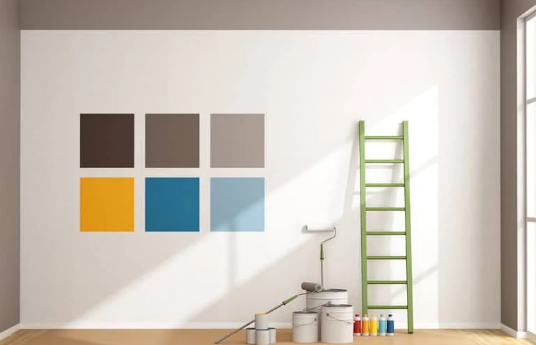

Wall colors and wall paints play a pivotal role in bringing life and identity to a space. Choosing the right paint is not only about aesthetics, but also about quality, durability, ease of cleaning, and even the psychological impact of the colors on the occupants of the house. Among the myriad types of paints and countless shades of colors, many people are confused by a seemingly simple decision that has a long-lasting impact on the comfort and mood of the home.
In this report, we provide a comprehensive guide to help you choose the best types of paints for your walls, with tips from decorating experts on how to choose the perfect color for each room, according to its nature and function.
The most common and widely used types of paints
Choosing the type of paint should match the nature of the wall and its place in the house, and the following are the most prominent types:
1. Plastic (acrylic) paint:
The most common in modern homes, it is characterized by its ease of application and quick drying, and is available in three types according to gloss:
<Matte: Ideal for bedrooms and living rooms, as it hides wall imperfections.
Satin (Satin): Easy to clean and suitable for children's rooms and hallways.
Glossy: Reflects light and is commonly used in kitchens and bathrooms.
2. Oil paint:
Although less common nowadays, it is characterized by its hardness and high gloss. It is suitable for surfaces that are exposed to moisture, but it takes longer to dry and has a strong odor.
3.
3. Anti-moisture and anti-mold paints:
Ideal for bathrooms, kitchens or areas with high humidity, and helps protect walls from corrosion.
4.
4. Eco-Friendly Paints:
They minimize the emission of volatile organic compounds (VOC), maintain indoor air quality, and are an ideal choice for children or allergy sufferers.
4.

How to choose the perfect color for every room?
The choice of color is as important as the choice of type, each room has a special function and mood, and decoration experts advise the following:
Bedrooms: Shades of blue, light gray, or calming purple promote relaxation and tranquility.
Living Room.
Living room: Warm colors such as beige, honey, or olive add warmth and intimacy.
Kitchens.
Kitchens: White, light green, or yellow promote brightness and cleanliness.
Kitchens.
Kids" rooms: Bright colors such as cyan, pink, or yellow stimulate creativity and activity.
Bathrooms: Cool colors such as light blue or white give a sense of cleanliness and freshness.
Bathrooms: Bright colors such as cyan, pink, or yellow stimulate creativity and activity.

Important tips before you start painting
Prepare the walls well: Make sure to clean them and repair any cracks or holes before painting.
Test the color.
Test the color: Try a small sample of the color on the wall, and see it under day and night lighting.
Test the color.
Think about the lighting: Colors appear differently depending on the type of lighting, so consider the orientation of the room and the intensity of natural light.
Use washable paints: Especially in hallways and children's rooms for easier cleanup.
Washable paints.