
The ambitions of the construction industry are no longer just about creating high-rise towers or mega-housing projects, but are increasingly focused on how to reduce cost without compromising on quality or performance. With rising raw material prices and a growing demand for sustainable and energy-efficient urban solutions, innovation in building materials has emerged as one of the most promising solutions to reduce costs and achieve both economic and environmental efficiency.
Innovation in building materials has come to the forefront as one of the most promising solutions to reduce costs and achieve both economic and environmental efficiency.
High performance, low cost
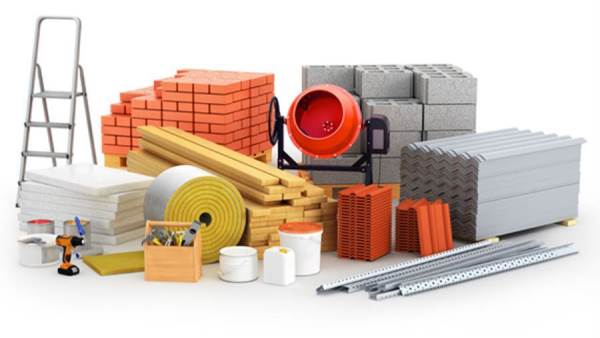
<Recent years have seen a frantic race among global companies and research centers to develop smart building materials that combine high performance, low cost and climate resilience. These innovations go beyond simply optimizing the composition of cement or bricks, and include entirely new concepts in design and production, ranging from eco-friendly and recycled materials to advanced manufacturing techniques such as 3D printing and nanotechnology.From the most notable examples, global companies and research centers have been racing to develop smart building materials that combine high performance, low cost, and climate resilience. <One notable example is self-curing concrete, which contains bacterial components that react with air and water and automatically repair small cracks that may form over time. This technology minimizes the need for ongoing maintenance, reducing long-term costs, despite its higher initial cost compared to conventional concrete.
.
Sustainable Materials
<At the same time, some countries, especially those with high population densities, are seeking to adopt bricks made from recycled plastics as an economical and environmentally friendly alternative. These bricks are characterized by their light weight, high resistance to moisture and weathering, and low production costs compared to traditional materials. With increasing environmental awareness, the use of sustainable building materials has become a requirement for many government policies and major development projects. <The field of thermal insulation is also witnessing a remarkable technological breakthrough, with the emergence of new materials with superior insulation efficiency, such as aerogel, which is lightweight and highly effective in reducing heat transfer. The use of these materials contributes to reducing energy consumption within buildings, thereby reducing electricity bills and operating costs, which is an important attraction for investors and consumers alike.
Reduced construction time
Even traditional materials such as wood have undergone significant advances, with composite and chemically treated species being developed to outperform many other materials in hardness and resistance. They are easy to transport and install, making them ideal for reducing construction time, a critical factor in reducing the overall cost of any project. <But despite all these promises, it's important to distinguish between the initial cost of the material and the overall cost of the project in the long run. Some innovative materials may be more expensive initially, but offer significant savings in other areas, such as reduced maintenance, lower energy consumption, and shorter construction time, all of which ultimately reduce the overall cost of the building.
Despite these promises, it is important to distinguish between the initial cost of the material and the overall cost of the project in the long run.
Current Challenges
<However, there are still real challenges that stand in the way of innovation in building materials. Most notably, weak standards and local legislation often lag behind new technologies. This lag may hinder the adoption of these materials in major projects, especially in emerging markets, which still rely heavily on traditional materials due to their low cost and ease of availability.In addition, there are real challenges to innovation in building materials. <In addition, the lack of awareness among some contractors and engineers about the benefits of using these materials is a real obstacle to their popularization. Switching to innovative materials requires not only their availability in the market, but also the qualification of the human cadres that deal with them, and the modernization of work models and implementation methods.
H4
Successful international experiences
In light of these challenges, some successful international experiences stand out as a source of inspiration for other countries. In the Netherlands, for example, 3D printing has been used to build low-cost houses using flexible concrete, reducing construction time and material costs. In India, authorities developed new bricks that can be assembled in a Lego-like manner, helping to accelerate affordable housing projects. In the United States, solar panels have been integrated directly into building facades and windows to self-generate energy, helping to reduce long-term operating costs.
The future of construction is tied to the cost of materials.
The future of construction today is inextricably linked to innovation. No country or real estate developer can afford to ignore the growing trend towards smart and cost-effective building materials, especially with mounting economic pressures and the need for rapid, sustainable development projects that meet residents' expectations in terms of quality and price.
The future of construction today is inextricably linked to innovation.
With the rapid shifts in technology, buildings and windows are self-generating energy, helping to reduce long-term operational costs. In a rapidly shifting industry, the most important question in the coming years may not be "What is the cheapest material?" but "What is the smartest material?" - the one that combines economic efficiency, climate resilience, and flexibility in design and implementation to become the best choice in the race for the urban future.
With the rapid shifts in the industry, the most important question in the coming years may not be "What is the cheapest material?" but "What is the smartest material?