
In a move aimed at stabilizing the rental market and striking a balance between the interests of landlords and tenants, the General Real Estate Authority has revealed new details to regulate contractual relationships in the city of Riyadh compared to the rest of the Kingdom’s cities.
These amendments are part of the Saudi government’s strategy to protect the rights of all parties, regulate residential and commercial rent prices, and increase the appeal of investing and living in the Kingdom.
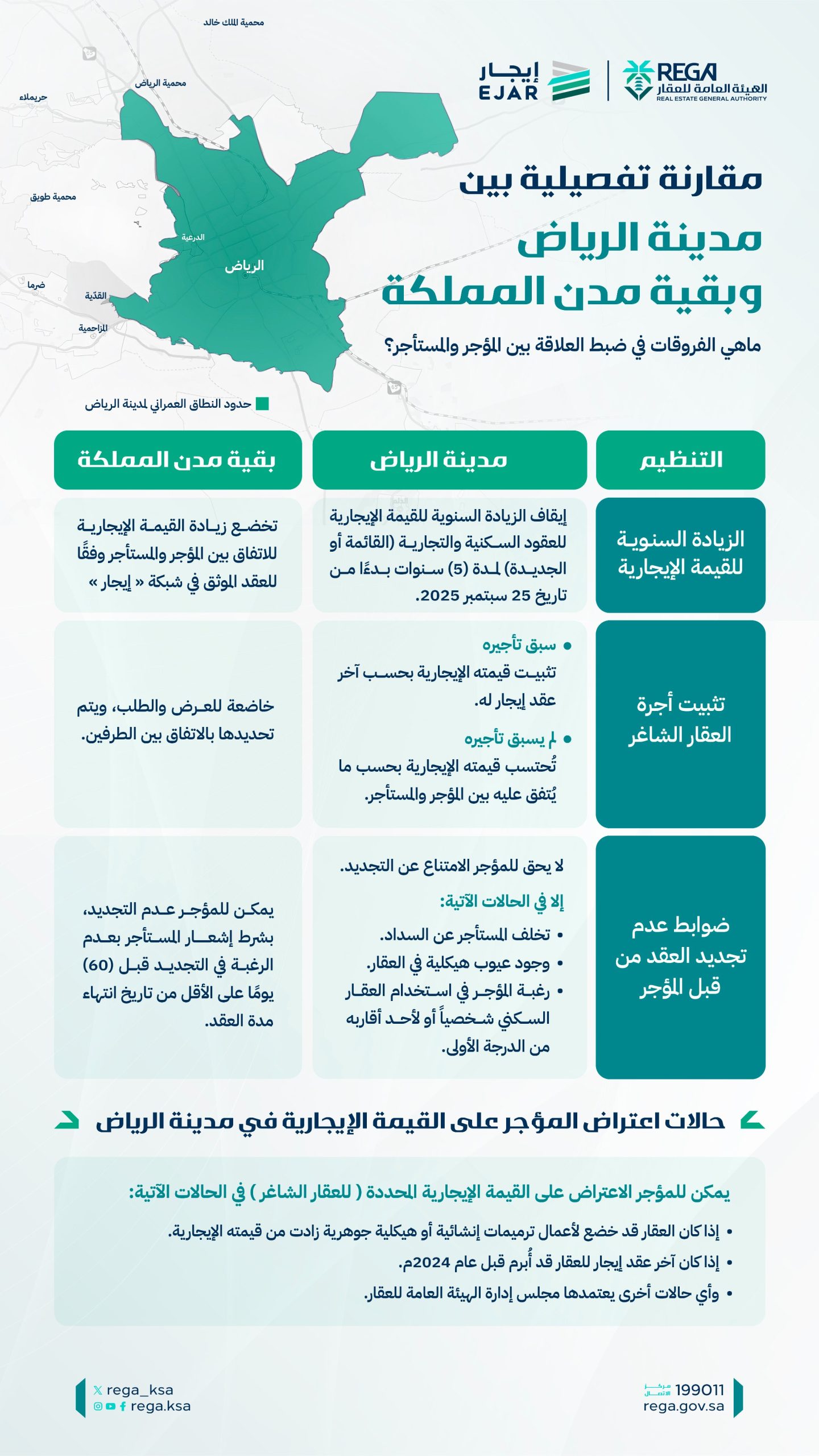
According to the General Real Estate Authority, the differences in regulating rental relationships in Riyadh and the rest of the Kingdom’s cities include the following:
First: Suspension of the annual rent increase in Riyadh
The annual increase in rent for residential and commercial leases (existing or new) within the urban area of Riyadh has been suspended for a period of five years, effective September 25, 2025.
Second: Fixing the Rent for Vacant Properties
If the property has been previously rented, the rent is fixed according to the terms of the most recent lease agreement.
If the property has not been previously leased, the rent is determined by mutual agreement between the landlord and the tenant.
In the rest of the Kingdom’s cities, rent increases are subject to agreement between the landlord and the tenant in accordance with the contract notarized through the “Ejar” network.
Third: Regulations Governing Automatic Contract Renewal
In Riyadh, the landlord may not refuse to renew the lease if the tenant so desires, except in three specific cases:
1. The tenant defaults on payment.
2. There are structural defects in the property that affect its safety.
3. The landlord wishes to use the residential unit personally or for a first-degree relative.
In other cities, the landlord may choose not to renew the lease provided they notify the tenant at least 60 days before the lease expires.
Fourth: Cases Where the Landlord Objects to the Rental Value in Riyadh
The landlord may object to the rental value set for a vacant property in the following cases:
If the property has undergone substantial structural or architectural renovations that have increased its rental value.
If the most recent lease agreement was entered into prior to 2024.
Any other cases approved by the Board of Directors of the General Real Estate Authority.