The Daily Mail: The Saudi government is a powerful player in the real estate sector and the kingdom is on the cusp of a construction boom in the foreseeable future
Written by: Ahmed Alshimi
Special - Amlak
Government efforts have increased the purchasing power rates of those wishing to own homes
Mortgage loans rose by 30% this year
Large-scale housing projects must be built to accommodate growing demand
The rise in labor wages after the correction period is the most important challenge for the construction sector
Home ownership in Saudi Arabia is the lowest in the Gulf and financial support must be available for housing projects in each region
Government programs to support the real estate sector will bear fruit next year 2014
The British newspaper DAILY MAIL said that the Saudi real estate sector is witnessing strong catalysts that drive it to strong growth, and that it remains the ideal environment to attract investments, especially with strong demand and strong supply leading the real estate market to a significant recovery, especially with government programs that support the purchasing power of home buyers, and the growth of demand in the commercial and hotel real estate sector.
The newspaper referred to the report of Jones Lang LaSalle, which revealed that real estate loans in the current year 2013 increased by 30% compared to last year, and the announcement of financial institutions to inject additional financial resources, encouraging the process of bank lending and thus increasing demand, but the most prominent challenge is the need to build large housing projects to accommodate this demand, in a way that does not affect the rise in prices, in addition to the high cost of construction, due to the high prices of building materials, as a result of the increasing demand from developers to provide apartments.
The newspaper praised the efforts of the Saudi government, noting that the government is still a strong and influential player in the real estate market, and that its policies such as the provision of land, loans provided by the Real Estate Development Fund and the ”Ejar” system aim to reduce the gap between supply and demand and regulate the real estate market and rents to encourage home ownership.
The newspaper points out that many Saudi contracting companies have been greatly affected by the legalization programs of expatriate workers and the end of their status correction period, which led to an increase in the wages of workers by at least 30% during the last period, and this represents another challenge for this sector, and will greatly affect the projects implemented by these companies, so many of them resorted to companies specialized in providing trained and skilled workers, but the high wages of these workers may lead to the emergence of the phenomenon of ”labor shortage” in the foreseeable future.
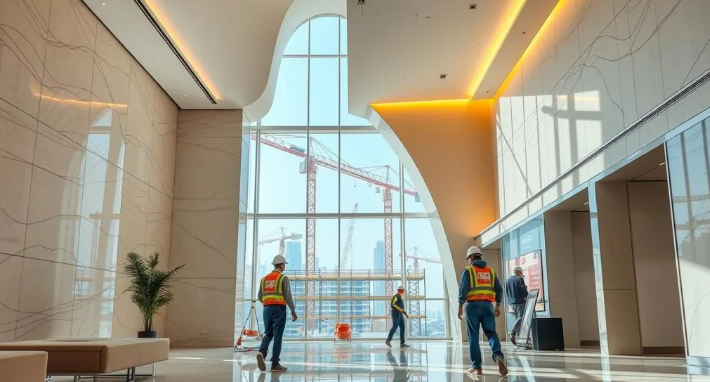
The newspaper quoted real estate experts as calling for government intervention to provide labor for construction companies, especially since the coming period will witness an urban boom supported by giant housing projects, and that this boom will restore the real estate market to its natural position, as the largest real estate market in the Middle East.
The estimates indicate that the annual demand for housing units is about 160,000 units, and that the deficit in meeting this demand amounts to 50,000 units, and that new construction projects target middle-income earners, as the segment that suffers from a shortage of housing units available to them.
The newspaper reviews the size of the demand for housing in the Kingdom, explaining that Jeddah accounts for 13% of the total demand, with 21,250 units, followed by Mecca with 10% of the total demand, with 16,000 units, then Medina with 14,000 units per year, noting that home ownership rates have increased over the past months by between 30 and 45%.
Despite the Saudi steps to support the real estate sector, housing is still a pressing issue for a wide range of citizens, as home ownership in the Kingdom is still the lowest compared to other GCC countries, in the UAE is 90%, and in Kuwait is 86%, and this is reflected in the increasing rates of furnished apartments that reach 57%, while the ratio reaches 30% in Britain and 25% in the rest of the European Union countries.
Experts call for the need for local businessmen and investors to join hands to launch housing initiatives and provide financial support for housing projects in each region of the Kingdom separately, stressing that the Ministry of Housing alone is unable to solve the issue, with the need to set a ceiling on prices and control exaggerated prices, especially since the argument of supply and demand mechanism leads to high prices that thwart the various efforts aimed at providing housing.
The newspaper concludes its report by saying: The government is dealing with the issue of housing as a national and fateful issue, and indeed it is, so it offers various financing and investment alternatives and tools for the prosperity of the real estate sector, pointing out that these steps will bear fruit next year 2014, after the positive developments in this vital sector during the current year, but it requires proper planning and the establishment of frameworks and legislation regulating the entire real estate market, and the development of mechanisms to control prices and provide land and housing at prices commensurate with the components of the economy, stressing that the provision of land will lead to a significant decline in prices.