The digital transformation in real estate management in the Kingdom of Saudi Arabia, led by the General Real Estate Authority in cooperation with the Ministry of Municipal and Rural Affairs and Housing, is witnessing a qualitative leap within the framework of Saudi Vision 2030, which aims to raise the efficiency of the real estate market and enhance transparency and governance, and this transformation has become a key pillar to develop the real estate business environment and simplify procedures through integrated digital platforms.
The growth of PropTech technologies and the expansion of electronic transactions
PropTech technologies have become one of the main pillars in modernizing the real estate sector through the use of artificial intelligence, big data analysis and digital documentation systems, according to the General Real Estate Authority, while TechSci Research 2024 data indicates that the size of the digital real estate technology market in the Kingdom reached about 806 million dollars, with expectations to exceed 2.4 billion dollars by 2030, with an annual growth rate approaching 19%.
The PropTech platform has recorded an annual growth rate of 19%. The “Ejar” platform recorded more than 8 million documented contracts until the end of 2024, of which more than 6 million and 600 thousand residential contracts, which reflects the development of the technical structure of the rental system and contract management electronically, while the “Real Estate Market” digital platform has seen more than one million registered users, with a daily average of more than 30 thousand users, and a transaction value of more than one billion Saudi riyals per day, as confirmed by reports of the General Real Estate Authority.
Comprehensive transformation towards smart cities
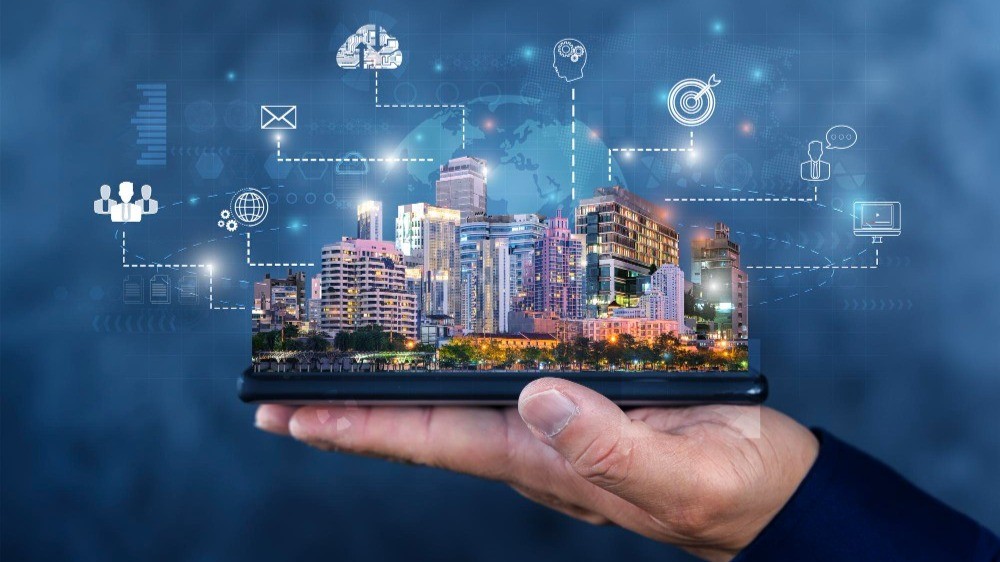
The digital transformation market in Saudi Arabia rose to USD 11 billion and 700 million in 2024 and is expected to exceed USD 56 billion by 2031, with an annual growth rate of 25%, as confirmed by the BlueWeave Consulting 2025 report, while digital transformation in real estate extends to smart city projects such as Neom, Qiddiya and AlUla, which rely on interconnected data systems, Internet of Things and digital twins to efficiently manage assets and buildings.
Digital transformation in real estate extends to smart city projects such as Neom, Qiddiya and AlUla, which rely on interconnected data systems, IoT and digital twins to efficiently manage assets and buildings.
Digital transformation in real estate.