
The Kingdom of Saudi Arabia is witnessing a remarkable transformation in the construction sector, coinciding with the adoption of recycling policies for demolition and construction waste, within the framework of supporting Vision 2030 and promoting the circular economy, as these efforts come in light of the high volume of building and construction projects in major cities, which makes waste management and sustainable construction an environmental and economic necessity.
Waste management and sustainable construction.
Recycling volume growth and national targets
<Saudi Arabia aims to recycle 60% of construction and demolition waste by 2035, as confirmed by the National Waste Management Center. Improved waste management could increase GDP by up to SAR 120 billion and create more than 100,000 jobs in the materials recycling and sustainable construction sector, according to reports by the Ministry of Environment, Water and Agriculture. Although the current recycling rate is limited, it is expected to increase significantly in the coming years with the introduction of centralized and specialized initiatives.
Pioneering projects and practical applications
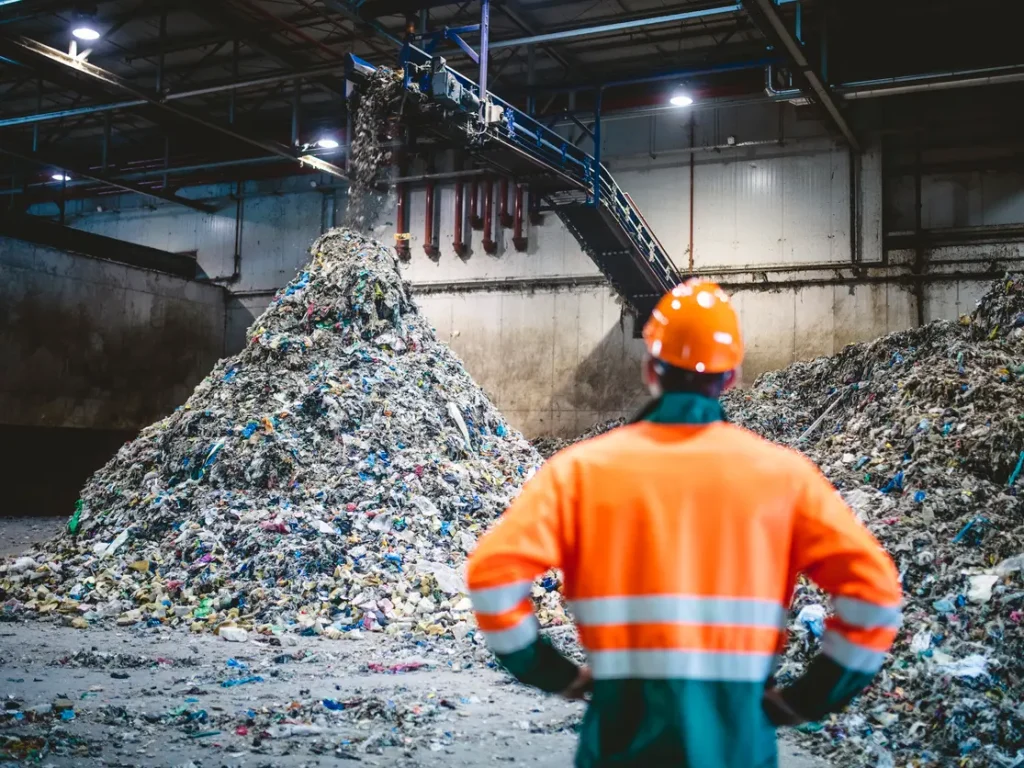
<Saudi Investment Recycling Company - SIRC operates advanced construction waste treatment facilities. Its plant in northern Riyadh processes 600 tons of demolition waste per day, achieving recycling rates exceeding 90%. The recycled materials are used in major road and housing projects, reducing reliance on new resources, saving money and reducing environmental impact, while the application of smart technologies such as BIM (Building Information Modeling) and AI (Artificial Intelligence) helps estimate waste volume and improve the quality of recycled materials before they are used in projects.Growth Drivers and Economic Opportunities
Saudi Vision 2030 and major infrastructure projects are increasing the demand for recycled building materials, the expansion of the residential sector and government projects support the adoption of sustainable solutions, especially in major cities such as Riyadh and Jeddah, and the development of waste-to-energy plants enables the economic and environmental exploitation of waste, and enhances the Kingdom's role as a regional center for waste management.Waste-to-energy plants allow for the economic and environmental exploitation of waste. Experts expect the recycling sector in Saudi construction to witness a significant expansion in the coming years, with a high percentage of recycled materials used in residential and commercial projects, as well as relying on innovation and smart technologies such as artificial intelligence and BIM will enhance recycling efficiency and reduce waste, as the Kingdom is moving towards building a circular economy in the construction sector, integrating environmental sustainability and economic opportunities, and placing it among the leading countries globally in construction waste management.
The expansion of the residential sector and government projects supports the adoption of recycled solutions, especially in major cities such as Riyadh and Jeddah, and allows the development of waste plants to utilize waste energy economically and environmentally, and enhances the role of the Kingdom as a regional center for construction waste management.