
في إطار تنظيم السوق العقارية ورفع كفاءة استخدام الأراضي، تتضح أهمية التمييز بين الأرض الخام والأرض المطورة، ليس فقط من حيث التعريف، بل وفق معايير نظامية دقيقة ترتبط بالبنية التحتية والتراخيص والاعتمادات الرسمية. هذا التصنيف يشكّل أساسًا مهمًا لتحديد الالتزامات النظامية والرسوم المرتبطة بالأراضي.
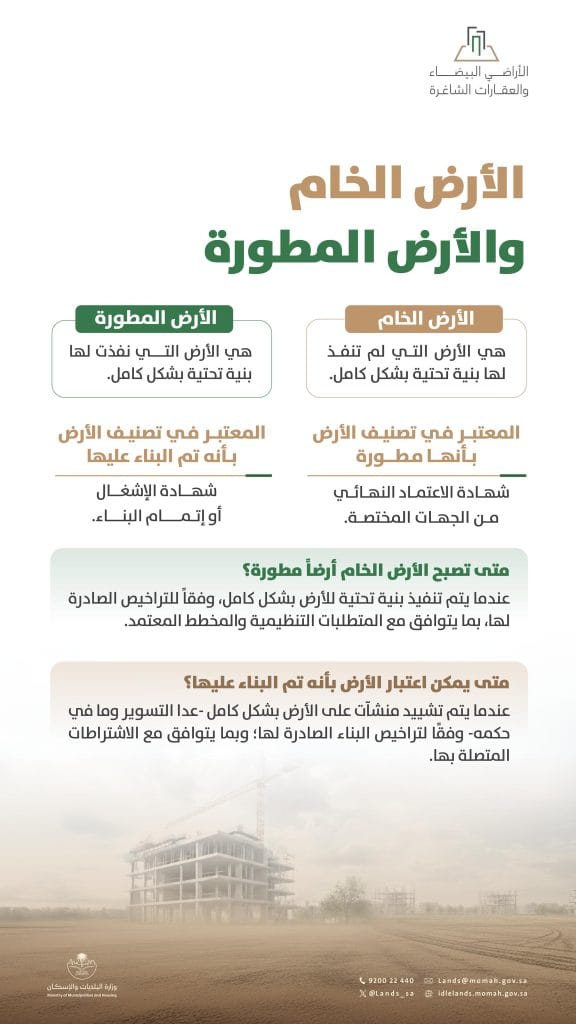
وبحسب برنامج الأراضي البيضاء والعقارات الشاغرة، تُعرَّف الأرض الخام بأنها الأرض التي لم تُنفَّذ لها بنية تحتية بشكل كامل، وتبقى غير مؤهلة للاستخدام العمراني وفق المتطلبات التنظيمية المعتمدة. ويُعتمد في تصنيف الأرض على أنها خام استنادًا إلى عدم حصولها على شهادة الاعتماد النهائي من الجهات المختصة.
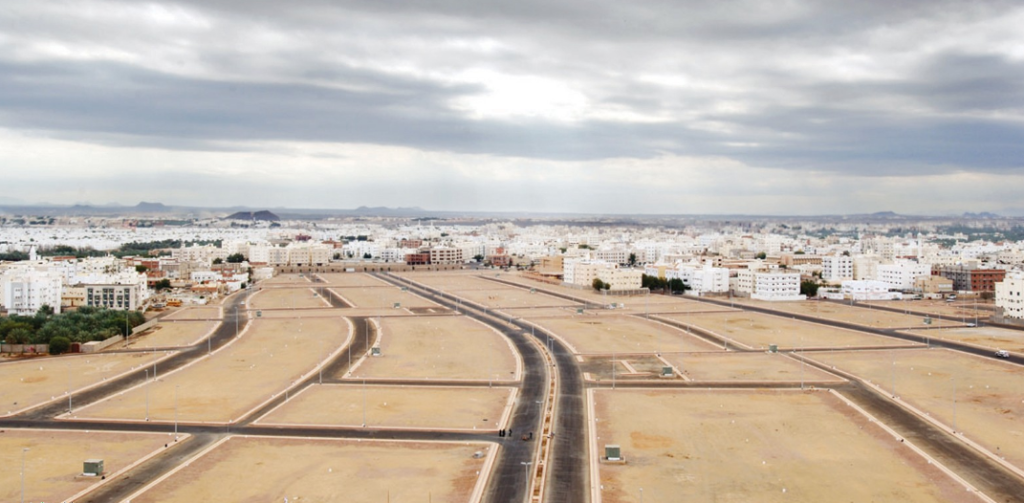
في المقابل، تُعد الأرض المطورة هي الأرض التي نُفذت لها بنية تحتية متكاملة، تشمل الخدمات الأساسية وفق المخطط المعتمد. ويُعتد في تصنيفها كمطورة بناءً على تنفيذ أعمال التطوير بالكامل، مع وجود ما يثبت ذلك رسميًا. وبشأن متى تتحول الأرض الخام إلى أرض مطورة، فإن ذلك يتم عند استكمال تنفيذ البنية التحتية للأرض بشكل كامل، وفق التراخيص الصادرة، وبما يتوافق مع المتطلبات التنظيمية والمخططات المعتمدة من الجهات المختصة.
أما اعتبار الأرض بأنه تم البناء عليها، فيتحقق عند تشييد منشآت على كامل الأرض – باستثناء التسوير وما في حكمه – وفق تراخيص البناء النظامية، وبما يتوافق مع الاشتراطات والأنظمة ذات العلاقة. ويهدف هذا التوضيح إلى تعزيز الفهم النظامي لتصنيف الأراضي، وضمان الشفافية في التعاملات العقارية، وتحفيز تطوير الأراضي بما يسهم في تحقيق التوازن في السوق العقارية ورفع كفاءة الاستفادة من الأصول العقارية.