
في تحول ديموغرافي واجتماعي غير مسبوق، يشهد المجتمع السعودي صعوداً لافتاً لظاهرة “السكن المنفرد” بين الشباب من الجنسين. لأول مرة في تاريخ المملكة، يتجه قطاع متزايد من الشباب نحو الاستقلال السكني قبل الزواج، مدفوعين بتغيرات اقتصادية واجتماعية عميقة.
هذا التحول الجذري لا يقتصر تأثيره على البنية الاجتماعية فحسب، بل يمتد ليعيد تشكيل خريطة الطلب العقاري بالكامل، خالقاً فرصاً استثمارية غير مستغلة في سوق لا يزال يركز بشكل كبير على بناء “فلل العائلة الممتدة”.
السؤال الذي يطرح نفسه بإلحاح: من يبني لجيل العزاب السعودي الجديد؟
التحول الديموغرافي: لغة الأرقام تتحدث
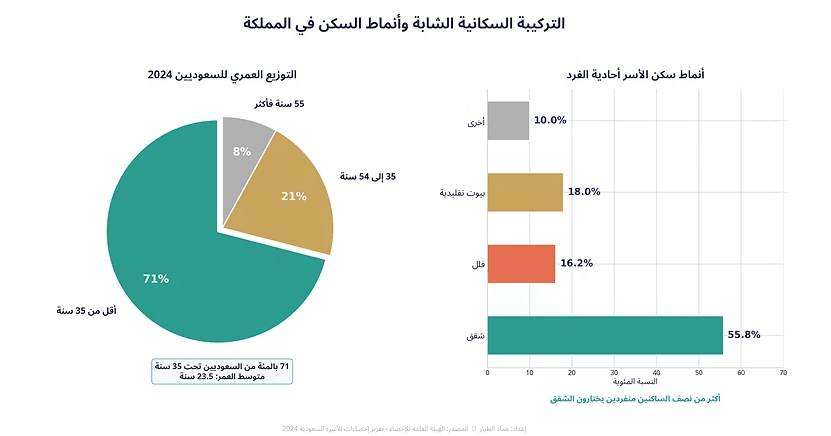
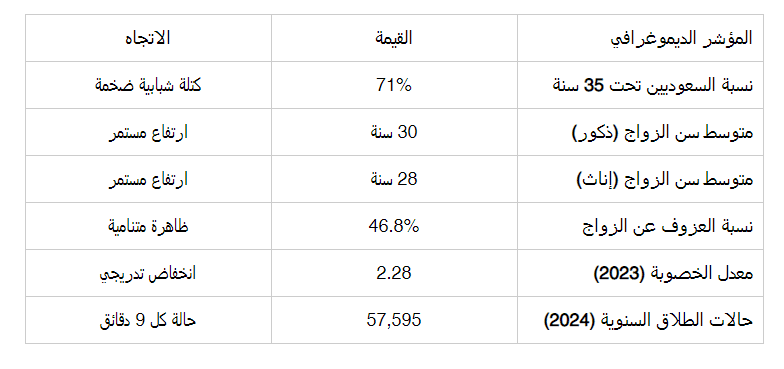
لفهم حجم هذا التحول، يجب النظر أولاً إلى التركيبة السكانية الشابة في المملكة. وفقاً لتقرير الهيئة العامة للإحصاء لعام 2024، يشكل الشباب تحت سن 35 عاماً نسبة 71% من إجمالي المواطنين السعوديين، بمتوسط عمر يبلغ 23.5 سنة فقط . هذه الكتلة الديموغرافية الضخمة تدخل سوق العمل وتتخذ قراراتها السكنية باستقلالية متزايدة، في مشهد مختلف تماماً عما عرفه جيل آبائهم.
وتشير إحصاءات الأسرة السعودية لعام 2024 إلى أن الأسر أحادية الفرد (Single-person households) أصبحت شريحة لا يستهان بها في المنظومة السكنية. المثير للاهتمام أن 55.8% من هذه الأسر تسكن في شقق، بينما 16.2% فقط يسكنون في فلل . هذا التوجه الحاسم نحو الشقق يعكس تغيراً جوهرياً في نمط الحياة والقدرة الشرائية لهذه الشريحة.
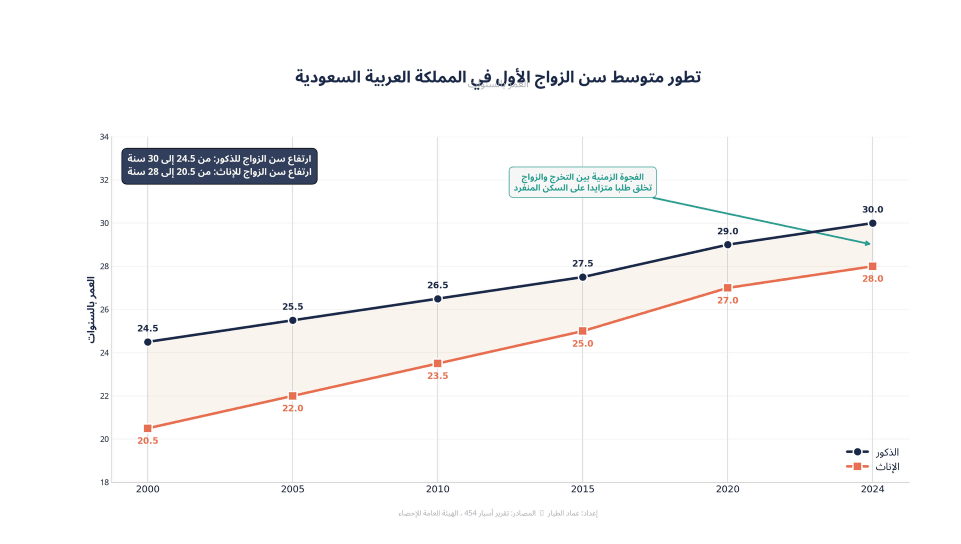
بالتوازي مع ذلك، يشهد المجتمع تأخراً ملحوظاً في سن الزواج. فقد ارتفع متوسط سن الزواج الأول إلى 28 عاماً للنساء و30 عاماً للرجال، مقارنة بـ 20.5 و24.5 على التوالي في مطلع الألفية . وتكشف دراسة أكاديمية حديثة أن نسبة العزوف عن الزواج بين الشباب السعودي بلغت 46.8%، وهي نسبة غير مسبوقة تاريخياً .
65.3% من الشباب السعودي غير متزوجين حالياً، ونسبة المتزوجين من إجمالي السكان انخفضت من 54.09% في 2024 إلى 52.77% في 2026 (3-6
هذا التأخر، سواء كان خياراً شخصياً أو نتيجة لضغوط اقتصادية حقيقية (حيث تتراوح تكلفة الزفاف في المدن الكبرى بين 145,000 و850,000 ريال، مع ارتفاع بنسبة 30% في عام 2023 وحده )، يخلق فجوة زمنية تمتد لسنوات طويلة بين التخرج من الجامعة وتكوين أسرة. هذه الفجوة هي بالتحديد الفترة التي يبرز فيها الطلب المتصاعد على السكن المنفرد.
ولتوضيح حجم التحدي الاقتصادي، يكفي أن نعلم أن رواتب الفئات الشابة تتراوح بين 4,000 و7,000 ريال شهرياً ، بينما ارتفعت الإيجارات بنسبة 9.7% في عام 2025 . هذه المعادلة الصعبة تجعل السكن المنفرد في وحدات صغيرة وبأسعار معقولة ضرورة وليس خياراً.
الفجوة بين العرض والطلب: من يبني لجيل العزاب؟
رغم هذا التحول الواضح في الطلب، لا يزال العرض العقاري متأخراً في مواكبة هذه التغيرات. السوق العقاري السعودي، تاريخياً، مصمم لتلبية احتياجات العائلة الممتدة أو الكبيرة، حيث يبلغ متوسط حجم الأسرة السعودية 4.9 فرد .
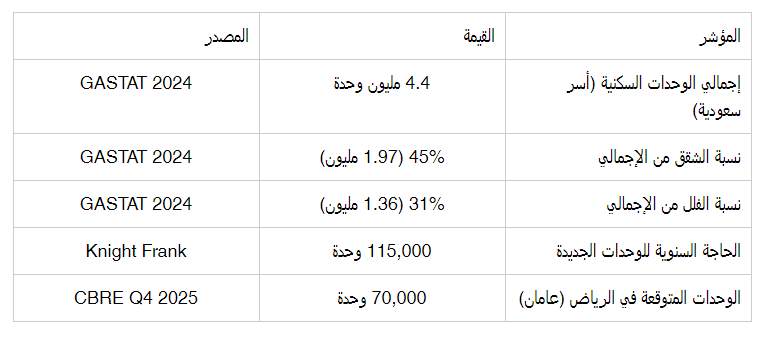
وفقاً لبيانات الهيئة العامة للإحصاء لعام 2024، بلغ إجمالي الوحدات السكنية المشغولة بأسر سعودية 4.4 مليون وحدة، بنمو 2.7% (أي 233,000 وحدة جديدة). ورغم أن الشقق تشكل 45% من هذا الإجمالي (1.97 مليون شقة)، إلا أن معظم هذه الشقق مصممة بمساحات كبيرة (3 إلى 4 غرف نوم) لتناسب العائلات، وليس الأفراد المستقلين .
هنا تكمن الفجوة الاستثمارية الحقيقية: الطلب يتزايد على “الاستوديو” والشقق ذات الغرفة الواحدة (One-bedroom apartments) في المواقع المركزية القريبة من مناطق العمل والترفيه، بينما المعروض من هذه الوحدات لا يزال شحيحاً. الشباب المستقل يبحث عن مساحات مدمجة، سهلة الصيانة، وذات تكلفة تشغيلية منخفضة، مفضلاً الموقع الاستراتيجي على المساحة الكبيرة.
وتؤكد بيانات Knight Frank أن المملكة تحتاج إلى بناء 115,000 وحدة سكنية سنوياً حتى عام 2030 لتلبية الطلب المتزايد، أي ما مجموعه 825,000 وحدة خلال الفترة 2024-2030 . السؤال المحوري: كم من هذه الوحدات سيكون مصمماً لتلبية احتياجات الساكن المنفرد؟
العوائد الاستثمارية: لماذا الاستوديو هو الحصان الرابح؟
من منظور استثماري بحت، تثبت الأرقام أن الوحدات الصغيرة هي الأكثر جدوى في المشهد العقاري الحالي. في الربع الأول من عام 2026، بلغ متوسط العائد الإيجاري الإجمالي (Gross Rental Yield) في المملكة 6.84% .
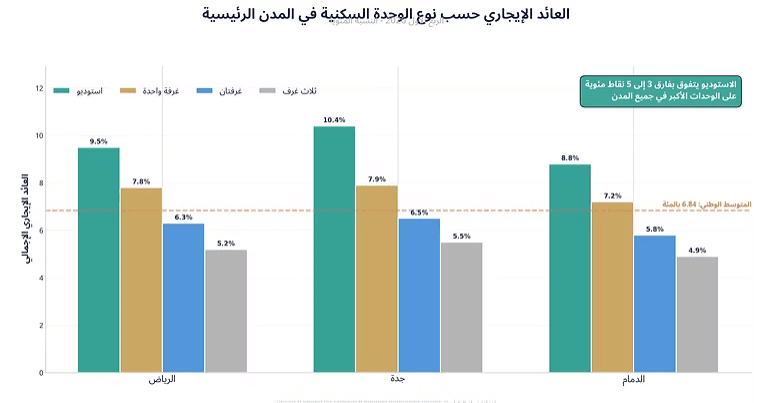
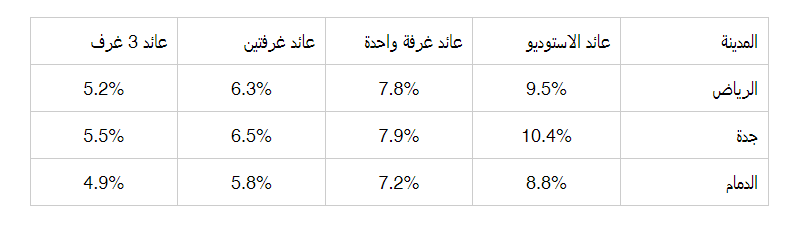
لكن عند تحليل العوائد حسب نوع الوحدة، تتفوق شقق الاستوديو بشكل كاسح. في مدينة جدة، على سبيل المثال، حققت شقق الاستوديو في حي الفيصلية عائداً إيجارياً إجمالياً بلغ 10.4% في مارس 2026، متفوقة بفارق 4 نقاط مئوية على الوحدات الأكبر مساحة . وفي الرياض، التي سجلت متوسط عائد إيجاري بلغ 8.89%، تستمر الوحدات الصغيرة في قيادة هذا النمو مدفوعة بطلب المهنيين الشباب والمغتربين .
هذا التفوق يعود لثلاثة أسباب جوهرية.
أولاً: انخفاض تكلفة الدخول: تكلفة شراء استوديو أقل بكثير من الشقق الكبيرة، مما يتيح للمستثمرين تنويع محافظهم وامتلاك وحدات متعددة بدلاً من وحدة واحدة كبيرة.
ثانياً: ارتفاع الإيجار للمتر المربع: المستأجرون مستعدون لدفع قيمة أعلى للمتر المربع مقابل الحصول على وحدة صغيرة في موقع متميز قريب من العمل والخدمات.
ثالثاً: انخفاض مخاطر الشغور: شريحة الطلب الواسعة التي تشمل الشباب المستقلين والمهنيين والطلاب والمغتربين تضمن معدلات إشغال مرتفعة على مدار العام.
شقق الاستوديو تحقق أعلى عائد إيجاري في جميع المدن الرئيسية، متفوقة بفارق 3 إلى 5 نقاط مئوية على الوحدات ذات الثلاث غرف (9،10)
وفي سياق أوسع، يشهد سوق شقق التملك في المدن الكبرى تحولاً ملحوظاً. تتراوح أسعار شقق التملك بين 500,000 ريال ومليون ريال، مع تأكيد خبراء السوق أن “المواقع المركزية تعطي الشقق الصغيرة قيمة أعلى من الوحدات الكبيرة في المناطق البعيدة” .
المهنيون الأجانب: المحرك الخفي للطلب على السكن المنفرد
عند الحديث عن السكن المنفرد، لا يمكن إغفال شريحة جوهرية تعيد تشكيل سوق الإيجارات في المدن الكبرى: المهنيون والموظفون الأجانب (White-collar expats). يجب هنا التفريق بوضوح بين العمالة التي تقطن في مساكن جماعية مخصصة للعمال، وبين الكفاءات المهنية التي تبحث عن سكن مستقل في السوق المفتوح.
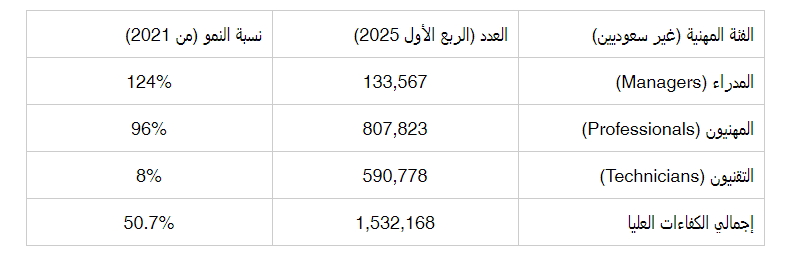
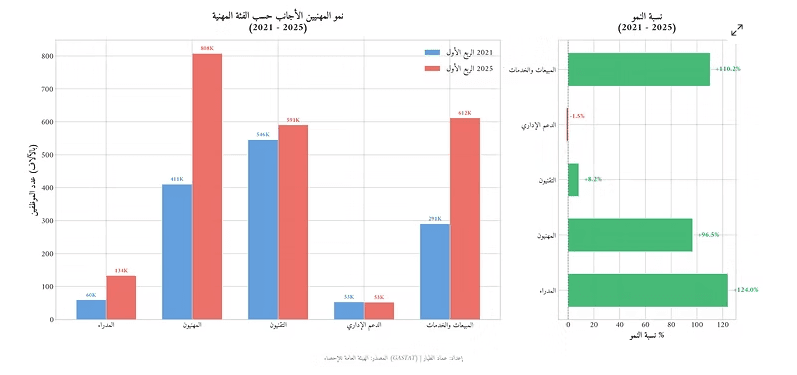
وفقاً لبيانات الهيئة العامة للإحصاء (GASTAT) للربع الأول من عام 2025، بلغ عدد المهنيين الأجانب في الفئات العليا (مدراء، مهنيون، وتقنيون) أكثر من 1.53 مليون موظف، مسجلين نمواً استثنائياً بنسبة 50.7% مقارنة بعام 2021 . وإذا أضفنا فئات الدعم الإداري والمبيعات، فإن إجمالي هذه الشريحة يقارب 2.2 مليون موظف.
هذه الكفاءات، التي تستقطبها المملكة ضمن مستهدفات رؤية 2030 في قطاعات التقنية، والسياحة، والطاقة المتجددة، والمالية، تأتي غالباً بعقود عمل فردية. وتكشف دراسة حديثة لشركة “ميرسر” (Mercer) أن 75% من الشركات في السعودية تقدم بدل سكن منفصل لموظفيها، وقد ارتفعت هذه البدلات بنسبة 8% بين عامي 2024 و2025 لمواكبة ارتفاع الإيجارات.
هذا التدفق للكفاءات الأجنبية، والتي تتراوح أعمار الكثير منهم بين 30 و55 عاماً ويأتون بمفردهم في بداية تعيينهم، يخلق ضغطاً هائلاً على قطاع الشقق الصغيرة والاستوديوهات. وتؤكد تقارير السوق أن الإيجارات السكنية في الرياض ارتفعت بأكثر من 10% سنوياً، مما دفع الحكومة لإقرار تجميد للإيجارات لمدة خمس سنوات في العاصمة بدءاً من سبتمبر 2025 لضمان استقرار السوق .
هذه الأرقام تؤكد أن الطلب على السكن المنفرد ليس مدفوعاً فقط بالشباب السعودي، بل تدعمه قوة شرائية أجنبية تبحث عن وحدات مدمجة، حديثة، وقريبة من مراكز الأعمال، مما يجعل الاستثمار في هذا القطاع خياراً استراتيجياً مزدوج العوائد.
ظاهرة عالمية بنكهة سعودية: مقارنة دولية
لا تقتصر ظاهرة السكن المنفرد على المملكة، بل هي اتجاه عالمي متسارع. لكن ما يميز الحالة السعودية هو سرعة التحول في مجتمع كان تقليدياً يعتمد على نموذج الأسرة الممتدة.
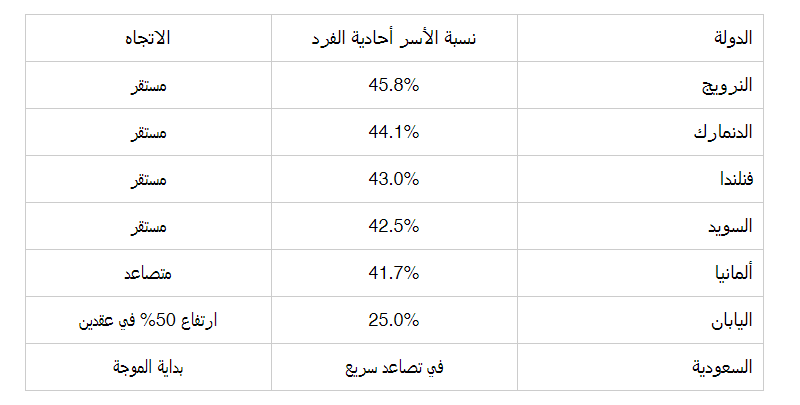
في الدول الاسكندنافية، تتجاوز نسبة الأسر أحادية الفرد 40% من إجمالي الأسر . وفي اليابان، ارتفعت هذه النسبة بنسبة 50% خلال العقدين الماضيين ، مما أدى إلى تحول جذري في سوق العقار نحو الوحدات المدمجة (Compact units) ومفهوم “المعيشة الذكية” (Smart living).
المملكة العربية السعودية تقف اليوم عند بداية هذه الموجة. والدرس المستفاد من التجارب الدولية واضح: الأسواق التي استبقت هذا التحول وطورت منتجات سكنية تناسب الساكن المنفرد حققت عوائد استثنائية، بينما تلك التي تأخرت واجهت فائضاً في الوحدات الكبيرة ونقصاً حاداً في الوحدات الصغيرة.
الآثار الديموغرافية والاقتصادية طويلة المدى
استمرار ظاهرة السكن المنفرد سيترك بصمات عميقة على المشهد الحضري والاقتصادي في المملكة، ويمكن رصد ثلاثة محاور رئيسية لهذا التأثير.
1- المحور الأول هو إعادة تصميم الأحياء السكنية. سنشهد تحولاً متسارعاً نحو مشاريع “الاستخدام المختلط” (Mixed-use developments) التي تدمج السكن المدمج مع مساحات العمل المشتركة (Co-working spaces)، والمقاهي، والخدمات الأساسية، لتلبية احتياجات نمط الحياة السريع للشباب المستقل. هذا النموذج بدأ يظهر بالفعل في مشاريع رؤية 2030 الكبرى، ومن المتوقع أن يتوسع ليشمل الأحياء القائمة.
2- المحور الثاني هو تغير أنماط الاستهلاك. الأسر أحادية الفرد لها أنماط استهلاك مختلفة جوهرياً عن الأسر التقليدية. هذه الشريحة تميل أكثر نحو الخدمات، وتوصيل الطعام، والترفيه خارج المنزل، والاشتراكات الرقمية، مما سيحفز قطاعات اقتصادية جديدة ويعيد توزيع الإنفاق الاستهلاكي.
3- المحور الثالث يتعلق بمعدلات الخصوبة. تأخر سن الزواج والاستقلال السكني يرتبطان عالمياً بانخفاض معدلات الخصوبة، والتي تراجعت بالفعل في المملكة من 6.6 في عام 1960 إلى 2.28 في عام 2023، مع توقعات بوصولها إلى 2.12 في 2025 . هذا التراجع، وإن كان طبيعياً في سياق التحول الديموغرافي، يستدعي سياسات حضرية واقتصادية ذكية تدعم تكوين الأسرة مستقبلاً دون إغفال احتياجات الشريحة المتنامية من الساكنين المنفردين.
الخلاصة: فرصة لمن يقرأ التحولات
ظاهرة السكن المنفرد ليست مجرد “تريند” عابر، بل هي انعكاس لنضج ديموغرافي واقتصادي يعيشه المجتمع السعودي في ظل رؤية 2030. المطورون العقاريون الذين سيستمرون في بناء “فلل العائلة الممتدة” فقط، قد يجدون أنفسهم خارج المنافسة في السنوات القادمة.
السوق يحتاج إلى 115,000 وحدة سكنية سنوياً حتى عام 2030 لتلبية الطلب . الفائزون في هذه المرحلة هم من يدركون أن “جيل العزاب” الجديد لا يبحث عن مساحات شاسعة، بل عن جودة حياة، وموقع مركزي، وتصميم ذكي. الاستثمار في الاستوديوهات والشقق الصغيرة ليس مجرد استجابة لطلب حالي، بل هو رهان مبني على قراءة دقيقة لمستقبل التركيبة السكانية في المملكة.
الفرصة واضحة أمام المطورين والمستثمرين الذين يملكون الجرأة لقراءة هذا التحول والاستجابة له. والسؤال لم يعد “هل سيحدث هذا التحول؟”، بل أصبح “من سيكون أول من يستثمر فيه بالشكل الصحيح؟”
المراجع
[1] الهيئة العامة للإحصاء (GASTAT)، تقرير إحصاءات الشباب السعودي، 2024.
[2] وكالة الأنباء السعودية (SPA)، “الهيئة العامة للإحصاء تصدر تقرير إحصاءات الأسرة السعودية 2024”.
[3] تقرير أسبار رقم 454، “تأخر سن الزواج في المجتمع السعودي: بين التحديات الاجتماعية والتحولات الاقتصادية”، فبراير 2026.
[4] ResearchGate، “Prevalence of Marriage Abstinence Among Saudi Youth”.
[5] المصدر السابق (تقرير أسبار رقم 454).
[6] GeoFactBook / Ehsaeyat، إحصاءات الزواج والطلاق في السعودية 2024-2026.
[7] أرقام (Argaam)، “إحصاءات المساكن: 4.4 مليون وحدة سكنية مشغولة بأسر سعودية في 2024”.
[8] Bloomberg / Knight Frank، “السعودية تحتاج لبناء 115,000 منزل سنوياً لتلبية الطلب”، نوفمبر 2024.
[9] Bayut، “عوائد الإيجار في السعودية: أفضل المدن وأنواع العقارات”، الربع الأول 2026.
[10] Sands of Wealth، “بيانات عوائد الإيجار في جدة – الاستوديو”، أبريل 2026.
[11] Arab News، “Flexible sales models, pricing options drive Saudi households to homeownership apartments”، مارس 2026.
[12] We Are Solo Living، “The Countries Where Solo Households Are Commonplace”.
[13] Global Issues، “The Growth of One-Person Households”، أبريل 2025.
[14] Arab News، “Marriage, children and careers in Saudi Arabia”.
[15] CBRE Saudi Arabia، “Saudi Arabia Real Estate Market Review Q4 2025”.
[16] Global Property Guide، “Saudi Arabia Residential Property Market Analysis 2026”.
[17] الهيئة العامة للإحصاء (GASTAT)، بيانات سوق العمل المبنية على السجلات الإدارية للربع الأول 2025.
[18] Arab News، تقرير Mercer حول بدلات السكن والتعليم في السعودية، مارس 2026.
[19] Fragomen، تقرير سوق الإسكان السعودي: السياسات والإيجارات وتكلفة المعيشة، فبراير 2026.