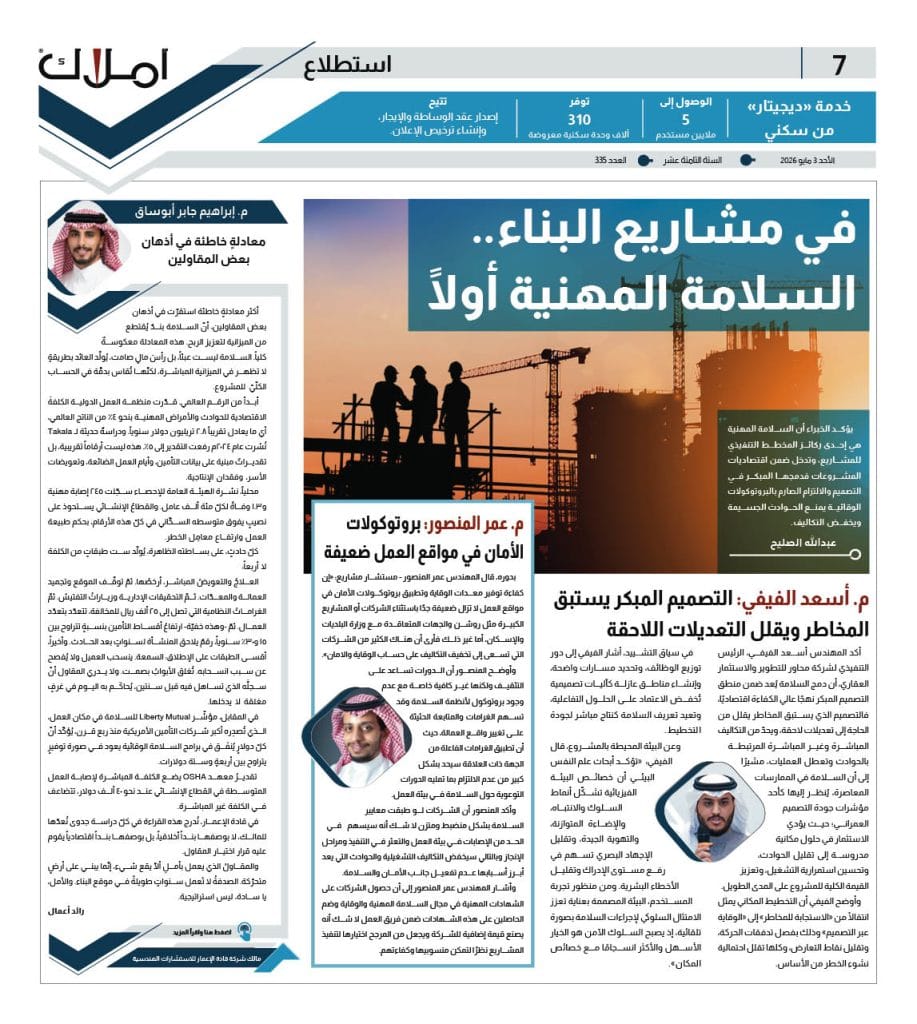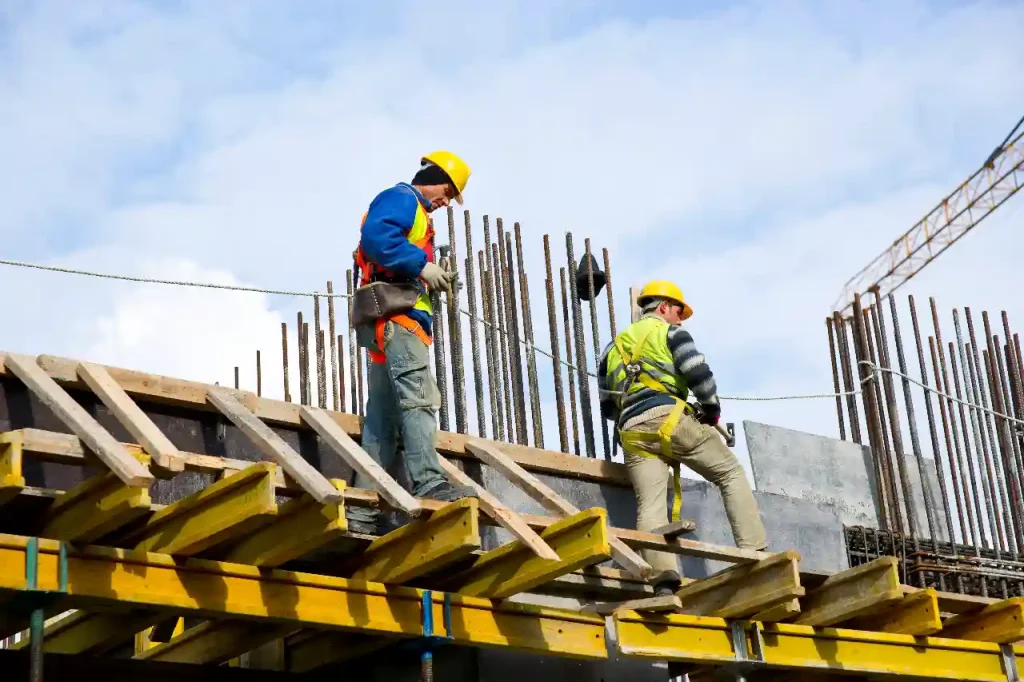

يؤكد الخبراء أن السلامة المهنية هي إحدى ركائز المخطط التنفيذي للمشاريع، وتدخل ضمن اقتصاديات المشروعات فدمجها المبكر في التصميم والالتزام الصارم بالبروتوكولات الوقائية يمنع الحوادث الجسيمة ويخفض التكاليف.
م. أسعد الفيفي: التصميم المبكر يستبق المخاطر ويقلل التعديلات اللاحقة

أكد المهندس أسعد الفيفي، الرئيس التنفيذي لشركة محاور للتطوير والاستثمار العقاري، أن دمج السلامة يُعد ضمن منطق التصميم المبكر نهجًا عالي الكفاءة اقتصاديًا، فالتصميم الذي يستبق المخاطر يقلل من الحاجة إلى تعديلات لاحقة، ويحدّ من التكاليف المباشرة وغير المباشرة المرتبطة بالحوادث وتعطل العمليات، مشيرًا إلى أن السلامة في الممارسات المعاصرة، يُنظر إليها كأحد مؤشرات جودة التصميم العمراني؛ حيث يؤدي الاستثمار في حلول مكانية مدروسة إلى تقليل الحوادث، وتحسين استمرارية التشغيل، وتعزيز القيمة الكلية للمشروع على المدى الطويل.
وأوضح الفيفي أن التخطيط المكاني يمثل انتقالًا من «الاستجابة للمخاطر» إلى «الوقاية عبر التصميم» وذلك بفصل تدفقات الحركة، وتقليل نقاط التعارض، وكلها تقلل احتمالية نشوء الخطر من الأساس.
في سياق التشييد، أشار الفيفي إلى دور توزيع الوظائف، وتحديد مسارات واضحة، وإنشاء مناطق عازلة كآليات تصميمية تُخفض الاعتماد على الحلول التفاعلية، وتعيد تعريف السلامة كنتاج مباشر لجودة التخطيط.
وعن البيئة المحيطة بالمشروع، قال الفيفي: «تؤكد أبحاث علم النفس البيئي أن خصائص البيئة الفيزيائية تشكّل أنماط السلوك والانتباه، والإضاءة المتوازنة، والتهوية الجيدة، وتقليل الإجهاد البصري تسهم في رفع مستوى الإدراك وتقليل الأخطاء البشرية. ومن منظور تجربة المستخدم، البيئة المصممة بعناية تعزز الامتثال السلوكي لإجراءات السلامة بصورة تلقائية، إذ يصبح السلوك الآمن هو الخيار الأسهل والأكثر انسجامًا مع خصائص المكان».
م. عمر المنصور: بروتوكولات الأمان في مواقع العمل ضعيفة

بدوره، قال المهندس عمر المنصور – مستشار مشاريع: «إن كفاءة توفير معدات الوقاية وتطبيق بروتوكولات الأمان في مواقع العمل لا تزال ضعيفة جدًا باستثناء الشركات أو المشاريع الكبيرة مثل روشن والجهات المتعاقدة مع وزارة البلديات والإسكان، أما غير ذلك فأرى أن هناك الكثير من الشركات التي تسعى إلى تخفيف التكاليف على حساب الوقاية والامان».
وأوضح المنصور أن الدورات تساعد على التثقيف ولكنها غير كافية خاصة مع عدم وجود بروتوكول ﻷنظمة السلامة وقد تسهم الغرامات والمتابعة الحثيثة على تغيير واقع العمالة، حيث أن تطبيق الغرامات الفاعلة من الجهة ذات العلاقة سيحد بشكل كبير من عدم الالتزام بما تمليه الدورات التوعوية حول السلامة في بيئة العمل.
وأكد المنصور أن الشركات لو طبقت معايير السلامة بشكل منضبط ومتزن لا شك أنه سيسهم في الحد من الإصابات في بيئة العمل والتعثر في التنفيذ ومراحل الإنجاز وبالتالي سيخفض التكاليف التشغيلية والحوادث التي يعد أبرز أسبابها عدم تفعيل جانب الأمان والسلامة.
وأشار المهندس عمر المنصور إلى أن حصول الشركات على الشهادات المهنية في مجال السلامة المهنية والوقاية وضم الحاصلين على هذه الشهادات ضمن فريق العمل لا شك أنه يصنع قيمة إضافية للشركة ويجعل من المرجح اختيارها لتنفيذ المشاريع نظرًا لتمكن منسوبيها وكفاءتهم.