
With rising temperatures and increasing reliance on cooling systems in homes and offices, choosing an air conditioner is no longer a simple decision based solely on price or appearance; but rather an important step linked to energy efficiency, air quality, and the unit’s suitability for the space and environment. With the variety of options available—including split and central air conditioners and various cooling systems—it has become essential to understand the fundamental differences between these systems before making a purchase decision.
First: How do you choose the right air conditioner?
Choosing air conditioner depends on a number of key factors, foremost among which is the size of the space. Small rooms require units with limited cooling capacity, while larger spaces require higher capacities or multiple systems. The nature of use also plays an important role; offices that operate for long hours require units that are more efficient and stable in performance compared to intermittent home use.
Another important factor is the building’s thermal insulation; the better the insulation, the less need there is for high-capacity units. The number of people in the space and the presence of additional heat sources, such as electrical appliances or strong lighting, must also be taken into account, as they directly affect cooling efficiency.
It is always preferable to choose high-energy-efficiency units, as they help reduce electricity consumption in the long term, even if they are more expensive to purchase, because they result in significant savings on the monthly bill.
Second: The Difference Between Air Conditioners and Cooling Units
Many people confuse air conditioners and cooling units, despite fundamental differences between them. Air conditioners provide full control over the indoor air temperature, as well as humidity regulation and air purification in some modern models, making them suitable for residential and office use year-round.
Refrigeration units, on the other hand, rely primarily on lowering the temperature without fully controlling air quality; they are often less expensive but less efficient in hot climates or in enclosed spaces with continuous use.
Consequently, air conditioners are considered a comprehensive solution, while cooling units are used as a limited or temporary option in some cases.
Third: Central Air Conditioning Systems... A Comprehensive Solution for Large Spaces
Central air conditioning systems are among the most efficient systems for large buildings such as open-plan offices, malls, and hotels, as they rely on a single central unit that distributes cool air through a network of ducts to various rooms and areas.
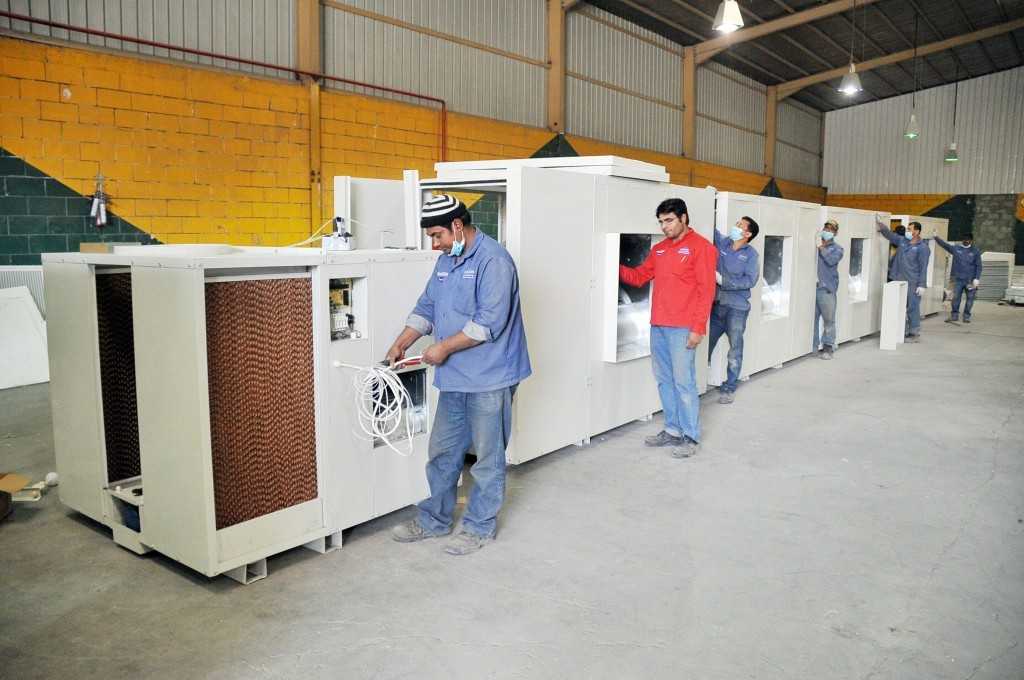
These systems are characterized by their ability to achieve balanced heat distribution within the space, while maintaining a sleek interior appearance free of visible units. They also provide centralized temperature control, which facilitates energy consumption management in large buildings.
However, central air conditioning systems require higher installation costs, in addition to the need for regular maintenance, making them a more suitable option for large projects compared to small homes.
Fourth: Which system is best?
There is no single system that can be considered the absolute best; rather, the choice depends on the nature of the space and the user’s needs. Split units are suitable for homes and individual rooms, while central systems are better suited for large buildings that require comprehensive air distribution.
Simple cooling units may be a temporary, economical option, but they do not provide the same level of comfort and efficiency as modern air conditioning systems.