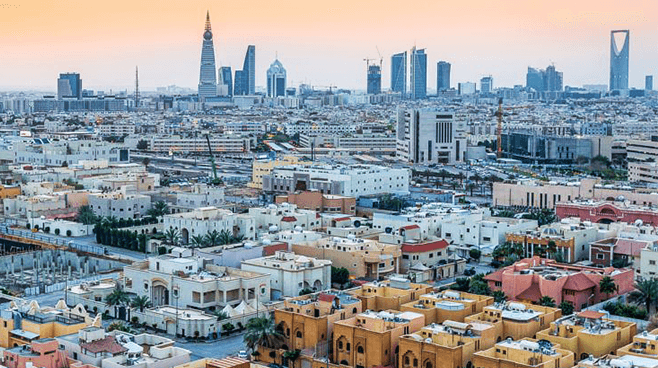
When you stand in front of one of the shiny office towers in Riyadh, with their reflective glass facades and dazzling architectural design, you might think at first glance that you’re looking at a workspace on par with the best that New York, London, or Singapore has to offer. International and local companies pay rents of up to 3,630 riyals per square meter annually, expecting a full «Grade A» experience in every detail. But once you step past the luxurious marble lobby, the real story begins to unfold.
Slow elevators that make you wait a long time during rush hour, parking spaces that aren’t enough for even half the employees, central air conditioning with uncontrollable temperature settings, and a facilities management team that deals with breakdowns with a «reactive» approach rather than preventive maintenance. These are not exceptions, but rather the daily reality experienced by many companies in towers that are theoretically classified among the highest categories.
In this investigation, we delve deep into the Saudi office market, to reveal the gap between «paper ratings» and «actual experience,» and why our luxury towers need a comprehensive redefinition of the concept of quality to keep pace with the ambitions of Vision 2030 and compete on the international stage.
The Illusion of Classification: How do we define Grade A?
Globally, no single entity has a monopoly on classifying office buildings, but there is a consensus among major real estate consulting firms on specific criteria. Grade A buildings are the best in their class, characterized by strategic locations, advanced technical infrastructure, high energy efficiency, and integrated services including security, concierge, and professional facilities management.
In contrast, Grade B buildings are good but older and lack luxury features, while Grade C buildings are older structures with basic infrastructure and limited amenities.
The problem in our local market lies in «grade inflation.» Many developers label their projects «Grade A» simply by using modern glass facades and a good location, ignoring the fact that the true classification lies in the «software» (facilities and services management) and not just the "hardware" (concrete structure).
Foreign headquarters boost occupancy rates
The office market in Riyadh is experiencing unprecedented growth. With the success of the Regional Headquarters Program, which has attracted more than 700 global companies as of early 2026—exceeding the Vision 2030 target of 500 companies ahead of schedule— finding premium office space has become a real challenge.
The occupancy rate for Class A offices in Riyadh reached 99%, an exceptional figure by global standards. This massive demand has driven average Class A rents to 2,750 riyals per square meter annually, a 15.1% increase year-over-year. In prime locations, rents reached 3,630 riyals per square meter.
This shortage of premium supply has forced many companies to turn to Class B office space, leading to a staggering 26% increase in rents to 1,335 riyals per square meter. When the market is in such a "landlord’s market," some landlords have little incentive to invest in improving the quality of facilities management, as the building is fully leased regardless of the level of service.
An employee’s daily experience is the true measure of an office building’s quality. When we compare some of our luxury towers to international standards, several fundamental challenges emerge:
First, the parking crisis: In cities like London or Singapore, employees rely heavily on public transportation, reducing the need for parking spaces. In Riyadh, however, where the car is the primary mode of transportation, allocating one parking space for every 50 or 100 square meters of leasable space creates a daily crisis for employees and visitors alike.
Second, elevator efficiency: In global Class A buildings, the number and speed of elevators are calculated based on detailed traffic analysis to ensure that wait times do not exceed 30 seconds during peak hours. In contrast, some of our towers suffer from daily bottlenecks due to poor planning or reliance on outdated guidance systems.
Third, Facilities Management: This is the biggest difference: professional management is not limited to cleaning and security, but also includes predictive maintenance of HVAC systems, indoor air quality management, and providing a seamless experience for tenants. Unfortunately, some towers are still managed with a "Class C" mindset, where intervention only occurs after a breakdown has occurred.
The challenge isn’t limited to leasing and facilities management. When a company leases space in a luxury tower, it often takes delivery on a «shell and core» basis. The cost of a fit-out in Riyadh ranges from 1,200 to 2,000 riyals per square meter for a premium-level space and may exceed 3,500 riyals for a luxury-level space.
This means that a company leasing 500 square meters could pay more than one million riyals to fit out the office before any employees even start working. In markets such as Dubai or London, landlords often offer Tenant Improvement Allowances to help cover these costs—a concept that remains rare in our local market due to strong demand.
New Classification Standards
While we discuss the challenges of elevators and parking, the world is moving toward entirely new standards. The British Council of Offices (BCO) recently announced that the current rating system (A, B, C) has become "unfit for purpose," with 97% of real estate professionals believing it needs to be changed.
The new global system is moving toward evaluating offices based on sustainability (such as LEED and BREEAM certifications), technology (WiredScore), and the quality of the work environment and employee health (WELL Certification). In Singapore, for example, 90% of Class A offices hold green building certifications.
Shining Examples of International Standards
Despite the challenges, there are undeniably shining examples shaping the future of the office market in Saudi Arabia. The King Abdullah Financial District (KAFD) represents a quantum leap that comes very close to meeting strict international standards. With rents ranging from 2,000 to 3,500 riyals per square meter, the center offers integrated infrastructure, professional facilities management, and global sustainability certifications.
This model proves that the Saudi market is capable of delivering a real estate product that competes globally when an ambitious vision is combined with meticulous execution and professional management.
700,000 square meters to get back on track
With more than 700,000 square meters of Class A office space expected to enter the Riyadh market by late 2026, through mega-projects such as Diriyah Gate and the non-profit Prince Mohammed bin Salman City (Misk), we are facing a golden opportunity to get back on track.
These new spaces must not settle for merely beautiful glass facades; rather, they must adopt global standards in facilities management, sustainability, and user experience. Developers who understand that “Class "A" category is a commitment to delivering exceptional service every day—not just a marketing slogan—are the ones who will lead the market in the coming phase.
The Saudi real estate market is maturing rapidly, and international and local companies have become more aware and demanding. It is no longer acceptable to pay Class A prices for Class C services. The time has come to elevate the interiors of our luxury towers so that they truly serve as a showcase befitting the ambitions of our growing economy.