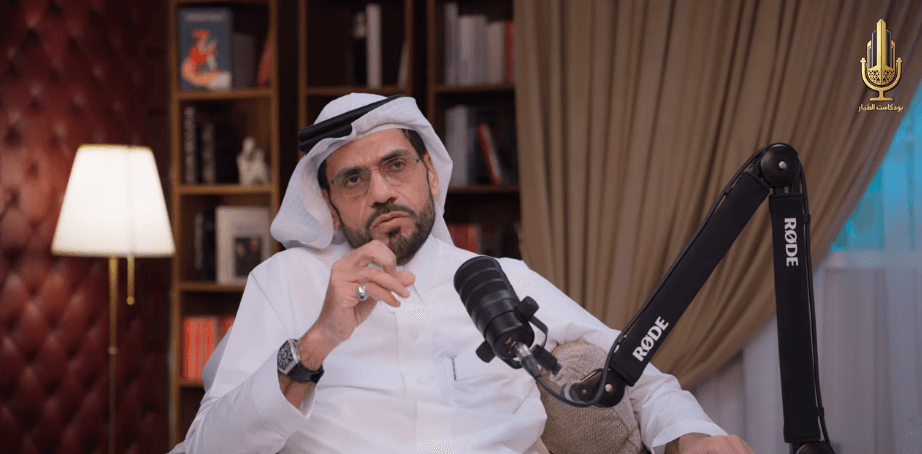

Mr. Khalid bin Shaker Al-Mubayyad, CEO of Mansat and a real estate appraisal specialist, appeared on the second episode of «The Real Estate Pilot» podcast . A journey spanning nearly three decades in the real estate sector, covering the most significant transformations the profession and the market have undergone, from the pre-internet era through to technological advancements and artificial intelligence.
Al-Mubayyad recalled his early days in the real estate sector in the late 1990s, when the market suffered from a negative stereotype, and real estate brokerage and appraisal had not yet reached the level of regulation and professionalism seen in the sector today. He explains that his first experience at «Al-Taswiqa Real Estate» introduced him to real estate brokerage and appraisal, and led him to recognize early on the importance of developing this profession and transforming it into a professional activity based on clear foundations.
He also spoke about his experience founding «Basma Real Estate» in 2008, and his philosophy of building a business on specialization and offering value that sets it apart from competitors, noting that the success of any real estate venture is not linked to the sheer number of services it provides, but rather to its ability to identify what distinguishes it and deliver it with high quality.
Al-Mubayyad revealed that real estate appraisal in Saudi Arabia, prior to approximately 2011, relied heavily on the appraiser’s opinion and personal experience, in the absence of a regulatory body that established uniform principles and standards for the profession. He believes that relying solely on opinion raised issues regarding the verifiability of the basis on which the value was established, as well as the ability to hold the appraiser accountable for his assessment.
In this context, he reviewed his early efforts to develop the appraisal profession by drawing on specialized expertise from Egypt and Lebanon and offering training courses to sector professionals, culminating in the establishment of the regulatory body for the appraisal profession in Saudi Arabia and participation in laying the groundwork for the profession’s development while drawing on international experiences and standards.
Regarding the concept of real estate appraisal, Al-Mubayyad explained that the profession combines science and art; the scientific aspect consists of unified controls, definitions, methodologies, and standards that govern the appraisal process, while the artistic aspect is reflected in the appraiser’s expertise and ability to interpret data, keep pace with developments, and use modern tools—including artificial intelligence—without straying from professional principles and standards.
Al-Mubayyad addressed one of the most prominent ideas he has worked on to improve the appraisal process: the separation of property inspection from value determination. He explains that the person who inspects the property and collects the basic data should not be the same person who determines its value, thereby reducing the likelihood of being influenced by the property owner or the party requesting the appraisal, while also helping to expedite the appraisal process and meet the needs of entities that require large numbers of appraisals.
Al-Mubayyad explained that real estate appraisal relies on three main methods, foremost among which is the market or comparative approach, which involves comparing the property to similar transactions and properties on the market. In cases where it is difficult to find suitable comparables, the income or residual value approach may be used, along with the cost approach, with the possibility of using more than one method and justifying the choice of the approach used.
The episode also addressed the difference between price, cost, and value, and the importance of distinguishing between these concepts when dealing with real estate, as part of an effort to simplify real estate appraisal concepts and convey them to non-specialists. On another note, Al-Mubayyad spoke about the future of the profession in light of technological advancements, emphasizing that the introduction of new tools such as artificial intelligence does not mean abandoning the scientific foundations of valuation, but rather presents an opportunity to develop the practice and enhance its efficiency, while maintaining the standards and methodologies that govern the profession.