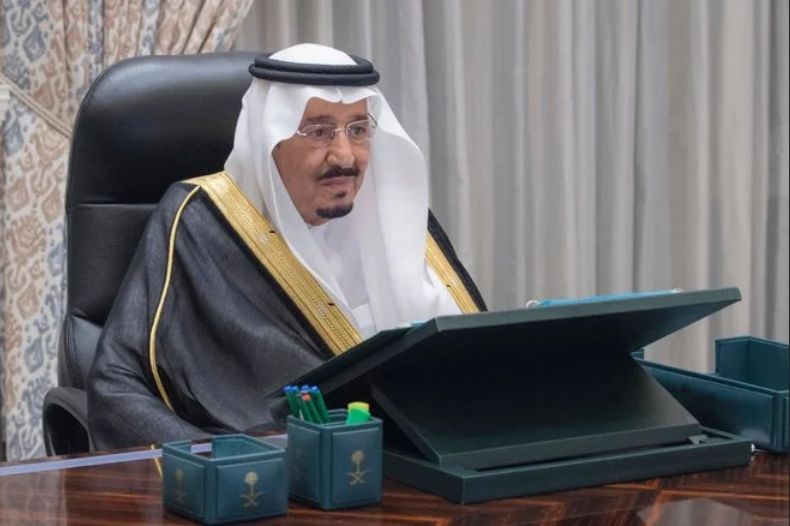

In the history of nations, major transformations are not measured solely by the number of years, but rather by the impact those years have on people, places, state institutions, and the future. In the Kingdom of Saudi Arabia, the anniversary of the pledge of allegiance to the Custodian of the Two Holy Mosques , King Salman bin Abdulaziz Al Saud – may God protect him – is a reminder of a long journey of work that began decades before he assumed the reins of power and has continued throughout his reign through projects, programs, and reforms that have reshaped many aspects of life in the Kingdom.
Monday, September 14, 2026, marks the twelfth anniversary of King Salman’s accession to the throne , and the Kingdom is proceeding on a broad development path based on a clear vision for the future, combining the development of state institutions, diversification of the economy, empowerment of the nation’s citizens, and strengthening the Kingdom’s political, economic and cultural presence on the international stage.
King Salman’s relationship with development projects did not begin with his accession to the throne; for more than five decades, Riyadh has been the scene of a broad administrative and developmental experiment, during which the capital has transformed from a city with limited population and capabilities into one of the most prominent, fastest-growing, and most influential Arab capitals.
Early experience in management and city building
King Salman bin Abdulaziz was born on the 5th of Shawwal, 1354 AH (December 31, 1935 CE). He is the twenty-sixth son of King Abdulaziz Al Saud, and his mother was Princess Hessa bint Ahmed Al Sudairi. He grew up under the care of his father, King Abdulaziz, and received his education at the Princes' School in Riyadh. From a young age, he was keen on memorizing the Holy Quran and studying the Prophetic Hadiths, thus instilling in him early on a deep connection to history, identity, and the values that formed the foundation of the Saudi state.
At the age of nineteen, his practical experience in administration began when he was appointed acting governor of the Riyadh region in 1373 AH, corresponding to 1954 AD, before the royal decree was issued appointing him governor of the region with the rank of minister.
From here began one of the longest administrative experiments in the history of the Kingdom, as it continued in the Emirate of Riyadh for more than fifty years, a period during which the capital witnessed a tremendous change in its urban, economic and service structure.
Riyadh, whose population at the beginning of that period was around one hundred thousand people, has today become a major city with more than 8.6 million inhabitants, and has transformed into a prominent regional economic, political and cultural center.
During those years, King Salman’s role was not limited to managing the affairs of the capital, but he became present in many national issues, close to the kings of the Kingdom who succeeded to rule, and an advisor to them, their secretary, and an envoy in a number of political and national missions.
Interest in history, culture, and society
King Salman’s interests during his years of work extended beyond administration and urban development, as his name became associated with cultural and social work and preserving the history of the Saudi state.
During his time as governor of Riyadh, his weekly majlis was known for hosting scholars, thinkers, intellectuals, and those interested in public affairs, providing a space for dialogue, the exchange of ideas, and concern for societal issues. He also served as chairman of the board of the King Abdulaziz Foundation for Research and Archives for approximately 25 years, contributing significantly to efforts aimed at documenting the Kingdom's history and preserving its sources and heritage.
One of the most prominent historical events that he oversaw was the celebration of the centenary of the founding of the Kingdom in 1419 AH, corresponding to 1999 AD, and the accompanying events, including the opening of the King Abdulaziz Historical Center and the honoring of a number of pioneers and their descendants.
From the Emirate of Riyadh to the Ministry of Defense
In Dhu al-Hijjah 1432 AH, corresponding to November 2011 AD, King Salman’s journey moved to a new stage with his appointment as Minister of Defense, where he continued to work on developing the administrative and military system, and paid attention to training, scholarship and qualification programs, in addition to supporting military projects and maneuvers and raising the efficiency of performance.
After the death of Prince Nayef bin Abdulaziz, may God have mercy on him, King Abdullah bin Abdulaziz chose him as Crown Prince, Deputy Prime Minister and Minister of Defense on 28 Rajab 1433 AH, corresponding to 18 June 2012 AD.
After decades of experience in administration and public service, King Salman assumed leadership of the Kingdom on the third of Rabi" al-Thani 1436 AH, corresponding to January 23, 2015 AD, ushering the country into a new phase of development and modernization.
Reorganizing the state and improving performance efficiency
From the early days of the era, a clear trend emerged towards reorganizing government work, raising the efficiency of state institutions, and unifying efforts among the various agencies.
In 1436 AH, corresponding to 2015 AD, a royal decree was issued to abolish 12 committees and supreme councils, and to establish the Council of Political and Security Affairs and the Council of Economic and Development Affairs, in a step aimed at raising the efficiency of decision-making and achieving greater integration between government agencies.
The following years also witnessed the restructuring of a number of ministries and government agencies, whether through merging, separating, or creating new entities, in parallel with the establishment of institutions and programs aimed at improving the efficiency of government spending and projects, accelerating digital transformation, and developing administrative performance.
These systems include the National Transformation Program, the Government Spending and Projects Efficiency Authority, the Digital Government Authority, and the National Center for Government Resource Systems, in addition to the establishment of the Ministry of Culture, reflecting the expansion of the scope of government work to include new sectors and renewed needs.
Combating corruption: Protecting development resources
Combating corruption has been a prominent issue during King Salman's reign, continuing an approach that has been a hallmark of his administrative career since his years working in Riyadh. In Safar 1439 AH (November 2017), a royal decree was issued establishing the Supreme Committee for Combating Corruption, chaired by Crown Prince Mohammed bin Salman, a move that reflected the state's commitment to strengthening oversight, transparency, and protecting public funds.
This coincided with strengthening the role of regulatory bodies and combating corruption, with the aim of reducing practices that could affect the efficiency of the economy or hinder the development process, and establishing the principle of accountability as a fundamental element in building the modern state.
Vision 2030: A roadmap for a more diversified economy
While the early years of King Salman’s reign witnessed a broad restructuring of the government work system, the launch of Saudi Vision 2030 represented a more comprehensive turning point in the course of national development.
In Rajab 1437 AH, corresponding to April 2016 AD, King Salman approved the vision presented by Crown Prince Mohammed bin Salman, to become a comprehensive framework for economic and social transformation programs and national development until 2030. The vision was launched from a basic goal of building a more diversified economy and less dependent on oil, while raising the efficiency of the government, enhancing the role of the private sector, developing promising sectors, creating job opportunities, and raising the quality of life.
During its implementation, the projects and related programs expanded in the fields of economy, tourism, culture, entertainment, sports, technology, industry and logistics, in parallel with the development of infrastructure and raising the competitiveness of the Kingdom.
The vision also became a framework for measuring government performance and monitoring targets, with a number of indicators achieving results that exceeded what was planned in previous time periods.
Saudi women: a growing presence in the development process
The transformations that the Kingdom witnessed extended to the social aspect, where Saudi women were given more space to participate in various fields.
Among the most prominent transformations is allowing women to drive, along with the increase in their participation rates in the labor market, and the expansion of their presence in leadership positions within ministries, government agencies, and the public and private sectors, as well as their increasing participation in diplomatic, economic, and cultural fields.
These transformations came within a broader path to empower national competencies and benefit from human energies as one of the main drivers for achieving development goals.
The Two Holy Mosques and serving the guests of God
At the heart of the Saudi state’s concerns, the Two Holy Mosques have remained present in the development process, as King Salman followed up on the third expansion works of the Grand Mosque and related projects aimed at increasing capacity and improving services provided to visitors to Mecca.
An order was also issued to establish the Royal Commission for the City of Mecca and the Holy Sites, as part of an approach aimed at developing the region and serving its residents and visitors, in addition to launching the Guests of God Service Program within the Saudi Vision 2030 programs.
This path reflects the Kingdom’s continued care for the Two Holy Mosques and its efforts to provide the best services for Umrah pilgrims, Hajj pilgrims, and visitors.
The humanitarian role: a presence that transcends borders
The giving during the reign of King Salman was not limited to internal matters, but extended to the humanitarian and relief field, where the King Salman Center for Relief and Humanitarian Aid was established to be an institutional platform for the relief and humanitarian work that the Kingdom provides to the needy and affected in different parts of the world.
This role comes as an extension of King Salman’s interest in charitable and humanitarian work, an interest that has accompanied him since his years of working in the Riyadh Governorate, in addition to his keenness to strengthen the cohesion and unity of the royal family and to take care of its affairs.
The Kingdom in an era of transformation
Today, the Kingdom faces a vastly different landscape than it did years ago. Change is no longer confined to a single project or sector, but has become a comprehensive process encompassing the economy, administration, culture, society, technology, infrastructure, and quality of life. Various regions of the Kingdom are witnessing rapid development projects, investment opportunities are expanding, cities are evolving, new sectors are emerging, and the Kingdom's presence on the global economic, political, and cultural stage is growing.
This comes under the leadership of the Custodian of the Two Holy Mosques, King Salman bin Abdulaziz Al Saud - may God protect him - and with the support of the Crown Prince, Prime Minister, His Royal Highness Prince Mohammed bin Salman bin Abdulaziz Al Saud, within a path aimed at bringing the Kingdom to a more advanced and influential position at the regional and international levels.