The future of the Saudi contracting market according to the new variables
Saudi economic growth has slowed as a result of the decline in oil exports, growing at a rate of 1.5% in 2016, according to Bloomberg's Slow Speed Calculator since the global financial crisis, as the kingdom announced a budget based on spending cuts, sweeping reform and subsidy cuts in order to balance its fiscal targets.
Vision 2030 and Transformation Plan 2020
Three-quarters of the Kingdom's budget was estimated to come from oil revenues, which necessitated the strategic direction of other resources after the slump in prices became a threat to global economies. As a result, Deputy Crown Prince Mohammed bin Salman led reforms through Vision 2030 and the National Transformation Plan 2020 where Saudi Arabia will no longer be dependent on oil, and these programs are expected to raise at least $1 billion by 2020, more than tripling non-oil revenues and balancing the budget.
Vision 2030 aims to reduce the Kingdom's dependence on oil as a resource and promote economic sources, as the vision aims to raise non-oil revenues to the equivalent of US$160 billion by 2020. Vision 2030 has three milestones: Vibrant Society, Prosperous Economy, Ambitious People.
The National Transformation Plan also restructures government agencies and institutions to deliver Vision 2030 and other national priorities, as the Kingdom will develop alternatives to oil, and plans to double private education by 30% students, schools and transform the health system into an insurance-based system while expanding and introducing the private sector on a large scale, and it will develop Islamic tourism to holy sites in hopes of attracting 18 million visitors per year, rising to 35-45 million within 5 years.
<p class="p1The future of the Saudi contracting market
The Saudi contracting market remains competitive despite the slump in oil prices, according to industry experts. The government is expected to spend about US$29.9 billion on real estate projects in 2016 and the same amount in 2017, despite the slump in global oil prices, according to industry experts. According to Faithful + Gould F+G, as the Kingdom's budget is 20% less in 2016 than in 2015, The country is doing its best to develop different monetary models that would benefit the Kingdom and compensate for its historical dependence on oil such as a private public partnership to complement its existing and considered spending.
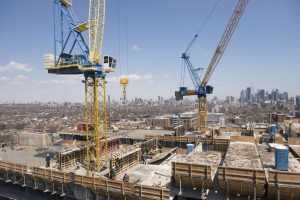
Saudi Arabia is pushing through its existing investment plans in the contracting sector, specifically in construction, to mitigate any slowdown it may feel in any other sector, and the Saudi Arabian government is committed to paying outstanding invoices to companies in the country's construction sector, Saudi Arabia is also implementing projects worth US$300 billion in the water, energy, transportation, gas and construction sectors. The construction, infrastructure and energy sectors are expected to grow from US$41,788 million in 2016 to US$57,134 million in 2017. Investments in other sectors such as health, industrialization plans, education facilities, energy and construction projects are expected to contribute to the growth of Saudi Arabia's contracting industry.
Revenue outlook for the construction and infrastructure sector
Infrastructure
The construction contracting segment revenue remains the largest and is expected to increase from $18,700 million in 2016 to $22,441 million in 2017
Tourism has been the largest contributing sector to Saudi Arabia's economy with a strong focus, aided by other sectors such as aviation, hospitality (aiming to double the number of rooms by 2020), and the vision aims to increase the annual capacity of foreign visitors for Umrah to about 1.5 million by 2020 and 30 million by 2030, and to facilitate this, the third expansion of the Two Holy Mosques has been launched, in addition to expanding, modernizing and increasing the capacity of airports. In addition, the Makkah Metro project has been initiated, and Saudi Arabia aims to double the number of Saudi heritage sites registered with UNESCO, for which the Kingdom has allocated about 10.65 billion US dollars to build and upgrade more than 20 airports to help accommodate the rapid growth of the aviation industry, and the Kingdom's retail sector is booming as the government eases restrictions on foreign investment and its young population keeps spending in check as the economy slows.
<p class="p2and Saudi Arabia has the largest number of hotels under construction in the region. Statistics from June revealed that the Kingdom currently has a total of 35,770 hotel rooms under construction in 81 hotels, with Makkah leading the way with 24,133 rooms at present, The Saudi Commission for Tourism and National Heritage also plans to develop 140 new heritage projects as part of its plan in the Kingdom-wide national reform program, including museums and historical monuments throughout the Kingdom, and the cost of these projects is estimated to be equivalent to 2.77 billion US dollars signed by 13 agreements.
In June 2016, King Salman bin Abdulaziz launched a number of projects focusing on health, education, culture and the service sector, allocating US$185 million for the development of infrastructure facilities at Taiba University and the Islamic University of Medina to be built with an investment of US$225 million.
In June 2016, King Salman launched a number of projects focusing on health, education, culture and the service sector.
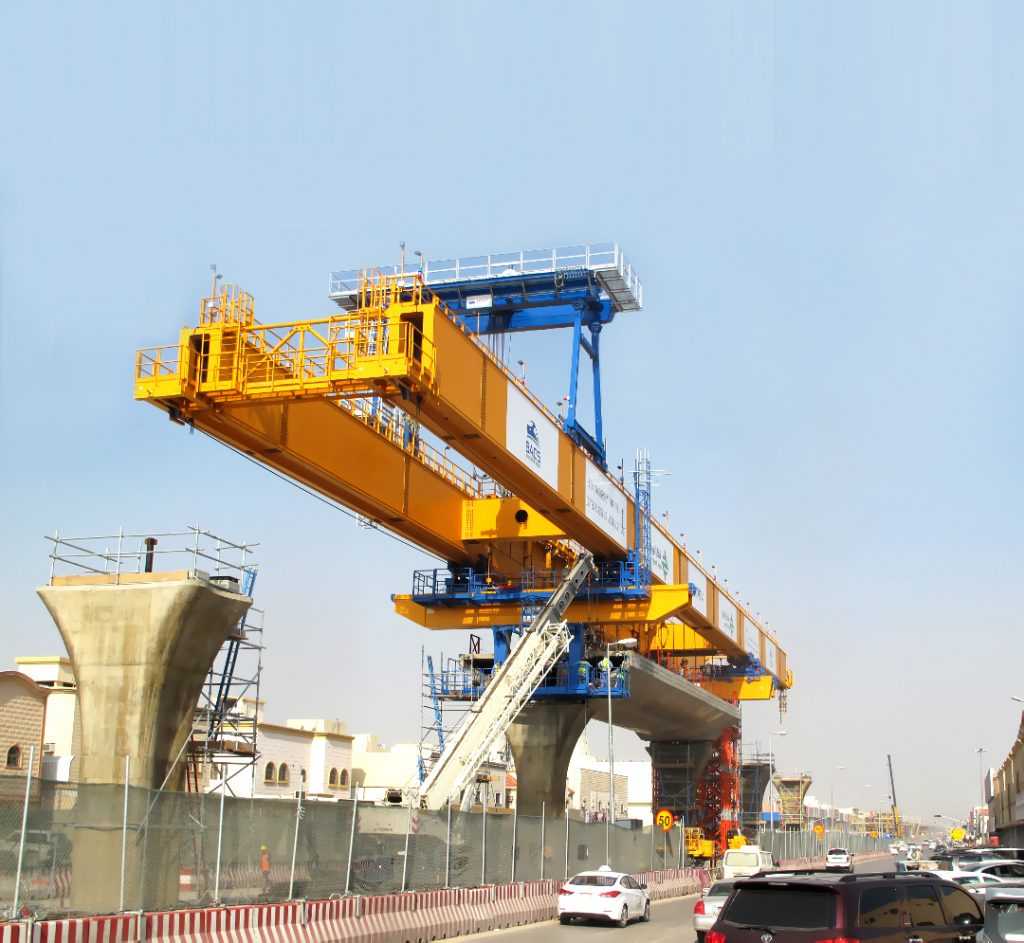
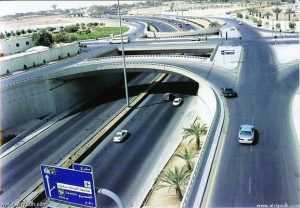
In addition to a host of planned road, rail, port and airport projects, the Kingdom is poised for strong infrastructure construction, expected to increase from US$5046 million in 2016 to US$16010 million in 2017. In the context of plans for railway projects, in light of Saudi Arabia's widely planned investment plans, where one third of the railway budget is allocated to the development of existing lines and the construction of new networks across the Kingdom, which is the main goal of Saudi Arabia's plan, which is to have a conceptual framework within the long-term development of the transportation network for passengers and goods coming to the Kingdom. In addition to achieving full coordination between the GCC countries, Saudi Arabia and other countries, the Kingdom, as a core member of the GCC, has taken the initiative to promote the establishment of the GCC Railway Capacity Center, and there are major projects in Saudi Arabia to improve security, safety, monitoring and quality of highways and the construction of bridges at an advanced stage of technologically correct development to be completed in 2017.<The Kingdom is set to build four new highways between Makkah and Jeddah, benefiting 35 million people. Saudi Aramco, National Shipping Company (Bahri), Imperial Energy and Hyundai Heavy Industries signed a Memorandum of Understanding for joint cooperation on the development of a world-class maritime complex in Saudi Arabia, where such a commitment shows the continued commitment and opportunities that can be leveraged to develop the maritime sector. About 80% of the economy is Saudi government funds in infrastructure projects and only 4 % from public partnership, and currently the Kingdom plans to work and partner with the private sector and enter into a new series of international partnerships to complete, improve and connect its infrastructure internally and across borders.
.
Conclusion
Sustainable diversification drivers have produced strong results for Saudi Arabia, in the absence of oil sector growth, prompting the government to provide more opportunities for the private sector in economic development and projects through the National Transformation Plan 2020 and Vision 2030. Over the next 15 years, there will be more large-scale investments (increasingly from the private sector), and this is expected to translate into continued demand for construction, and the Kingdom has set its goal in Strategy 2030 to increase private sector contribution to GDP from 40% in 2016 to 65% by 2030, and non-oil revenues will increase from $43 billion to $267 billion before the end of this next decade, in addition to that the Saudi government is incubating many projects, The bright side is that the Kingdom is currently addressing the housing shortage, and moving forward with some major infrastructure plans, and to see the sectors that offer opportunities for construction is the hospitality sector (hotels), retail, education, healthcare and residential and transportation with transportation infrastructure, with the transformation plan in place, Saudi Arabia is looking forward to growth and investment, which will lead to new news for the construction market.