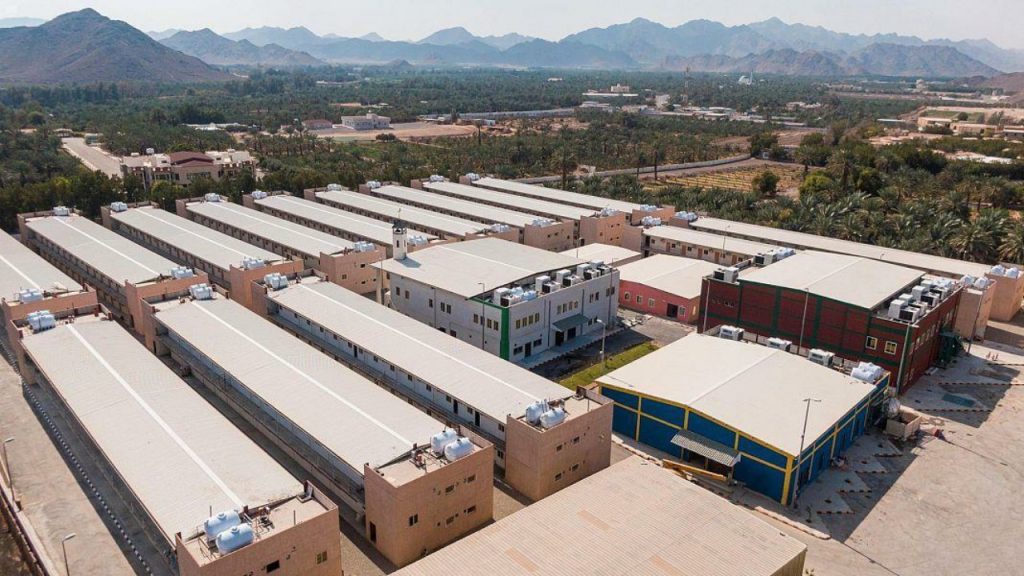

The National Program for the Development of Collective Housing for Individuals has announced an increase in the number of private-sector facilities eligible for licensing to 100, up from the 60 targeted for 2021, and 3,176 properties were licensed as collective housing, providing housing for 547,463 residents—exceeding the 2021 target of 450,000 residents— Meanwhile, the capacity for workers from small, medium, and micro-enterprises residing in licensed collective housing was increased to 253,000 workers, up from the 2021 target of 172,000.
In a statement issued yesterday, the program emphasized the importance of obtaining a license and ensuring compliance with health, technical, and safety requirements to achieve quality and sustainability in housing, noting that the service for issuing collective housing licenses to individuals is provided through the “Baladi” through one of the qualified engineering offices, with ease and convenience.
The service allows property owners and tenants to obtain collective housing licenses for individuals, as well as helping to ensure that collective housing for individuals complies with the necessary health, technical, and safety requirements for housing, and to strengthen governance and cooperation among relevant authorities involved in the development of collective housing to improve the quality of collective housing services for individuals.
It is worth noting that the National Program for the Development of Shared Housing is chaired by the Ministry of Municipal, Rural Affairs, and Housing and includes as members the Ministry of Interior, the Ministry of Health, the Ministry of Human Resources and Social Development, the Saudi Authority for Industrial Cities and Technology Zones, the Public Health Authority “Waqaya,” the Ministry of Industry and Mineral Resources, the Ministry of Commerce, the Authority for Special Economic Zones and Cities, and the Royal Commission for Jubail and Yanbu. The program has launched 22 approved initiatives to develop group housing for individuals by organizing and improving the process of housing individuals in shared units that comply with all health, safety, and regulatory requirements.
The National Program for the Development of Shared Housing seeks to enable establishments to improve the level of services provided to workers and ensure the provision of a suitable living environment in accordance with approved quality and safety standards, in addition to making it easier for property owners to market their properties and providing a sufficient supply of licensed properties to increase market competition.
A campaign was launched to raise health awareness in collective housing facilities for individuals, to improve the collective housing system and increase its supply to meet demand, emphasizing that obtaining a collective housing license for collective housing for individuals supports urban development and contributes to improving quality of life.
The collective housing program for individuals is one of the initiatives aimed at ensuring the provision of a suitable living environment for individuals, in line with their working conditions and in accordance with health and environmental standards, with the goal of developing collective housing for individuals and achieving its strategic objectives, promote a culture of healthy living environments, improve licensing and oversight procedures, alleviate overcrowding in shared housing both within and outside cities, coordinating efforts among stakeholders involved in the development of collective housing, and developing financing mechanisms for collective housing projects for individuals.