
بدأ اليوم التسجيل العقاري لـ 51،293 قطعة عقارية في ثمانية أحياء بمدينة الرياض ابتداءً من 23 يونيو 2024م الموافق 17 ذي الحجة 1445هـ، حتى نهاية يوم 26 سبتمبر 2024م الموافق 23 ربيع الأول 1446هـ.
الأحياء المستفيدة من السجل العقاري
وأوضحت الهيئة العامة للعقار بأنَّ الأحياء المستفيدة من السجل العقاري في هذه المرحلة تشمل الأحياء التالية: (حي النسيم الشرقي، حي النسيم الغربي، حي المنار، حي السلام، حي الريان، حي الروابي، حي الربوة، حي جرير)، مُبينةً بأنَّ التسجيل الأول للعقارات في هذه الأحياء مُتاحًا عن طريق منصة السجل العقاري الإلكترونية أو من خلال مراكز الخدمة، وأكّدت الهيئة بأنَّ اختيار الأحياء تم وفق معايير محددة، وسيتم الإعلان تباعًا عن بقية المناطق والأحياء التي ستستفيد من السجل العقاري في مختلف مناطق المملكة خلال الفترات القادمة. وأشارت “هيئة العقار” إلى أنَّ عدد الأحياء التي تم الإعلان عنها للسجل العقاري في مدينة الرياض بلغت حتى الآن (77) حيًّا، تشمل (9،671،191) قطعة عقارية.
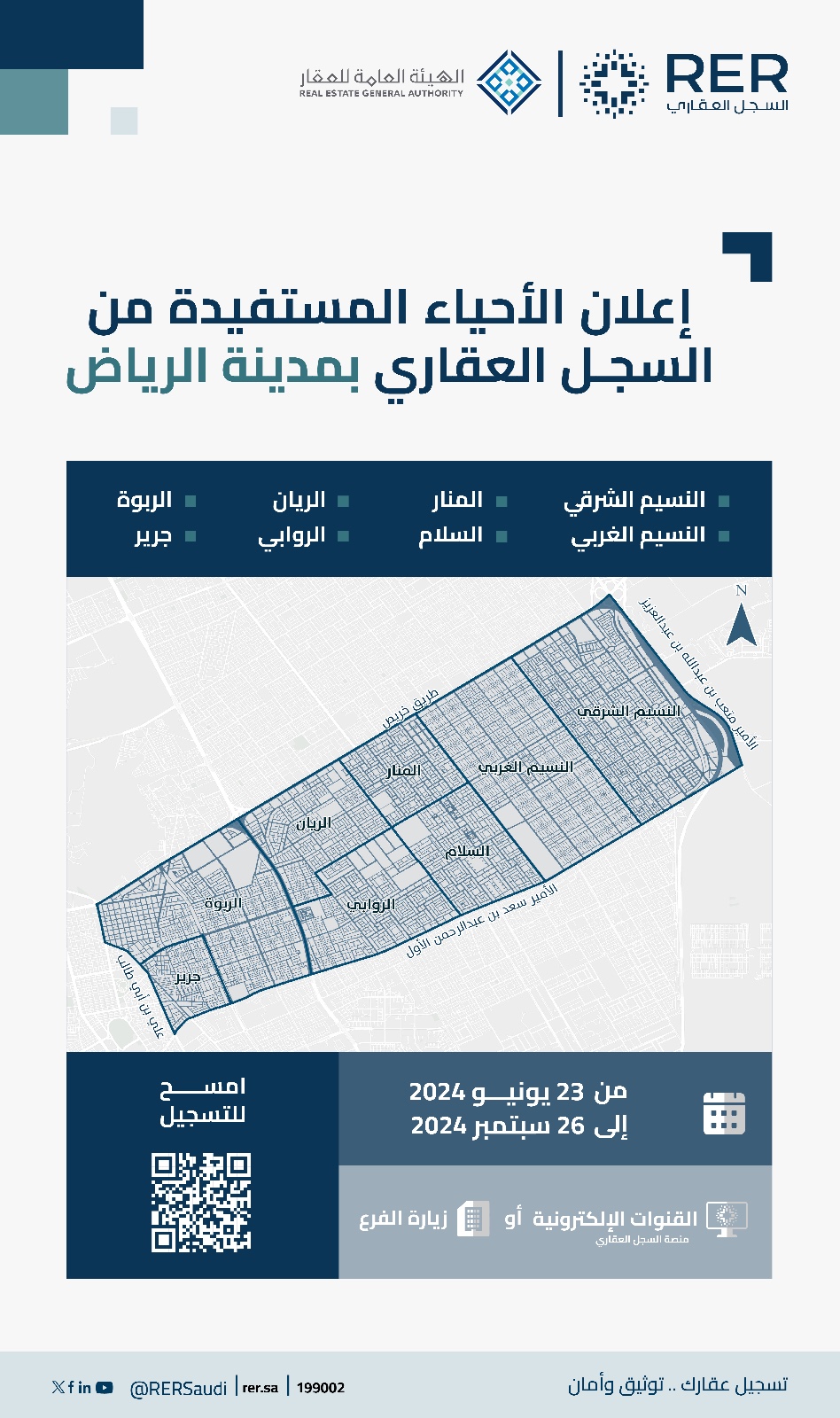 ودعت الهيئة مُلاك العقارات الواقعة ضمن الأحياء المستفيدة من السجل العقاري، إلى التحقق من صك ملكية العقار وتوفر الاشتراطات اللازمة (صك إلكتروني مُحدَّث صادر عن وزارة العدل مكتمل البيانات مستوفي شروط الملكية)، وتسجيل عقاراتهم في منصة السجل العقاري ويمكن للمستفيدين التواصل مع مركز خدمة العملاء 199002، للاستفسار عن إجراءات وخطوات التسجيل. يُذكر بأنَّ السجل العقاري هو نظام لتوثيق العقارات يعتمد على الوحدة العقارية كأساس لتسجيل الملكية والتصرفات والحقوق العقارية الأخرى المترتبة على العقار، وذلك بإصدار وثيقة تشمل على رقم العقار واسم مالكه وأوصافه من حيث نوعه وموقعه الجغرافي كإحداثيات مرتبطة بالبيانات الجيومكانية، ومساحته وحدوده وأبعاده والعقارات المجاورة له، وما له من حقوق وما عليه من التزامات وما يطرأ عليه من تغيير أو تصرفات وما يترتب عليه من حقوق للغير.