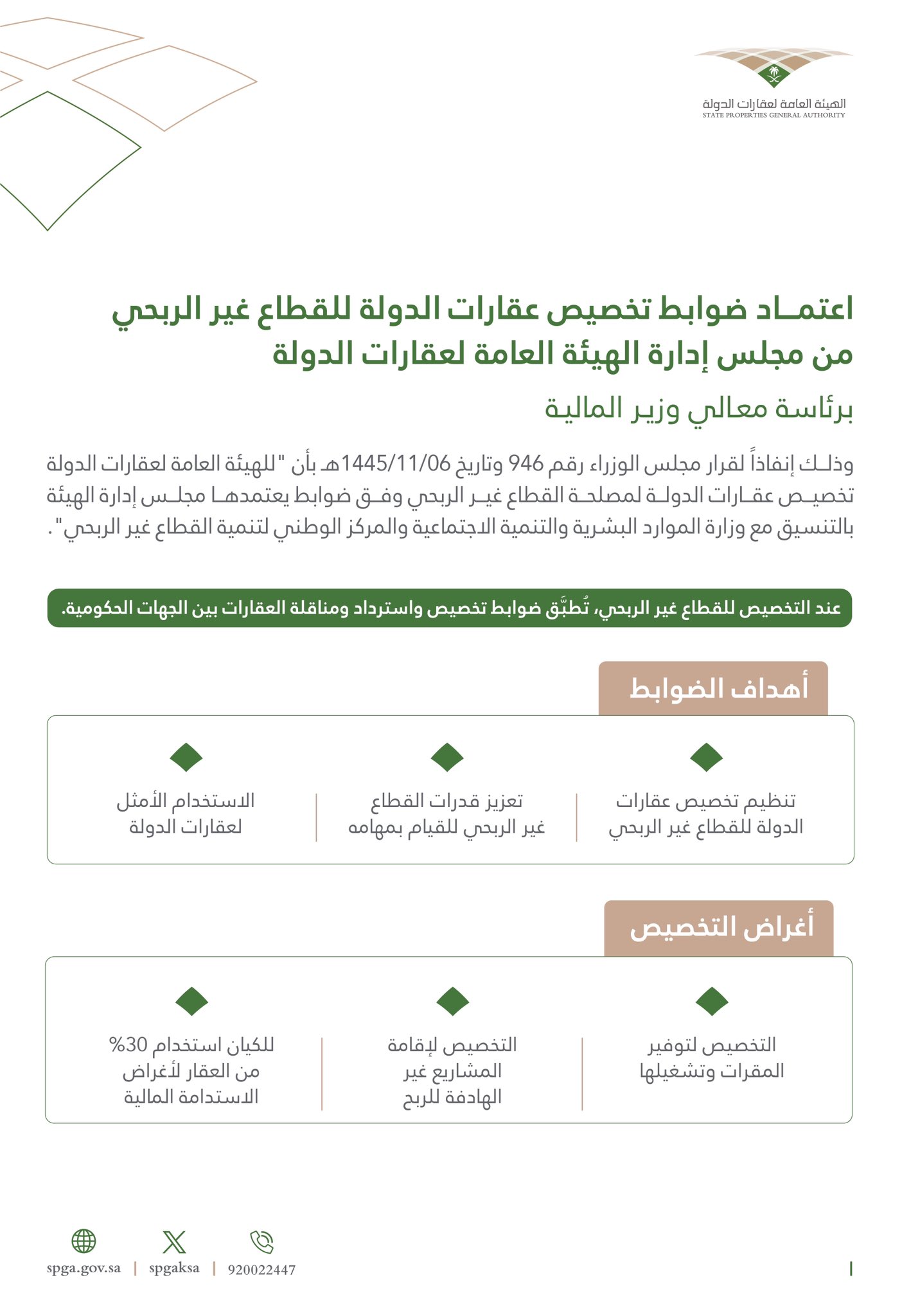

اعتمد مجلس إدارة الهيئة العامة لعقارات الدولة برئاسة معالي وزير المالية الأستاذ محمد بن عبد الله الجدعان ضوابط تخصيص عقارات الدولة لمصلحة القطاع غير الربحي.
يأتي ذلك إنفاذاً لقرار مجلس الوزراء رقم 946 وتاريخ 1445/11/06هـ القاضي بأن “للهيئة العامة لعقارات الدولة تخصيص عقارات الدولة لمصلحة القطاع غير الربحي وفق ضوابط يعتمدها مجلس إدارة الهيئة بالتنسيق مع وزارة الموارد البشرية والتنمية الاجتماعية والمركز الوطني لتنمية القطاع غير الربحي”.
وبيّنت الهيئة أن الضوابط التي تم إعدادها بالتكامل والتعاون مع وزارة الموارد البشرية والتنمية الاجتماعية وكذلك المركز الوطني لتنمية القطاع غير الربحي، تهدف إلى تنظيم ما يتصل بتخصيص عقارات الدولة للكيانات غير الربحية، وذلك دون الإخلال بالأنظمة والأوامر والقرارات والتعليمات ذات الصلة.
كما أكّدت أن اعتماد ضوابط تخصيص عقارات الدولة للقطاع غير الربحي يأتي جزءًا من الأهداف التي أطلقتها رؤية السعودية 2030، والتي من بينها تعزيز التعاون بين مؤسسات القطاع غير الربحي والجهات الحكومية؛ وذلك تعزيزاً لقدرة القطاع الثالث على زيادة نسبة المشاريع التنموية التي تحمل تأثيرًا اجتماعيًا بحلول عام 2030.
وكشفت الهيئة أن الضوابط الجديدة نصت على أن يكون التخصيص لأغراض توفير المقرات وتشغيلها محدداً باحتياج الكيان غير الربحي، وألا تزيد مساحة التخصيص على 2,500 متر مربع، كما يُسمح للكيان باستخدام 30% من العقار لأغراض الاستدامة المالية.
وأضافت الهيئة: “بالنسبة للتخصيص لإقامة المشاريع التنموية غير الهادفة للربح، فقد أكّدت الضوابط وجود كيانٍ نظامي غير ربحي، ووجود متبرع، مع السماح أيضاً باستخدام 30% من العقار لأغراض الاستدامة المالية”.
وأشارت إلى أن إنشاء المباني على هذه العقارات المخصّصة يجب أن يتم وفق المعايير والمواصفات التي تحدّدها الهيئة العامة لعقارات الدولة، موضحةً آليةَ رفع طلبات التخصيص، حيث يرفع مركز تنمية القطاع غير الربحي أو برنامج “سخاء” توصياته للهيئة بعد التحقق من استيفاء الطلب للاشتراطات.
وحثّت الضوابط الكيانات غير الربحية على استغلال العقار بالشكل الأمثل، حيث تضمنت أنّه في حال انتفاء الحاجة للعقار أو تعثر الكيان غير الربحي – لا قدر الله -، فإنه سيتم إعادة تخصيص العقار لمشروع آخر، أو استرداده من قبل الهيئة لاستخدامه في مشاريع أخرى، وذلك بالتنسيق بين المركز الوطني لتنمية القطاع غير الربحي أو برنامج “سخاء”، والهيئة.
كما أكدت الضوابط متابعة حالة العقارات المخصصة، إذ يُعِد المركز الوطني لتنمية القطاع غير الربحي أو برنامج “سخاء” تقريراً سنوياً عن طبيعة استغلال هذه العقارات.