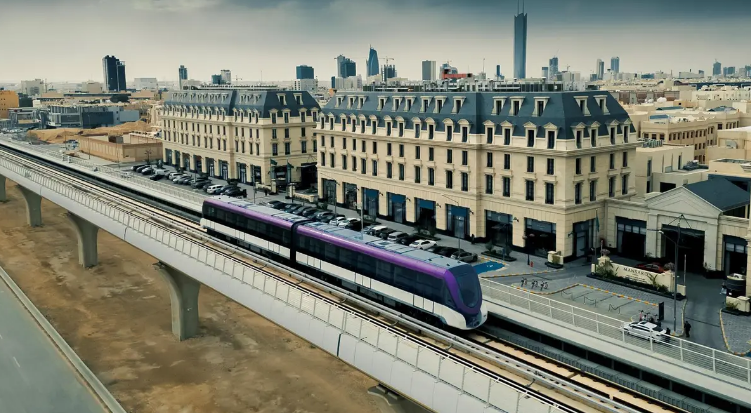

With the launch of the Riyadh train, the project that is considered one of the largest public transportation projects in the Kingdom, attention is turning to its impact on the real estate market, especially the commercial ones. The debate revolves around whether the train will reshape the demand for commercial real estate in locations far from its stations, and whether these changes will create new opportunities for young people aspiring to enter the world of entrepreneurship. Will remote properties hold a new future amid the concentration of business activities around train stations?
Focusing business activities around stations: an opportunity or a challenge?
The Riyadh train stations are expected to become major centers of attraction for diverse commercial activities, as the stations provide fast transportation services and direct connections to the city's vital areas. This trend opens up vast opportunities for the value of commercial real estate near the stations to grow, with increased demand from investors and entrepreneurs wishing to take advantage of the daily flow of passengers.
In contrast, this concentration of activities may lead to a decline in demand for distant commercial real estate, raising questions about the ability of those areas to adapt to this transformation.
Far-flung commercial real estate: Will it become a destination for entrepreneurship?
Despite the potential challenges that commercial real estate far from Riyadh’s train stations may face, a decline in demand could positively impact its prices, opening the door for young people and entrepreneurs. At lower prices, young people can rent or purchase commercial spaces to launch their own projects without incurring huge financial burdens.
These regions may undergo a qualitative transformation over time, where small businesses and emerging projects can find an environment suitable for growth away from intense competition in key areas. If these regions invest in improving infrastructure and providing outstanding services, they could become a new destination that meets the needs of the younger generation.
Reforming the real estate landscape
The Riyadh train is not just a means of transportation; it is a force of change that will reshape the real estate and commercial landscape of the city. While properties near the stations may benefit from increased demand, properties further away may become the ideal choice for young people and entrepreneurs. The question remains: Will this opportunity be exploited to transform the properties further away into new hubs for entrepreneurship, or will they remain in the shadows? The answer will depend on the vision of investors and the government’s support for effectively exploiting these changes.
Models of global cities: lessons learned
Experiences in cities like London and Singapore have shown that large public transport projects have a significant impact on the distribution of commercial activities. In London, for example, property prices around the new Crossrail stations have increased, while remote areas have become attractive opportunities for projects with limited budgets. This scenario could be repeated in Riyadh, where train stations contribute to the redistribution of economic activities.
The balance between centralization and decentralization
To ensure the sustainability of the commercial real estate market, government policies and community initiatives can contribute to achieving a balance between nearby and distant areas. Providing investment incentives for distant commercial areas, such as tax exemptions or support for emerging projects, may encourage their development and propel them to become an important part of the city's economy.