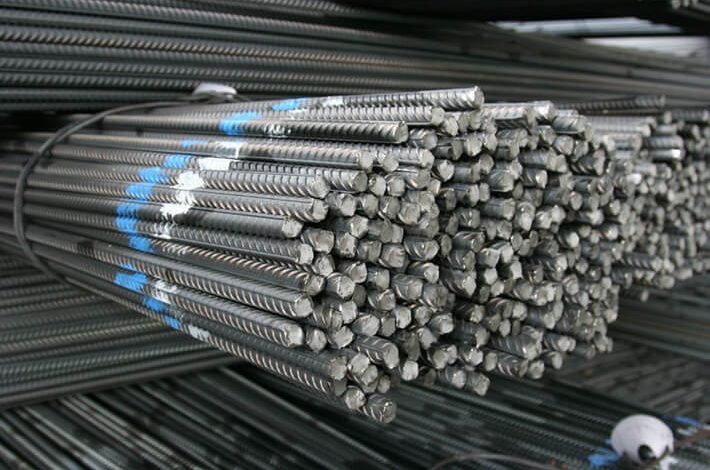

The building materials markets in Saudi Arabia saw mixed price trends during the month of October, as prices for rebar across various categories—with the exception of one—while lumber prices continued their notable decline. These changes raise questions about market dynamics and their impact on the construction sector.
Decline in steel prices
According to a bulletin from the General Authority for Statistics, rebar prices varied across most categories, while one category recorded a slight increase:
(6 mm): rose by 0.2% to reach 3,990.81 riyals per metric ton.
(8 mm): Decreased by 1% to 2,760.31 riyals per metric ton.
(10 mm): Decreased by 1% to 2,800.99 riyals per metric ton.
(12 mm and 14 mm): Both fell by 0.7% to 2,691.66 riyals and 2,691.46 riyals per metric ton, respectively.
(16 mm): Recorded a 0.6% decline to 2,694.11 riyals.
(18 mm): Fell by 0.8% to 2,693.72 riyals per metric ton.
Chinese rebar tie wire: rose by 0.9% to 51.41 riyals per 10 kg.
Changes in Electrical Wires and Cables
Prices for electrical wires and cables fluctuated between slight increases and decreases:
(2.5 mm): rose by 2.5% to 1.22 riyals per meter.
(4 mm): remained stable at 1.75 riyals per meter.
(6 mm): Increased by 1.9% to 2.76 riyals per meter.
(10 mm): Decreased by 1.3% to 22.2 riyals per meter.
(25 mm): Declined by 0.5% to 48.4 riyals per meter.
(35 mm): Declined by 1.8% to 62.35 riyals per meter.
(50 mm): Fell by 0.2% to 88.63 riyals per meter.
(70 mm): Fell by 0.6% to 127.27 riyals per meter.
(95 mm): Fell by 1.7% to 173.1 riyals per meter.
(120 mm): Rose by 0.4% to 223.76 riyals per meter.
(300 mm): Recorded a slight increase of 0.03% to 542.76 riyals per meter.
Decline in Lumber Prices
Lumber prices saw mixed declines, most notably:
Chilean wood: Declined by 1.1% to 1,540.97 riyals per cubic meter.
Romanian wood: Fell by the same percentage to 1,483.04 riyals per cubic meter.
African teak: Saw a significant decline of 4.25% to 6,027.22 riyals per cubic meter.
Indonesian appalachian wood: fell by 2.2% to 3,168.55 riyals per cubic meter.
Future Trends
Recent changes in steel and lumber prices point to volatile dynamics in Saudi Arabia’s construction materials market, which is influenced by several factors such as supply and demand, global raw material costs, and changes in import and export policies. The decline in prices for most categories of steel and lumber reflects an improvement in the purchasing power of consumers and real estate developers, which may help drive residential and commercial projects in the Kingdom, especially as work continues on Vision 2030 projects aimed at promoting economic development and infrastructure.
On the other hand, the slight change in prices for certain categories, such as rebar (6 mm) and Chinese rebar ties, reflects the ongoing challenges in achieving full price stability. These challenges may be linked to global fluctuations in energy and transportation prices, as well as currency fluctuations that directly affect the cost of imported materials.
With regard to lumber, the notable decline in prices for Chilean, Romanian, and Indonesian Ablakash wood may indicate an abundance of supply or a decline in demand in the local market, which provides a good opportunity for developers to reduce construction costs. However, the continuation of these trends depends heavily on government policies to support the construction sector, particularly with regard to providing materials at competitive prices and encouraging investment in local industries related to construction materials.
In the long term, these changes may promote sustainability in the construction sector by encouraging the adoption of modern construction techniques that rely on lower-cost, more efficient materials. Furthermore, lower prices may prompt more real estate companies to enter the market, thereby increasing competition and stimulating innovation to deliver higher-quality projects that better meet residents’ needs.