
Ramadan is an exceptional period that affects various economic activities, including the real estate sector, as working hours are adjusted to suit the special nature of the holy month. While these changes provide a more comfortable working environment for workers, they also pose significant challenges for real estate developers, especially when it comes to meeting project delivery timelines, whether in construction, marketing, or operations. Is reducing working hours during the holy month a real impediment to the progress of real estate projects, or have companies found innovative solutions to maintain the pace of completion?
Modifying working hours and its impact on productivity
<During Ramadan, working hours are reduced in many Muslim countries, including those working in real estate and construction, where daily working hours are usually reduced to 6 hours instead of 8 or 9 hours. This change affects the pace of completion, especially in projects that rely on strict timelines, such as major residential and commercial projects.
Completion and delivery challenges under reduced working hours
The main challenges facing real estate developers during Ramadan are:
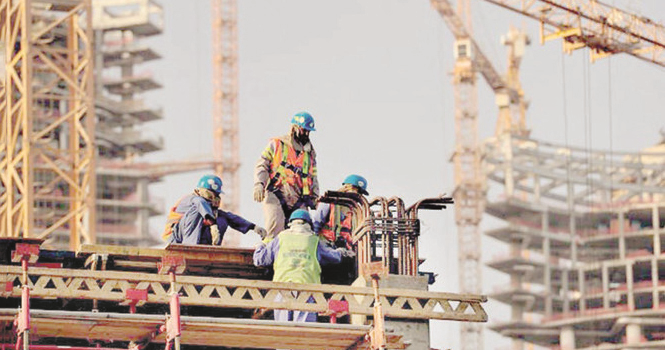
Slowdown in the pace of work on construction sites: As labor hours are reduced, completion rates drop, which can lead to delayed delivery dates.
Difficulty juggling engineering and management teams.
Difficulty reconciling engineering and administrative teams: Reduced working hours limit the ability of engineering and supervisory departments to follow up on work with the same efficiency as usual.
Increased pressure after Ramadan: Projects that are delayed during the holy month need to make up the difference after Ramadan is over, which may lead to increased pressure on labor and implementing companies.
Higher operational costs: In some cases, companies are forced to work night shifts or increase the number of workers to compensate for lost working hours, resulting in higher costs.
H4>Ramadan.
To avoid delays and deal with the challenges posed by reduced business hours, many real estate companies are resorting to innovative strategies, including: Rescheduling operations.
Rescheduling operations: Work plans are adjusted to focus on tasks that are less affected by reduced hours, such as office work and engineering designs. Ramadan's impact on the real estate market is not limited to construction and development.
With Ramadan over, real estate companies are scrambling to make up for potential delays, ramping up work and increasing productivity to catch up with any decline in the pace of implementation. The focus is also on resuming marketing and sales operations at a higher pace to offset any drop in demand during the holy month.
How do real estate companies face these challenges?
Increase night shifts: In some projects, evening shifts are used to make up for lost daytime hours, especially on high-priority projects.
Divide the work into short-term phases: Instead of executing work on a long schedule, tasks are broken down into small phases that can be executed within the available working hours.
Leverage technology in management: Use project management software to track performance remotely and provide flexible solutions for completion without the need for extensive on-site presence.
Ramadan's impact on the real estate market and real estate marketing
The impact of Ramadan is not only limited to construction and development, but also extends to real estate marketing. While some believe that real estate demand declines during the holy month, others see Ramadan as an ideal opportunity to target buyers who prefer to search for properties during the month's leisure time.Is it possible to make up the lost ground after Ramadan?