
Construction waste between environmental and economic challenges
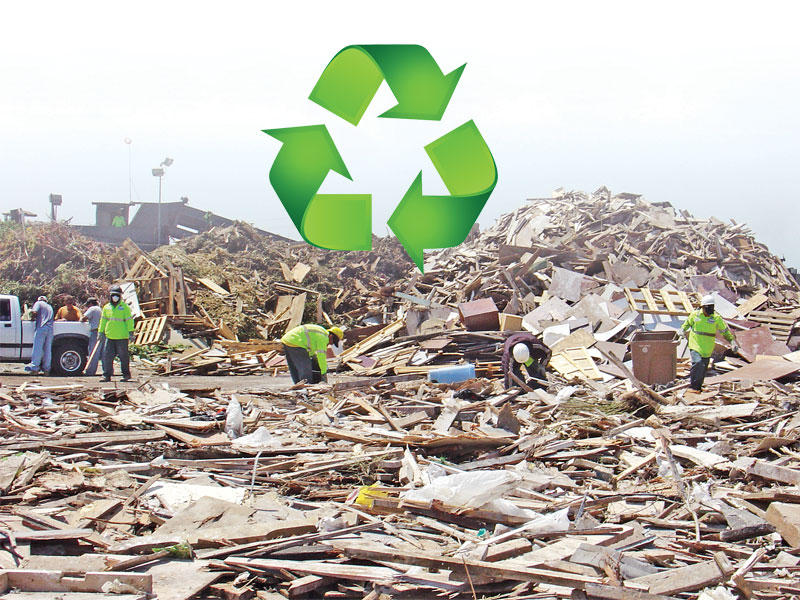
With the rapid urbanization of the world's cities, the amount of construction and demolition waste is steadily increasing, and today accounts for 30% to 40% of total solid waste in many countries. These wastes, consisting of concrete, bricks, wood, and metals, occupy large areas in landfills, lead to soil and water contamination, and deplete natural resources due to the constant reliance on new raw materials.
In developing countries, construction and demolition wastes are increasingly common. <In developing countries, the issue is exacerbated by weak environmental legislation and lack of awareness of the importance of recycling, creating an environmental and economic crisis that requires effective intervention.
Recycling construction waste
Recycling construction waste is not just an environmental option, it has become an economic and social necessity. Waste can be converted into secondary raw materials used in the production of concrete, asphalt, insulation, and concrete blocks, reducing dependence on natural resources and lowering production costs.
Recycling construction waste is not just an environmental choice, it has become an economic and social necessity.
Environmental benefits
Reduced pressure on landfills: Reducing the volume of accumulated waste protects the environment and reduces pollution.
Reduced landfill waste:
Reduce carbon emissions: Recycling reduces the need to extract and manufacture new raw materials, contributing to the reduction of greenhouse gas emissions.
Recycling reduces the need to extract and manufacture new raw materials, contributing to the reduction of greenhouse gas emissions.
Recycling reduces greenhouse gas emissions.
Conserve natural resources: Using recycled materials conserves resources such as stone, sand and clay.
Reduced construction costs: Recycled materials are often less expensive.
Job creation: The recycling sector opens up a wide range of job opportunities in collecting, sorting, and processing waste. Support the economy.
Supporting the circular economy: Turning waste into productive inputs promotes a sustainable circular economy model. Supporting the circular economy:
Despite the significant benefits, recycling faces several challenges:
Weak infrastructure: Lack of specialized collection and processing centers for construction waste.
Lack of strict legislation: Lack of clear laws mandating the sorting and recycling of waste. Lack of awareness and training
Lack of awareness and training: Limited knowledge of recycling methods and markets.
Cost of transportation and processing: High transportation and sorting costs hinder the process.
Many countries have adopted successful models in recycling construction waste, such as: Germany and the Netherlands Germany and the Netherlands: Using concrete and brick waste as a raw material to make new building materials. Germany and the Netherlands:
Japan: Strict regulations for the recycling of demolition waste with governmental and financial support for companies operating in the sector. Japan.
Egypt and the Gulf States: Limited but promising private projects have begun to establish construction waste recycling plants in cooperation with the private sector. Egypt and the Gulf States.
To transform construction waste from an environmental burden to an investment opportunity, we must:
<Enact laws and regulations that incentivize recycling and mandate waste sorting.
<Develop infrastructure for collection and processing centers.
<Promote community awareness and vocational training for construction workers.
<Encourage investment in modern recycling technology.
<Public and private sector cooperation to establish effective partnerships.
Economic and social benefits
Challenges facing construction waste recycling
Global and local success stories
Steps towards a more sustainable future