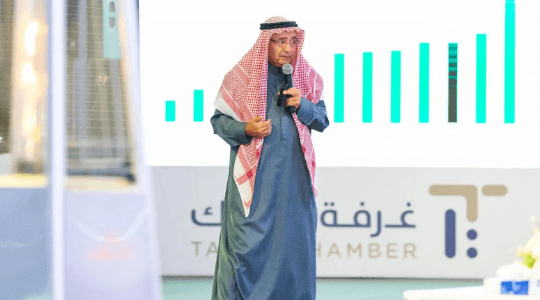

The Secretary of the Tabuk Region, Engineer Husam bin Muwafaq Al-Yusuf, a set of official data reflecting the region’s development progress, emphasizing that the coming phase will prioritize “humanizing the city” and improving quality of life, based on verified figures released by relevant authorities and ministries.
During a panel discussion held yesterday at the “Tabuk Chamber of Commerce Diwaniya” as part of its second annual Ramadan season—attended by the Chamber’s Chairman, Imad bin Sadaad Al-Fakhri, board members, and a number of businessmen and businesswomen from the region, that there are more than 360 available investment opportunities, within a portfolio comprising 68 direct opportunities within the chamber’s jurisdiction and approximately 350 investment assets, distributed across the sectors of health, education, the environment, energy, agriculture, tourism, logistics, and industry—in a move aimed at expanding the investment base and enhancing private-sector participation in development projects.
In the real estate sector, it was noted that the number of commercial land transactions reached 8,135, at a time when the region is witnessing the implementation of housing projects exceeding 4,215 residential units with an investment value of approximately 3.7 billion riyals, in addition to recording the highest annual rate of change in real estate prices during the second quarter of 2025; this reinforces the attractiveness of the real estate market.
He said: “Ministerial data released by the relevant authorities confirms that the region’s border crossings recorded more than (795) thousand passengers in 2024, while the aviation sector achieved growth of (25%) compared to the previous year, with a target of reaching (4.3) million passengers annually by 2050,” reflecting the surge in economic and tourism activity and Tabuk’s status as a strategic northern gateway. He explained that purchasing and consumer power through May 2025 reached approximately (5.44) billion riyals, with a high rate of online shopping exceeding (82.6%); reflecting a clear shift in spending behavior and the maturity of the digital market in the region.
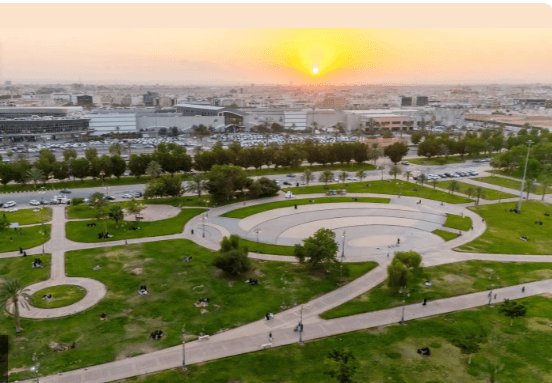
Regarding environmental initiatives, he noted that recycling efforts totaled 15,878 metric tons, with the production of 263,400 trees and 4.5 million flowers through the Municipality’s nursery, in addition to planting (20,000) trees in the Central Park, which spans an area of approximately (2) million square meters, as part of an initiative to enhance quality of life and increase per capita access to public spaces to (8.1) m², exceeding the target, He also touched on the Refuse-Derived Fuel (RDF) project, which aims to convert between (25–30%) of unused waste —amounting to about (407) metric tons per day—into a valuable industrial product that supports the circular economy and opens up new industrial opportunities.
He noted that the city of Tabuk scored (72.1%) on the Quality of Life Index, with a high performance in the security and safety category at (88.3%), which reinforces an environment of stability and investment attractiveness. The Mayor of Tabuk emphasized that these figures are not merely statistical indicators, but rather tools for planning and decision-making based on accurate data. He called for integrated efforts between the public and private sectors to continue accelerating the pace of growth and achieving sustainable development goals in the region, He commended the Tabuk Chamber of Commerce’s role in promoting economic dialogue and praised the business community’s engagement and active participation in enriching the meeting.
At the conclusion of the session, the floor was opened for discussion, with contributions addressing the promotion of afforestation and the improvement of the urban landscape, the development of roads and infrastructure, and the regulation of commercial activities, as well as mechanisms to support investment and streamline procedures. The discussion combined direct service requests, urban development proposals, and investment-related questions, reflecting a clear interest among business leaders in the region’s quality of life, identity, and economic future.