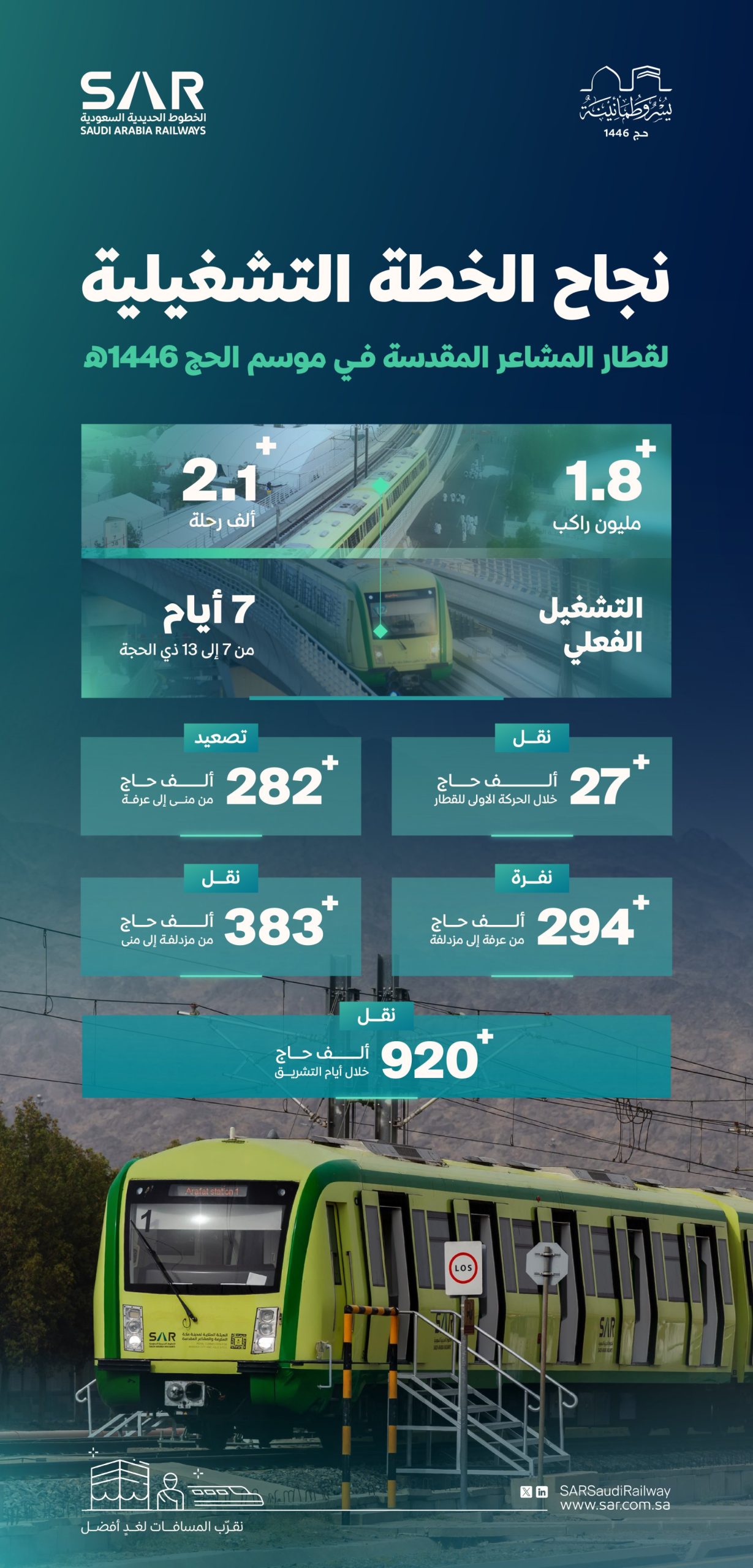

The Saudi Railways (SAR) transported approximately (1.87) million passengers between the stations of Al-Mashaaer in Mina, Muzdalifah and Arafat via the Holy Sites Train, during the period of operation that extended from the seventh day of Dhul-Hijjah until the end of the days of Tashreeq, through (2154) trips amidst high coordination with various relevant authorities.
The operational plan for the Holy Sites Train during the Hajj season of 1446 AH included five main movements. The first movement began between all stations on the seventh and continued until sunset on the eighth of Dhu al-Hijjah, during which more than (27) thousand passengers were transported. Then the second movement included transporting (282) thousand pilgrims from Mina to Arafat. This was followed by the third movement, which witnessed the transport of (294) thousand pilgrims from Arafat to Muzdalifah. In the fourth movement, more than (349) thousand pilgrims were transported from Muzdalifah to Mina. The last movement, which continued until sunset on the last day of Tashreeq, recorded the transport of more than (920) thousand passengers to and from Mina 3 station (Jamarat).
The CEO of Saudi Railways Company ( SAR ), Dr. Bashar bin Khalid Al-Malik, praised the support and empowerment provided by the wise leadership, which contributed to the integration of efforts and services provided to the guests of God, including transportation services via the Holy Sites Train.
He explained that the completion of the operational plan reflects the role played by SAR employees, and the effectiveness of joint coordination with various operational and security entities, in addition to the preparatory efforts that included simulation and comprehensive trial operation tests, ensuring the highest levels of readiness and safety.