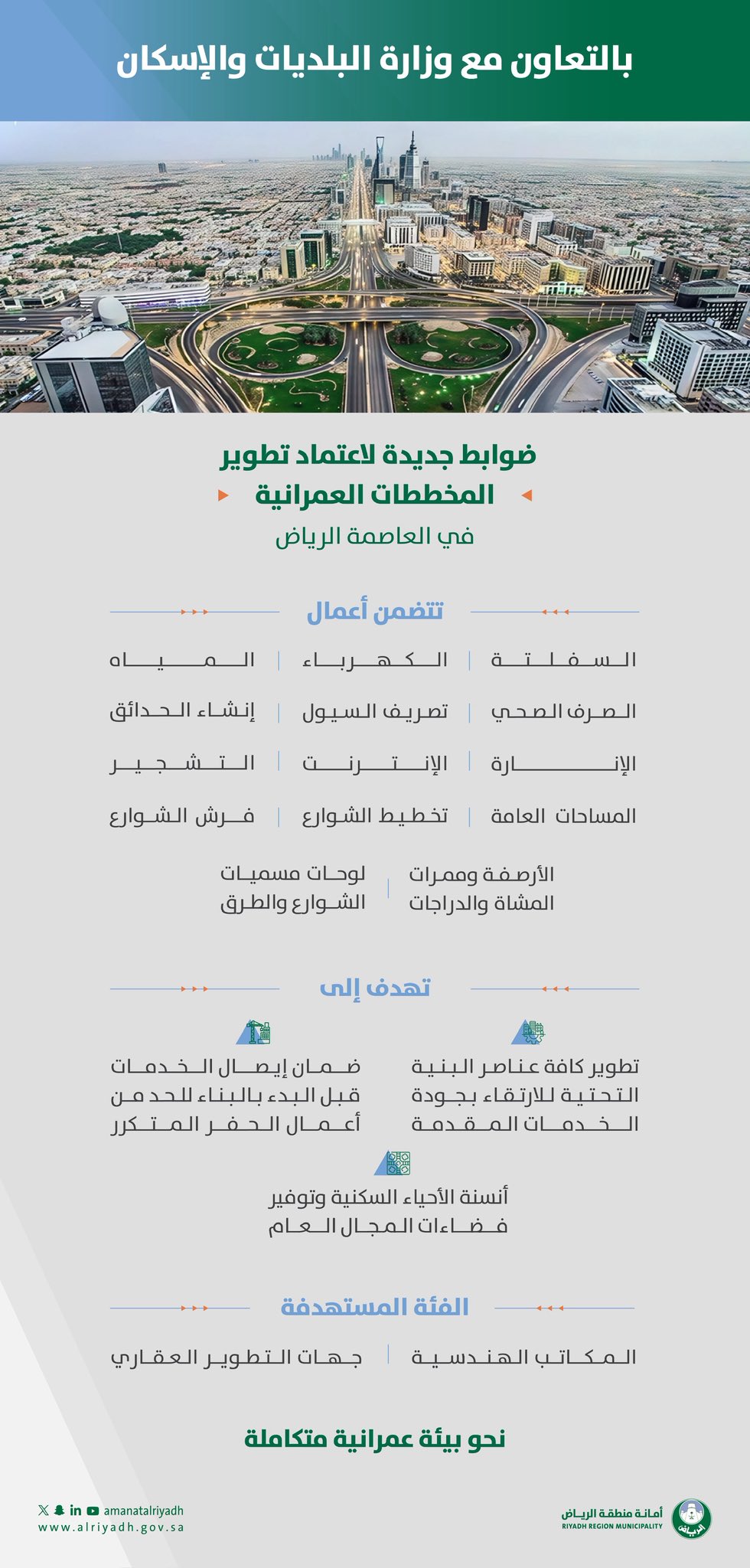

أقرت أمانة منطقة الرياض، بالتعاون مع وزارة البلديات والإسكان، حزمة من الضوابط والاشتراطات الجديدة لاعتماد المخططات العمرانية في العاصمة، التي تلزم المكاتب الهندسية والمطورين العقاريين باستيفاء كامل عناصر البنية التحتية والمجال العام قبل الشروع في أعمال البناء، وذلك في خطوة استراتيجية تعكس تحولًا جذريًّا في منهجية التخطيط العمراني، وترسخ أسس الاستدامة وجودة الحياة في المدينة.
وتشمل الاشتراطات الجديدة تنفيذ أعمال السفلتة والرصف، وإنارة الشوارع، وتمديد شبكات المياه، والصرف الصحي، والكهرباء، والهاتف، إلى جانب استكمال شبكات تصريف السيول، وإنشاء الحدائق، وأعمال التشجير، وتوفير عناصر المجال العام مثل الفراغات المفتوحة، ولوحات تسمية الشوارع، وتخطيط الطرق، وتوفير الأثاث الحضري لتحسين الأماكن العامة، وذلك وفق الأدلة الفنية المعتمدة لدى الأمانة.
ويأتي هذا التوجه ضمن جهود أمانة منطقة الرياض لتعزيز الاستباقية في التنمية الحضرية، وتفادي التحديات المتكررة التي كانت تعاني منها النماذج السابقة، ومن أبرزها الحفر المتكرر في الشوارع بعد البناء، والتأخر في إيصال الخدمات، وعدم اكتمال عناصر البيئة الحضرية في مراحلها الأولى.
ومن شأن هذه الضوابط أن تسهم في رفع جودة المخططات الجديدة، وتأسيس أحياء متكاملة تلبّي احتياجات السكان، وتعزز كفاءة استخدام الأراضي، وتدعم زيادة المسطحات الخضراء، ومسارات المشاة والدراجات، مما يُواكب أهداف الأمانة في أنسنة المدينة وتحقيق مستهدفات رؤية المملكة 2030، ويدعم مكانة العاصمة مدينةً حديثة، مرنة، ومستدامة.