
Infographic / White Land Fees Regulation: Details of conditions, incentives and evaluation mechanism

The system defines the scope of application, assessment mechanisms, fee rates, incentives, registration obligations, and revenue allocation for housing.

Posted in

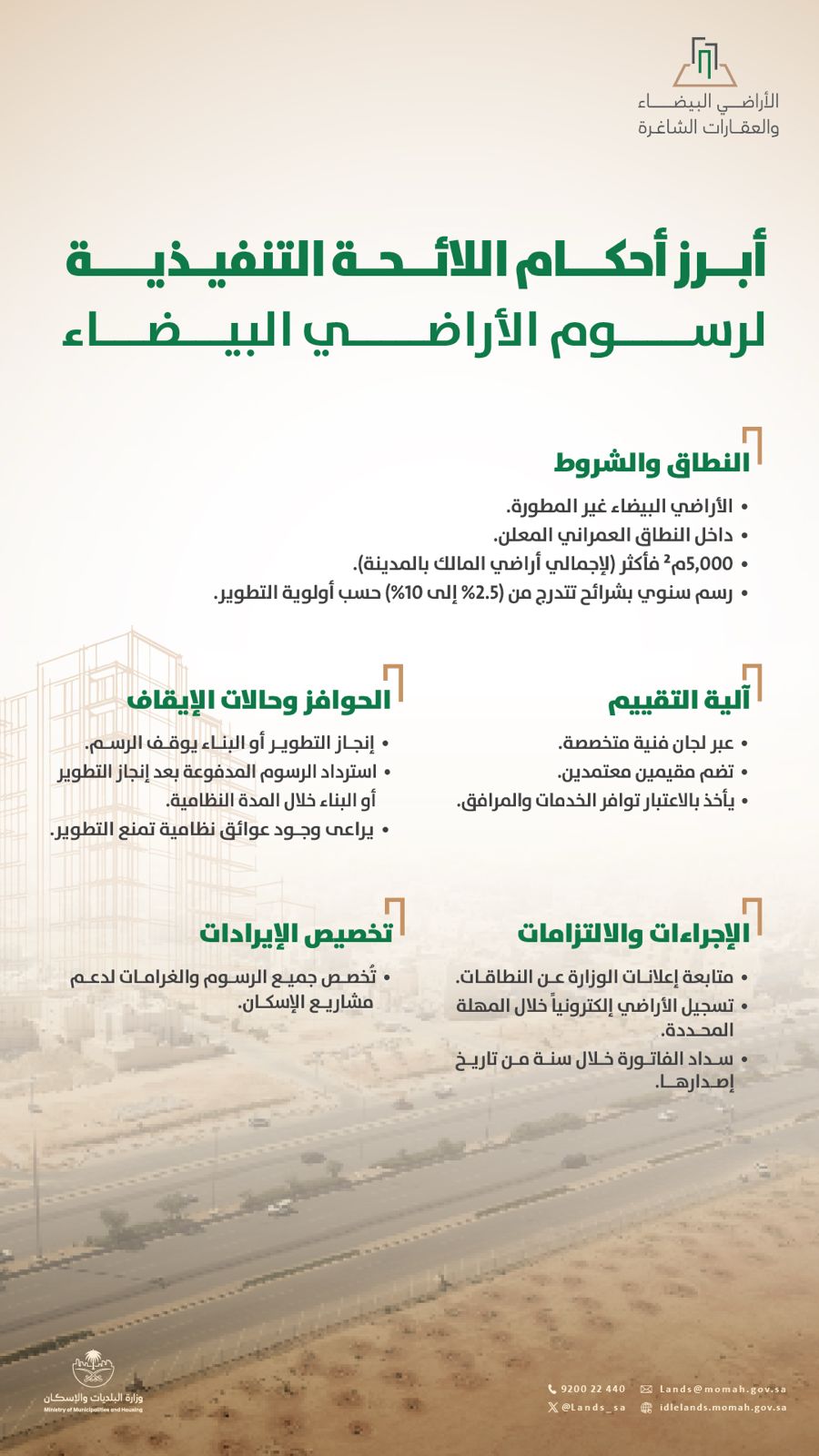
The White Land and Vacant Properties Fee Program has highlighted the main provisions of the White Land Fee Executive Regulation, explaining the scope of its application, assessment mechanism, available incentives, as well as revenue allocation and statutory procedures that should be adhered to.

According to the regulation, the White Land Fee includes undeveloped land located within the declared urban area, to be applied on undeveloped land within the declared urban area. <According to the regulation, white land fees include undeveloped land located within the declared urban area, to be applied to areas exceeding 5,000 square meters or more of the owner's total land in the city. An annual fee ranging from 2.5% to 10% is levied depending on the priority of development. As for the evaluation mechanism, it is done through specialized technical committees that include accredited evaluators, taking into account the available services and facilities.

With regard to incentives, the regulation emphasized that the fee is suspended or refunded if the development or construction is completed within the statutory period, or if there are statutory obstacles preventing the development.

The ministry also emphasized that the fee is suspended or refunded if the development or construction is completed within the statutory period, or if there are statutory obstacles preventing development. <The Ministry also emphasized the need for taxpayers to adhere to several procedures, most notably: Following up on the ministry's announcements regarding the ranges, registering land electronically within the specified deadline, and paying invoices within one year from the date of their issuance.

The ministry also emphasized that taxpayers must adhere to several measures, most notably. All revenues collected from fees and fines are allocated to support housing projects, which contributes to enhancing the housing supply and achieving the goals of the Kingdom's Vision 2030 in the housing sector.

All revenues collected from fees and fines are allocated to support housing projects, which contributes to enhancing the housing supply and achieving the goals of Saudi Vision 2030 in the housing sector.