
While the Kingdom's real estate market continues its dynamic trajectory, the housing sector is emerging as a key driving force, global real estate consultancy Knight Frank said in a recent report. The residential sector accounted for approximately 63% of the total real estate transaction value of 123.8 billion riyals during the first half of 2025.
The residential sector accounted for approximately 63% of the total real estate transaction value of 123.8 billion riyals during the first half of 2025.
Rising activity supported by government funding
The number of residential transactions increased by 7% year-on-year to reach about 93.7 thousand transactions with a total value of SAR 77.5 billion, driven by the growth of mortgage activity, continued government support programs, and the delivery of new units in major cities.
The company explained that the number of residential transactions increased by 7% year-on-year to reach about 93.7 thousand transactions with a total value of SAR 77.5 billion.
Medina leads growth
Madinah recorded the highest growth rate in residential transaction values in the Kingdom, increasing by 49% to reach SAR 3.4 billion in H1 2025. The volume of transactions there increased by 38%, although the volume of transactions decreased by 31% and the total value decreased by 20% to SAR 29 billion, the first annual decline in years.
As for prices, the average price of apartments rose by 2.5% to SAR 3,835/m², while villas saw a slight decline of 0.3% to SAR 3,500/m². With 353.4k units by the end of 2024, the supply is expected to increase to 381.2k units by 2028 after an additional 27.86k units are delivered.
With 353.4k units by the end of 2024, the supply is expected to increase to 381.2k units by 2028.
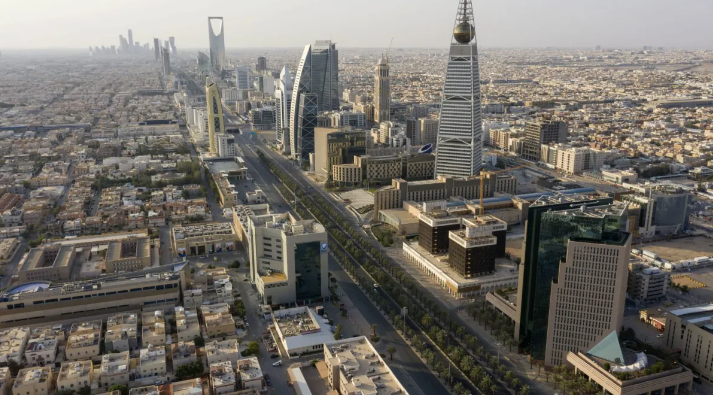
Riyadh. Strong demand and rising prices
In Riyadh, average apartment prices rose 11% year-on-year in Q2 2025 to reach SAR 6175/m², supported by strong demand in central neighborhoods. Al Taawun neighborhood recorded a jump of 32% to 9470R/m², while prices in King Abdullah neighborhood rose by 17% to 7656R/m².
In the south of the capital, prices reached an average of 3000 SAR/m², reflecting the entry of a new segment of buyers.
As for villas, prices continued to rise by 8% to SAR 5470/m², with North Riyadh remaining the most expensive with an average of SAR 8660/m². Al Sahafa recorded a growth of 24% to 8050 SAR/m², followed by Al Narges with an increase of 17% to 8750 SAR/m².
Mecca. Mixed indicators
<In Makkah, apartment prices fell by 0.5% to SR3650/m², while villa prices rose by 0.4% to SR3420/m². The current supply stands at around 428.2k units, with expectations to rise to 462k units by 2028.
Jeddah. Growing activity and varying prices
<Jeddah recorded a remarkable growth in the volume of transactions by 19% and an increase in value by 28% to SAR 17.3 billion. The average price of apartments reached SR4,324/m² with a year-on-year increase of 2.7%, with clear jumps in the central and western areas by 6% to SR5,246/m².In details, prices in Al Naeem neighborhood increased by 12.2% to 4885 SAR/m², and Al Zahraa neighborhood by 10% to 6325 SAR/m². As for villas, they witnessed a moderate increase of 3.2% to 5040 SAR/m², while the northern areas remained the most demanded with a rise of 5.4% to 6150 SAR/m². Northern Abhur led the growth with 9.2% to reach 5800 SR/m², followed by Al Nahda with 8.3% to 5850 SR/m².
North Abhur led the growth with 9.2% to 5800 SR/m².
Riyadh market between balance and future attractiveness
<Riyadh's residential real estate market entered a rebalancing phase during H1 2025, but this did not put pressure on prices, as apartments and villas continued their upward trajectory. The launch of the Riyadh Metro raised the attractiveness of neighborhoods with direct access to public transportation such as Al Olaya, Al Yasmeen, and Hattin, which recorded notable increases in villa prices.Riyadh Metro's launch contributed to the attractiveness of neighborhoods with direct access to public transportation.
The shift towards integrated projects
<The report found that demand is increasingly shifting towards gated communities with integrated master plans, which include residential, commercial, educational and health components. Major projects such as The Bride by Roshan, backed by the Public Investment Fund, are generating significant interest, especially in coastal areas where demand for waterfront units and community facilities is growing.The report concluded.