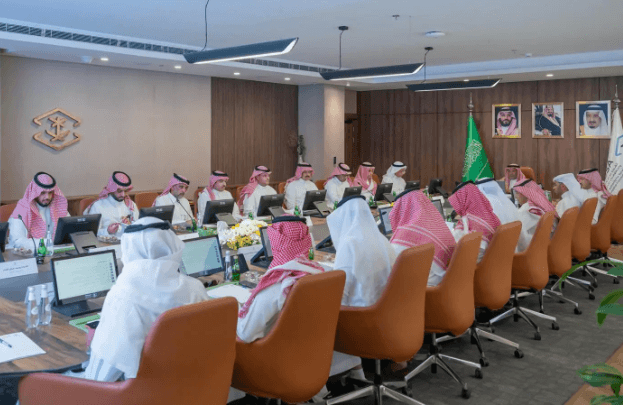
Fifth Industrialists Meeting concludes under the patronage of the Minister of Commerce
Ministry of Industry: 100 factories ready for operation within 3 years
Industrialists and investors call for focus on manufacturing industries
Dammam-Amlak
The Fifth Industrialists Meeting 2013 held at the Eastern Chamber concluded its activities with the participation of a number of companies and entities concerned with the industrial sector, led by the Industrial Cities and Technology Zones Authority (MODON), the Saudi Basic Industries Corporation (SABIC), and the Saudi Metals Company (Ma'aden), in addition to some experts and specialists in industrial affairs in a number of government departments and private institutions. The forum was held under the patronage of the Minister of Commerce and Industry Dr. Tawfiq bin Fawzan Al-Rabiah, who announced during the forum that the procedures for industrial licensing will be facilitated through the Ministry's website to be delivered by express mail within a maximum of 3 days to the applicant's place of residence.
<Establishment of 1000 factories
The Minister of Commerce and Industry revealed that the Ministry intends to establish 1000 fully equipped factories during the next three years, through which the Ministry aims to encourage Saudi youth to invest in the industrial field, stressing the Ministry's keenness to provide integrated factories and then lease them to Saudi youth at reasonable prices that do not exceed 120 thousand riyals per year, expressing his hope that the Kingdom will be an advanced industrialized country, achieve a state of diversity in its local economy, and contribute to the creation of more projects that provide job opportunities for Saudi youth.
Al-Rabiah emphasized that industrial lands have been provided in all industrial cities across the Kingdom at nominal prices. Some factories' infrastructure issues have also been addressed in the second industrial city in Dammam. Al-Rabiah added that the ministry will build high-end residential complexes near industrial cities and invest in them in the future, stressing that the ministry does not hesitate to close any factory that causes danger to residents or pollution of the environment, especially factories near residential neighborhoods, revealing that ten factories were closed in the first industrial city in Dammam because they were dangerous to residents and did not apply safety measures. Al-Rabiah denied that the Ministry of Commerce has received any complaints of damage from factory owners due to the campaign carried out by the Ministry of Labor, police and passports to eliminate the phenomenon of illegal workers, stressing at the same time that Saudi factories are considered the lowest in the number of violating workers and the most applied the conditions of the Ministry of Labor.
Saudi Companies Law
Speaking to reporters, Al-Rabeeah announced that the ministry has submitted to the responsible authorities the new system for the development of Saudi companies, without disclosing the details of the system, saying only that if it is approved, its details will be announced, which will serve the interest of national companies.
Manufacturing industries
Industrialists, economists and investors in the Kingdom called for a more in-depth consideration of the issue of the government's interest in the orientation and greater focus on the manufacturing industries that will open a wider horizon in the industrial development and civilizational growth of the country, praising this strategic direction announced by the government, but a number of industrialists still express concerns about the success of this approach if not providing full support to the manufacturing sector in all respects similar to the support provided to basic industries.
Engineer Saad Al-Rabiah, Executive Vice President of Specialty Chemicals at SABIC, asked, "Is the government support for manufacturing industries comparable to the support given to basic industries?" Commenting that the support is still weak despite the government's enthusiasm to activate its strategic plans to develop the manufacturing sector, which aims to exploit the added values of basic products that are manufactured in the Kingdom with huge capacities and are exported and returned to the Kingdom as final products and consumer goods. Al-Rabeeah's demands were summarized by the need to create basic equipment and integrated infrastructure for the establishment of manufacturing industries with all logistics services and vital facilities and the provision of feedstock, raw materials and the necessary financing through the unity of the concerned government sectors, the private sector and banks, as happened to the basic and petrochemical industries sector, which received all the support that resulted in the Kingdom's leadership of the petrochemical sector in the world.
Business Development
Engineer Faisal Al Jandal, Phosphate and Industrial Minerals Business Development Officer at Ma'aden, strongly supported these demands, drawing attention to the broad list of investment opportunities in phosphate-based manufacturing industries and emphasizing the prominent role played by the Royal Commission in Jubail to provide the demands mentioned by Al-Rabeeah, namely that the Royal Commission assume full responsibility in providing infrastructure and basic equipment for the establishment of strong manufacturing industries.
Industrial clusters
Mohammed Al Azaz, Sadara's Director of Chemical and Manufacturing Development, hinted at ensuring the success of his company's plans to support the establishment of manufacturing industries and industrial clusters through his company's assurances to provide critical raw materials that are produced for the first time in the Kingdom and allocated to manufacturing industries, most notably elastomer and polyurethane, which will have a head start in adding a new chain of value-added resources, strengthening the Kingdom's position in chemical manufacturing.