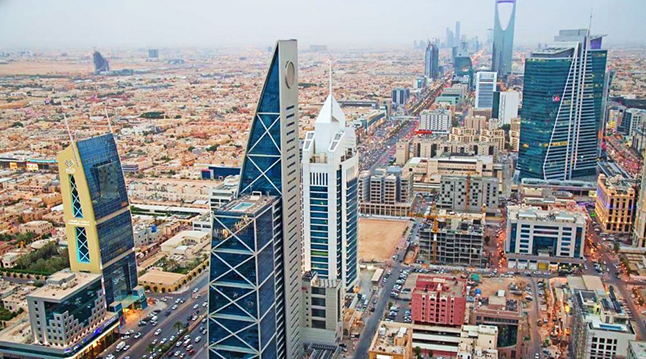

JLL confirmed that Riyadh's real estate market is undergoing a profound structural transformation, driven by accelerating strategic changes, strong momentum in implementing the goals of Saudi Vision 2030, and an impressive diversity of investment opportunities across multiple sectors, reflecting the market's maturity and ability to absorb more complex growth phases.
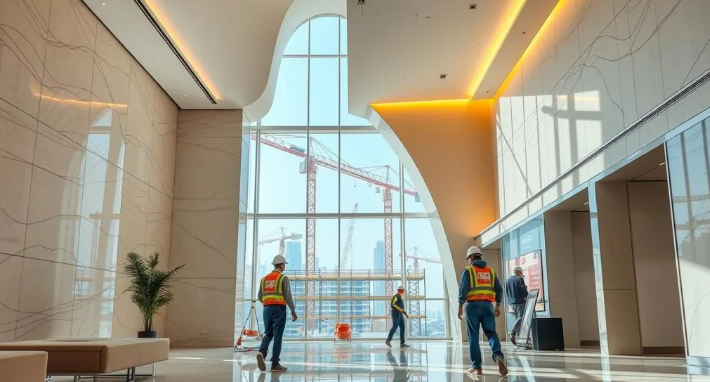
Riyadh's real estate market is undergoing a profound structural transformation, driven by accelerating strategic changes, strong momentum in implementing the goals of Saudi Vision 2030, and an impressive diversity of investment opportunities across multiple sectors. <In a statement, the company explained that the Kingdom's construction sector continues to demonstrate a high degree of resilience, despite challenges associated with the availability of skilled labor, rising costs of construction materials, and supply chain volatility. Increased adoption of Building Information Modeling (BIM) has contributed to more efficient execution and improved project management, reducing operational risks and enhancing cost control.
The company said in a statement. According to JLL, Saudi Arabia's construction sector was valued at nearly $100 billion in 2025 and is expected to continue growing at an annualized rate of 5.4% through 2029, driven by the momentum of major projects and expanding government and private investments.
JLL said that Saudi Arabia's construction sector is expected to grow at an annualized rate of 5.4% through 2029, driven by the momentum of major projects and the expansion of government and private investments. In terms of execution costs, the average annual inflation of tender prices is expected to range from a high of 2% to a low of 2%, emphasizing that this range reflects the importance of proactive cost management as a critical element to maintain efficient financial performance and ensure the sustainability of projects.
With regards to execution costs, the firm expects the average annual inflation of tender prices to range from a high of 2% to a low of 2%, reflecting the importance of proactive cost management. She stressed that the outlook for the real estate market in Riyadh remains positive, supported by a set of major catalysts, most notably hosting Expo 2030, organizing the FIFA World Cup 2034, developing King Salman International Airport, the legislative reform package, and growing PIF partnerships with the private sector, which enhance the attractiveness of the market to local and international investors.
Saud Al-Sulaimani, Regional Director and Head of Capital Markets at JLL Saudi Arabia, said that Riyadh is leading the way in realizing Saudi Vision 2030, capitalizing on the unprecedented opportunities available to investors and developers as the government continues to update national priorities, ensuring strategic alignment between projects and enhancing collaboration with the private sector.
For his part, Saud Al-Sulaimani, Regional Director and Head of Capital Markets at JLL Saudi Arabia, said that Riyadh is at the forefront of realizing Saudi Vision 2030. <Sulaimani added that regulatory reforms, such as the implementation of white land fees and the decision to freeze rent increases, aim to consolidate stability in the real estate market, which will gradually lead to a greater focus on developing high-quality assets. He pointed out that this shift, in conjunction with changing construction costs in some sectors, contributes to redrawing the map of the real estate market in Riyadh, and opens the way for a more mature and selective phase of investment and development.
Sulaimani added.